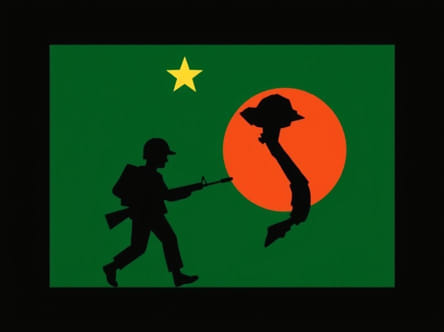
The Vietnam War, which lasted from the mid-1950s to 1975, was marked by intense conflict, shifting strategies, and a series of major offensives that shaped its course. These offensives were not merely military operations but often signaled turning points in both strategy and public perception. The major offensives during the Vietnam War demonstrated the complexities of guerrilla warfare, the limitations of conventional military power, and the deep impact of political will. Understanding these key offensives offers deeper insight into how the war unfolded and why it remains one of the most significant conflicts of the 20th century.
The Nature of Offensives in the Vietnam War
Unlike traditional wars, the Vietnam War featured asymmetric warfare, where North Vietnamese and Viet Cong forces employed guerrilla tactics against a more technologically advanced U.S. and South Vietnamese military. This dynamic meant that offensives were often less about territory and more about morale, disruption, and perception. Many major offensives aimed not to conquer, but to destabilize or provoke a political response.
The Tet Offensive (1968)
The Tet Offensive is arguably the most famous and consequential military campaign of the Vietnam War. Launched in late January 1968 during the Vietnamese Lunar New Year (Tet), the offensive was a surprise coordinated assault by North Vietnamese and Viet Cong forces on over 100 cities and military targets across South Vietnam.
- Strategic Surprise: Despite earlier warnings, the attacks caught U.S. and South Vietnamese forces off-guard, particularly in cities like Hue and Saigon.
- Psychological Impact: Although the offensive was eventually repelled and led to massive losses for the North Vietnamese, the scale and audacity of the attacks shocked the American public and media.
- Political Ramifications: The Tet Offensive led to a dramatic shift in U.S. public opinion, eroding support for the war and prompting President Lyndon B. Johnson to withdraw from re-election.
The Tet Offensive demonstrated that the war was far from over and exposed the gap between official U.S. military assessments and the reality on the ground.
The Easter Offensive (1972)
The Easter Offensive, also known as the Nguyen Hue Offensive, was launched by the North Vietnamese in March 1972. It was one of the largest conventional military campaigns of the war and involved heavy use of tanks, artillery, and troops.
- Objective: The goal was to gain territory in South Vietnam and apply pressure during peace negotiations in Paris.
- Scale: This offensive marked a shift from guerrilla tactics to large-scale warfare, particularly in the northern provinces and the Central Highlands.
- Response: U.S. airpower, including Operation Linebacker I, played a critical role in halting the offensive. South Vietnamese forces, though initially overwhelmed, eventually regained ground.
The Easter Offensive highlighted the growing strength of the North Vietnamese Army and foreshadowed the challenges South Vietnam would face after U.S. troop withdrawals.
The Cambodian Incursion (1970)
Though not a traditional offensive by enemy forces, the U.S. and South Vietnamese incursion into Cambodia in April 1970 was a significant campaign aimed at disrupting North Vietnamese sanctuaries and supply lines, especially along the Ho Chi Minh Trail.
- Rationale: North Vietnamese troops had long used border regions in Cambodia as staging areas for attacks into South Vietnam.
- Execution: Joint forces invaded eastern Cambodia to destroy enemy bases, caches, and infrastructure.
- Controversy: The operation triggered widespread protests in the U.S., including the tragic Kent State shootings.
Although the campaign achieved short-term tactical success, it extended the war into a new country and further polarized American public opinion.
Operation Rolling Thunder and Air Offensives
While ground offensives dominated headlines, the air war was equally significant. Operation Rolling Thunder (19651968) was a prolonged bombing campaign over North Vietnam, intended to weaken the enemy’s resolve and capacity.
- Intensity: Thousands of sorties were flown, targeting infrastructure, supply routes, and military installations.
- Limitations: Despite its scope, the operation failed to achieve its strategic goals due to restrictive rules of engagement and underestimation of North Vietnam’s resilience.
- Aftermath: The campaign hardened North Vietnamese resolve and strengthened their propaganda efforts.
Subsequent air campaigns such as Linebacker I and II had greater tactical impact, especially in supporting ground operations and influencing peace talks.
The Fall of Saigon (1975)
The final major offensive of the Vietnam War was the Spring Offensive of 1975, which culminated in the fall of Saigon. With minimal U.S. military support remaining, South Vietnam was left to defend itself against a determined and increasingly powerful North Vietnamese military.
- Rapid Advances: In a matter of weeks, North Vietnamese forces overwhelmed South Vietnamese defenses, capturing cities and provinces with little resistance.
- Collapse of Government: The government of South Vietnam fell into disarray, leading to mass evacuations and chaos in Saigon.
- End of War: On April 30, 1975, Saigon fell, marking the end of the Vietnam War and the reunification of Vietnam under communist rule.
This offensive was the culmination of decades of struggle, bringing a dramatic and symbolic conclusion to the conflict.
Impacts of the Major Offensives
Military and Political Shifts
Each major offensive during the Vietnam War shifted the military and political balance in significant ways. Some strengthened North Vietnam’s strategic position, while others revealed vulnerabilities within South Vietnam and its U.S. allies. The Tet Offensive, in particular, reshaped U.S. foreign policy by demonstrating the limits of military power in a politically complex conflict.
Public Opinion and Media
Television coverage and media reports of these offensives deeply influenced public perception in the United States. Graphic images and reporting during the Tet Offensive and the Cambodian Incursion played pivotal roles in swaying opinion against the war effort, leading to a more cautious approach in U.S. foreign interventions thereafter.
Legacy of the Vietnam War Offensives
The legacy of these offensives continues to be studied in military academies and political science programs. They offer lessons in unconventional warfare, the role of public opinion in democratic societies, and the complexities of foreign intervention. The major offensives of the Vietnam War remain case studies in resilience, strategy, and the far-reaching consequences of war.
The major offensives of the Vietnam War whether launched by the North Vietnamese or by U.S.-led forces were pivotal in shaping the trajectory and ultimate outcome of the conflict. From the shock of the Tet Offensive to the devastating fall of Saigon, each campaign revealed not just military objectives but the deeper political and psychological undercurrents of the war. These offensives remain central to understanding the Vietnam War’s complexity and enduring historical importance.