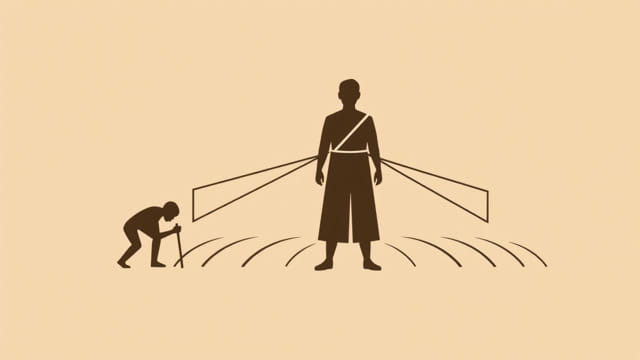
The labor system of Russian serfdom played a central role in shaping the country’s social, economic, and political landscape for centuries. It was a form of bonded labor that tied peasants to the land and their landlords, creating a rigid and oppressive social structure. Russian serfdom was distinct from Western European feudalism in several ways, but it shared similar foundations in forced agricultural labor and limited rights for the working class. Understanding the definition and structure of Russian serfdom is essential for grasping the dynamics of pre-reform Russia and the hardships endured by the peasant majority.
Definition of Russian Serfdom
What Was Russian Serfdom?
Russian serfdom was a system where peasants, known as serfs, were legally bound to the land owned by nobles, the church, or the state. They were not slaves in the full legal sense, but they had little freedom. Serfs were expected to work the land, pay taxes or provide labor services, and were subject to the control of their landlords.
Legal Status of Serfs
Serfs were not considered property in the same way as slaves, but they were not free individuals either. They could not leave the estate where they lived without permission, could not own significant property, and could be bought, sold, or transferred with the land. Their legal rights were minimal, and their fate was largely determined by their lords.
Origins and Development
Early Beginnings
The roots of Russian serfdom can be traced back to the 15th century, but it became more formalized and widespread in the 17th century. The legal code of 1649, known as the Sobornoye Ulozheniye, officially tied peasants to the land permanently, ending their right to move or change landlords.
Growth Under the Tsars
During the reigns of Tsars like Peter the Great and Catherine the Great, serfdom expanded further. These rulers relied on the support of the nobility and granted them increased control over their serfs in exchange for loyalty and service to the state. By the 18th century, most of Russia’s rural population lived under serfdom.
Structure of the Labor System
Types of Obligations
Russian serfs owed their landlords a combination of obligations, which could include:
- Barshchina (labor duties): Serfs were required to work on their lord’s land for a set number of days per week, typically without pay.
- Obrok (payments): Instead of labor, some serfs paid rent in cash, goods, or produce.
- Other services: Serfs might also be expected to perform tasks such as repairing buildings, transporting goods, or serving in the lord’s household.
Variation in Conditions
The conditions of serfdom varied depending on the region, the type of landowner, and the economic status of the peasant. Some serfs had small plots of land to cultivate for their own families, while others had none and lived in extreme poverty. The level of exploitation often depended on the landlord’s attitude and the local administration.
Role in Russian Economy
Agricultural Backbone
Serfs formed the foundation of the Russian agrarian economy. They produced most of the country’s food supply and were essential to the wealth and power of the nobility. The system ensured that landowners had access to cheap and controllable labor, which allowed them to extract high profits from their estates.
Limitations on Economic Growth
While serfdom supported the traditional economy, it also stifled innovation and productivity. Because serfs had little incentive to improve land or adopt new techniques, agricultural output remained low. The lack of a mobile labor force also hindered the development of industry and urbanization in Russia compared to Western Europe.
Social and Human Impact
Daily Life of Serfs
The daily life of a Russian serf was marked by hard physical labor, poverty, and dependence on the landlord. Most serfs lived in small wooden huts, worked long hours in the fields, and faced frequent food shortages. Illiteracy was widespread, and medical care was nearly nonexistent.
Abuse and Punishment
Landowners had considerable authority over their serfs and could impose harsh punishments, including beatings, forced labor, and exile. In some extreme cases, serfs were sold without land, treated as commodities rather than human beings. The system reinforced a deeply unequal and violent social order.
Resistance and Reform Movements
Peasant Rebellions
Over the centuries, Russian serfs occasionally rebelled against their harsh conditions. Notable uprisings include the Bolotnikov Rebellion (16061607) and the Pugachev Rebellion (17731775). Although these revolts were ultimately crushed, they highlighted the widespread resentment and suffering among the peasantry.
Intellectual and Political Criticism
By the 19th century, Russian intellectuals, writers, and reformers began to speak out against the injustices of serfdom. Thinkers like Alexander Herzen and Leo Tolstoy criticized the system for its inhumanity and its backwardness. Some members of the nobility also supported reforms, seeing serfdom as incompatible with modernization.
The End of Serfdom
Emancipation of 1861
The turning point came under Tsar Alexander II, who issued the Emancipation Edict in 1861. This law freed approximately 23 million serfs, granting them the right to own land and act as free citizens. It was one of the most significant reforms in Russian history.
Limitations of the Reform
Although the emancipation was a major step forward, it came with many limitations. Freed serfs were often required to pay high redemption payments for the land, which placed them in long-term debt. Many ended up with poor-quality land and remained economically vulnerable. True freedom and equality remained elusive for many years after the formal end of serfdom.
Legacy of Russian Serfdom
Long-Term Effects on Society
The legacy of serfdom continued to affect Russian society well into the 20th century. It left deep social divisions between landowners and peasants and contributed to the tensions that eventually led to the Russian Revolution of 1917. Even after emancipation, the rural economy remained underdeveloped, and the lives of former serfs improved only gradually.
Understanding Modern Implications
Studying the labor system of Russian serfdom helps explain the historical context of Russian politics, class struggles, and social transformations. It shows how deeply entrenched systems of exploitation can shape a nation’s path and how reform efforts can struggle against long-standing traditions and resistance from the elite.
The labor system of Russian serfdom was a powerful and oppressive institution that defined the lives of millions of peasants for centuries. It was based on forced labor, legal inequality, and the dominance of the nobility. While it supported the agricultural economy, it also held Russia back from modern development. The eventual abolition of serfdom in 1861 marked a turning point, but the path toward equality and economic improvement for former serfs was long and difficult. Understanding the labor structure of serfdom is essential to grasp the broader themes of freedom, reform, and resistance in Russian history.