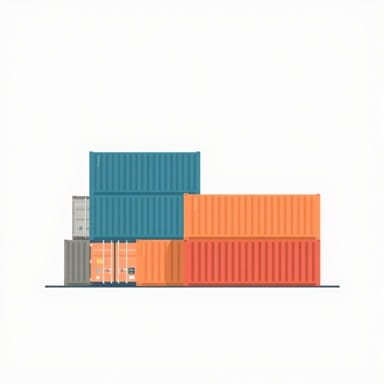
Containerization is a vital concept in AP Human Geography, particularly within the fields of globalization, economic development, and spatial organization. As an innovation in transportation, containerization revolutionized the way goods move across the world, influencing everything from trade patterns to urban development. The standardized shipping container has helped to shrink the world economically, fostering interdependence and linking producers with consumers across vast distances. In human geography, the study of containerization offers insight into how technology transforms economic systems, reshapes spatial relationships, and alters patterns of human activity.
Understanding Containerization in AP Human Geography
What Is Containerization?
Containerization refers to the use of standardized containers, usually made of steel, to transport goods efficiently by sea, rail, and truck. These containers can be easily loaded and unloaded, stacked, and transferred between different modes of transport. This standardization reduces shipping costs, minimizes handling time, and lowers the risk of theft or damage.
Why It Matters in Human Geography
In the context of AP Human Geography, containerization is studied as part of the larger discussion on globalization and industrialization. It has changed how countries trade, how cities develop around ports, and how supply chains operate globally. This concept also ties into the study of economic geography, transportation networks, and the spatial distribution of industries.
Historical Background of Containerization
Pre-Container Era Challenges
Before containerization, shipping goods was a time-consuming and labor-intensive process. Items were loaded and unloaded individually, which increased costs and the risk of loss. Different transportation systems required different packaging, making intermodal transfer inefficient.
Invention and Adoption
Containerization began in the 1950s, pioneered by American entrepreneur Malcolm McLean. His vision of using uniform containers to streamline cargo handling quickly gained popularity. By the 1970s, most major ports had adapted to this method, and the global shipping industry was transformed.
Examples of Containerization in AP Human Geography
Example 1 The Port of Singapore
Singapore serves as a prime example of a containerized port in human geography. Strategically located along major trade routes, it has become one of the world’s busiest container ports. Its development has spurred urbanization, economic growth, and its emergence as a global trade hub.
- Efficient infrastructure for loading and unloading containers
- Intermodal transport linking port, rail, and road networks
- Influence on regional development and employment
Example 2 Los Angeles and Long Beach Ports (USA)
These twin ports in Southern California handle a significant portion of the United States’ containerized imports, especially from Asia. They are integrated into vast networks of highways and railways that distribute goods across the country. Their existence has shaped industrial locations, urban growth, and economic relationships with Pacific Rim countries.
Example 3 The Suez Canal and Global Trade Routes
Though not a port, the Suez Canal plays a crucial role in global containerized shipping. It offers a shortcut between Europe and Asia, significantly reducing travel time. Container ships passing through the Suez Canal exemplify how containerization influences spatial interaction and global interconnectivity in human geography.
Geographical Impacts of Containerization
Urban and Regional Development
Container ports often become the nucleus of economic activity, attracting businesses that rely on import and export. This leads to the creation of port cities, logistics hubs, and industrial zones. For instance, Rotterdam in the Netherlands developed significantly due to its port’s role in container shipping.
Changes in Spatial Organization
Before containerization, industries were located near ports due to labor-intensive loading methods. Today, industries can be situated far from ports because containers can be efficiently transported inland. This decentralization affects urban planning, land use, and regional economic patterns.
Containerization and Globalization
Acceleration of Global Trade
Containerization drastically reduces the cost and time of shipping goods, making it a pillar of globalization. Manufacturers can now source raw materials and components globally and distribute finished products to international markets efficiently.
Global Supply Chains
Modern supply chains rely heavily on containerization. Components for a single product might be manufactured in multiple countries and assembled elsewhere, all facilitated by container transport. This phenomenon reflects the spatial division of labor and economic interdependence.
- Smartphones with parts made in Korea, China, and Vietnam
- Automobiles assembled in Mexico using Japanese components
- Apparel produced in Bangladesh and shipped to retail outlets globally
Environmental and Social Considerations
Environmental Impacts
While containerization improves efficiency, it also has environmental consequences. Large container ships burn heavy fuel oil, contributing to air pollution and carbon emissions. Port activities can affect marine life and lead to habitat destruction. Sustainable shipping practices and regulations are being developed in response.
Labor and Employment Changes
Containerization has reshaped port employment. Fewer dockworkers are needed due to mechanized loading systems, which has led to job losses in some areas. However, it has also created new opportunities in logistics, warehouse management, and infrastructure development.
Key Terms for AP Human Geography Students
- Intermodal TransportationMovement of goods using multiple modes of transport without handling the cargo itself.
- Global Supply ChainA worldwide system that coordinates the production and distribution of goods.
- Time-Space CompressionThe reduction in time it takes for goods or people to travel due to innovations like containerization.
- Spatial InteractionThe movement and flows involving human activity and goods between locations.
Containerization is a transformative force in the modern world, playing a central role in the globalization of trade, reorganization of space, and advancement of intermodal transportation. In AP Human Geography, understanding this concept provides insight into how physical geography, technology, and economics intersect. From the bustling port of Singapore to the logistics hubs of the United States, the impact of containerization continues to shape our world, connecting distant places and influencing patterns of human activity. As students explore this topic, they uncover deeper truths about globalization, development, and the changing landscapes of human geography.