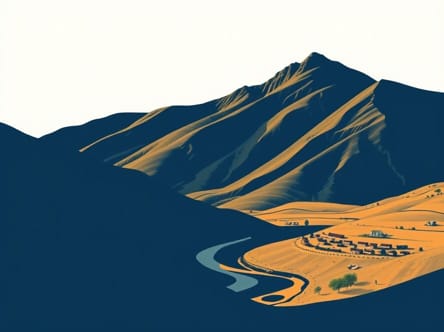
Stretching across central India, the Narmada Valley is a region of remarkable geographical, ecological, and cultural importance. It follows the course of the Narmada River, one of the most significant rivers in India. The valley is known for its lush landscapes, ancient geological formations, and deep-rooted history. Many people wonder in which state the Narmada Valley lies. The answer is not limited to a single state. In fact, the Narmada Valley flows through multiple Indian states, with the majority of its course lying in Madhya Pradesh. Understanding the geography and significance of this valley reveals much about the natural and cultural wealth of the Indian subcontinent.
The Location of Narmada Valley
Primarily in Madhya Pradesh
The Narmada Valley is mainly located in the central Indian state ofMadhya Pradesh. This state contains the largest portion of the river’s basin and hosts some of the most well-known sections of the valley. From Amarkantak, the river’s source in the Maikal Hills, the Narmada flows westward across Madhya Pradesh, shaping a broad and fertile valley. Many towns and cities along its course owe their development and cultural importance to the presence of the Narmada River and its valley.
Extending into Gujarat and Maharashtra
Although Madhya Pradesh holds the major part of the Narmada Valley, the river does not flow through this state alone. After passing through Madhya Pradesh, the river enters the state ofGujarat, where it ultimately drains into the Arabian Sea. A smaller part of the river’s upper basin also touches the eastern fringes ofMaharashtra.
Therefore, while the valley is predominantly situated in Madhya Pradesh, its full course spans across three Indian states
- Madhya Pradesh– Upper and middle Narmada Valley
- Maharashtra– A portion of the upper basin area
- Gujarat– Lower valley and river mouth
Geography and Topography of the Narmada Valley
Formation and Physical Features
The Narmada Valley is geologically unique. Unlike most Indian rivers that flow eastward, the Narmada flows westward. This unusual flow is a result of the Narmada Rift Valley a tectonic feature that defines the valley’s structure. It lies between the Vindhya Range to the north and the Satpura Range to the south, creating a long and narrow depression that serves as the river’s path.
The valley is characterized by rich alluvial soil, rocky cliffs, and forested hills. Its terrain supports a variety of ecosystems, from dry deciduous forests to riverine wetlands. The valley also contains gorges, waterfalls, and fertile plains that are essential for agriculture and biodiversity in the region.
Length and Area Covered
The Narmada River spans about 1,312 kilometers from its origin to the Arabian Sea. Its valley, following the river’s path, covers a large portion of this distance. The total catchment area of the Narmada River is around 98,796 square kilometers, out of which
- Approximately 86% lies in Madhya Pradesh
- About 2% is in Maharashtra
- Roughly 12% is in Gujarat
This distribution makes it clear that the Narmada Valley is primarily a feature of Madhya Pradesh, though it plays a vital role in the geography of Gujarat and parts of Maharashtra as well.
Economic and Ecological Significance
Agriculture and Irrigation
The Narmada Valley is a lifeline for millions of people. Its fertile plains support extensive agriculture, with crops such as wheat, rice, pulses, and cotton being widely cultivated. The Narmada River also fuels major irrigation systems that benefit farmers across central and western India.
Hydroelectric Projects and Development
One of the most prominent development features in the Narmada Valley is the presence of large dams. TheSardar Sarovar Damin Gujarat and theIndira Sagar Damin Madhya Pradesh are among the most significant. These dams provide water for drinking, irrigation, and hydroelectric power generation. However, they have also sparked debates about displacement and environmental impact, especially for tribal communities living in the valley.
Biodiversity and Forests
The valley is home to rich biodiversity. The forests in the region support a variety of wildlife species, including leopards, tigers, deer, and numerous bird species. National parks such as Satpura and Kanha lie within or close to the broader Narmada basin. The valley’s forest cover is also crucial for maintaining ecological balance, protecting watersheds, and controlling soil erosion.
Cultural and Historical Importance
Religious Significance
The Narmada River and its valley hold deep spiritual significance in Indian culture. The river is considered sacred by Hindus, and many pilgrims perform the Narmada Parikrama, a traditional circumambulation of the river’s entire length. Temples, ghats, and pilgrimage towns such as Omkareshwar, Maheshwar, and Amarkantak are major spiritual centers located within the valley.
Archaeological Heritage
In addition to its spiritual value, the valley has yielded important archaeological findings. Fossils of early humans, tools, and ancient structures have been discovered along its banks, offering clues about prehistoric life in the Indian subcontinent. The valley’s unique geology and long-standing human habitation make it a site of scientific and cultural interest.
Major Cities and Towns in the Narmada Valley
Several towns and cities lie within or near the Narmada Valley and have benefited from its resources and strategic location. These include
- Jabalpur– A major city in Madhya Pradesh known for the Marble Rocks and Dhuandhar Falls on the Narmada River.
- Hoshangabad (Narmadapuram)– Located on the banks of the river, known for religious festivals and temples.
- Barwani– Another town in Madhya Pradesh, close to the river and surrounded by forested hills.
- Rajpipla– A town in Gujarat near the Sardar Sarovar Dam site.
These urban centers contribute to the valley’s economic development and act as cultural hubs for the region.
The Narmada Valley is mainly situated in the state of Madhya Pradesh, with its lower stretches extending into Gujarat and parts of Maharashtra. The valley plays a crucial role in India’s physical geography, cultural traditions, and economic development. Its fertile lands, diverse ecosystems, and historical significance make it one of the most vital river valleys in the country. Whether viewed from the lens of geography, ecology, or heritage, the Narmada Valley continues to be a source of life, spirituality, and inspiration across multiple Indian states.