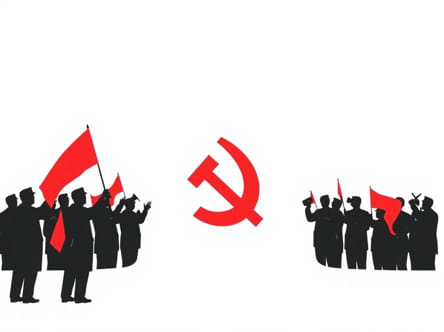
First published in 1848,The Communist Manifestoby Karl Marx and Friedrich Engels remains one of the most influential political documents in history. Written during a period of rapid industrialization and social upheaval, it sought to unite workers under a common cause and challenge the dominance of the capitalist system. The manifesto outlines the historical development of class struggle, critiques the structure of bourgeois society, and proposes a vision for a classless, stateless future. Understanding its synopsis provides insight into both its revolutionary call to action and its enduring relevance in political and economic debates.
Historical Context and Purpose
The manifesto was commissioned by the Communist League, an international political organization seeking to unite workers. It was published on the eve of the 1848 revolutions that swept across Europe, a time when the working class faced long hours, low wages, and minimal rights. Marx and Engels intended the work to be both a political statement and a strategic guide, making the language direct, urgent, and accessible.
The Call to Workers of the World
One of the most famous lines from the text, Workers of the world, unite! You have nothing to lose but your chains, captures the revolutionary spirit of the document. It was meant to inspire solidarity among workers across national borders, urging them to recognize their shared exploitation and organize collectively against the capitalist class.
Structure of The Communist Manifesto
The manifesto is divided into four main sections, each with a distinct purpose but interconnected in building its overall argument. These sections provide both a theoretical foundation and a political roadmap for revolution.
Part I Bourgeois and Proletarians
The first section explains the historical development of society through the lens of class struggle. According to Marx and Engels, all of human history has been marked by conflicts between the oppressor and the oppressed. In their contemporary time, society had evolved into two primary classes
- BourgeoisieThe capitalist class that owns the means of production, such as factories, machinery, and resources.
- ProletariatThe working class, which must sell its labor to survive and does not own the means of production.
This section describes how the bourgeoisie rose to power through industrial capitalism, transforming the economy, reshaping politics, and breaking down traditional feudal structures. However, the same process that empowered them also sowed the seeds for their downfall, as the proletariat grew in size and became increasingly aware of its collective strength.
Part II Proletarians and Communists
In the second section, Marx and Engels explain the relationship between the Communist Party and the working class. They emphasize that communists do not represent a separate interest apart from the proletariat. Instead, they serve as the most advanced and resolute segment of the working-class movement, aiming for the abolition of private property and the establishment of collective ownership of the means of production.
This section also clarifies that communism is not about abolishing personal possessions but about dismantling the capitalist system of private property that enables exploitation. Marx and Engels stress that the goal is to replace the competitive, profit-driven economy with a cooperative one where resources are used to meet human needs.
Part III Socialist and Communist Literature
The third section critically examines existing socialist and communist theories of the time. Marx and Engels categorize these into several types, including reactionary socialism, conservative or bourgeois socialism, and utopian socialism. They argue that many of these approaches fail to address the root causes of class exploitation and often attempt to reform rather than replace capitalism.
For Marx and Engels, only revolutionary socialism based on the collective action of the proletariat can bring about lasting social change. They dismiss reformist measures as insufficient for dismantling the entrenched power of the bourgeoisie.
Part IV Position of the Communists in Relation to the Various Existing Opposition Parties
The final section addresses political alliances and practical revolutionary strategy. Marx and Engels explain that communists should support all movements that challenge the existing social and political order, even if they do not share the exact same goals. However, the ultimate aim remains the same the overthrow of bourgeois supremacy and the creation of a society without class divisions.
This section closes with the rallying cry that continues to resonate in political discourse Workers of the world, unite!
Core Ideas and Principles
The manifesto presents several central ideas that define its revolutionary framework and continue to be discussed in political theory today.
- Historical MaterialismThe belief that material economic conditions, rather than abstract ideals, shape society’s structure and history.
- Class StruggleThe driving force of historical change, where one class oppresses another until revolutionary transformation occurs.
- Abolition of Private PropertyNot in the sense of personal belongings, but in ending private ownership of the means of production.
- InternationalismThe conviction that the working-class struggle must transcend national boundaries.
- Dictatorship of the ProletariatA transitional phase where the working class controls political power to dismantle the structures of capitalism.
Impact and Legacy
AlthoughThe Communist Manifestowas initially written for a small political audience, its influence spread rapidly. It became a foundational text for socialist and communist movements worldwide, inspiring revolutions, labor unions, and political parties. While interpretations have varied, its core message of challenging economic inequality remains relevant.
In the decades following its publication, parts of its vision were implemented in various socialist and communist states, though often in ways that diverged significantly from Marx and Engels’ original theory. The manifesto also influenced academic thought, contributing to sociology, political science, and economics.
Criticism and Debate
The work has been both celebrated and criticized. Supporters view it as a prophetic critique of capitalism’s inequalities and instabilities. Critics, however, argue that its revolutionary prescriptions are unrealistic or dangerous, pointing to historical examples where communist regimes became authoritarian.
Regardless of perspective, its role in shaping political discourse is undeniable. Even today, debates about wealth inequality, workers’ rights, and economic justice often echo the manifesto’s core themes.
Relevance in the Modern Era
In the 21st century, the ideas ofThe Communist Manifestocontinue to spark discussion. Economic globalization, technological automation, and the widening gap between rich and poor have renewed interest in Marxist analysis. Many see parallels between the conditions described in 1848 and current economic challenges, such as precarious labor and corporate dominance.
While some advocate for reforming capitalism rather than replacing it, others see the manifesto’s vision of collective ownership and democratic control of resources as a viable path toward a more equitable society. Its emphasis on solidarity, equality, and social justice ensures it remains a touchstone for activists and thinkers worldwide.
The synopsis ofThe Communist Manifestoreveals more than just a revolutionary pamphlet it presents a comprehensive analysis of capitalism, a blueprint for working-class unity, and a vision for a society free from exploitation. Its historical context, core principles, and enduring influence make it essential reading for understanding the history of political thought. Whether embraced or opposed, its challenge to the status quo continues to provoke reflection on how societies are structured and how they might be transformed.