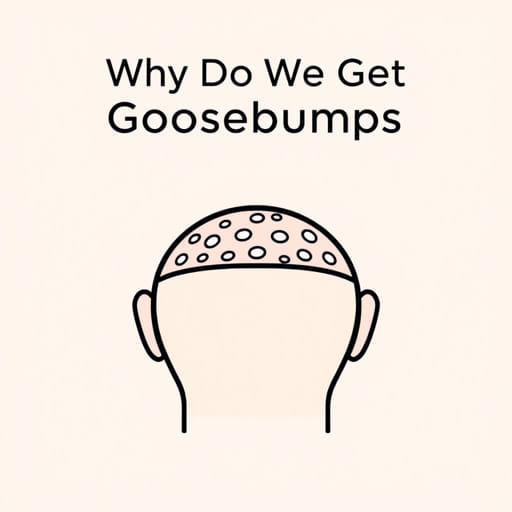
Almost everyone has experienced the sudden rise of tiny bumps on their skin known as goosebumps. They can appear when we feel cold, frightened, or even deeply moved by music or an emotional moment. Goosebumps are such a common human experience that many people hardly stop to think about why they happen. Yet, behind this simple skin reaction lies a fascinating story of biology, evolution, and psychology. Understanding why we get goosebumps provides insight into how the human body responds to different triggers and how our evolutionary past continues to shape our present-day reactions.
The Biological Mechanism Behind Goosebumps
Goosebumps, medically known as piloerection, occur when tiny muscles at the base of hair follicles, called arrector pili muscles, contract. This contraction pulls the hair upright and creates small bumps on the surface of the skin. The process is controlled by the autonomic nervous system, which manages involuntary responses in the body such as heartbeat, breathing, and digestion.
The Role of the Sympathetic Nervous System
The sympathetic nervous system is part of the body’s fight-or-flight response. When triggered, it releases adrenaline, which prepares the body for quick action. Goosebumps are one of the many automatic reactions caused by this system, alongside increased heart rate, rapid breathing, and heightened alertness.
Why Hair Stands on End
On animals with thick fur, the same reaction causes their coats to puff up. This makes them look larger to predators and also helps trap heat. For humans, who have relatively little body hair, the effect is far less dramatic. However, the biological mechanism remains, even though it no longer serves the same practical purposes it once did.
Evolutionary Reasons for Goosebumps
The evolutionary history of goosebumps explains why this reaction is still present in humans today. Our ancestors had more body hair, and piloerection played a vital role in survival.
Temperature Regulation
One of the main evolutionary functions of goosebumps is temperature control. When hairs stood on end, they trapped a layer of air close to the skin, helping to insulate the body against cold. Although modern humans no longer have dense fur, the same reflex is activated whenever we feel a chill.
A Defense Mechanism
Another purpose of goosebumps in early humans and animals was intimidation. By making the hair stand on end, an individual appeared larger and more threatening to predators or rivals. While this no longer provides much advantage to humans, the response is still triggered in moments of fear or stress.
Emotional Triggers of Goosebumps
Goosebumps are not limited to cold or fear. They also appear during intense emotional experiences, such as listening to moving music, watching a powerful scene in a movie, or recalling a deeply personal memory. These moments activate the brain’s reward system, releasing dopamine, which can trigger the piloerection response.
The Link Between Music and Goosebumps
Many people report getting goosebumps when listening to music that resonates deeply with them. Scientists believe this happens when music creates a sense of anticipation or emotional climax, releasing dopamine in the brain. This response connects physical sensations with emotional intensity.
Fear and Emotional Arousal
Goosebumps are also linked to fear responses. A scary story, a suspenseful movie, or even a sudden memory can activate the fight-or-flight system, leading to the same physical reaction as if danger were physically present. This overlap between emotional and physical triggers highlights how closely our nervous system ties emotions to body responses.
Goosebumps in Everyday Life
While goosebumps may not protect us as they once did, they continue to be part of daily life. People often notice them during situations such as
- Feeling cold in a breeze or air-conditioned room.
- Experiencing strong emotions from music, movies, or stories.
- Moments of fear or sudden fright.
- Physical arousal or excitement.
These situations demonstrate the wide range of triggers that can activate this ancient biological response.
Scientific Insights Into Goosebumps
Research into goosebumps has revealed that they are more than just a leftover evolutionary trait. Recent studies suggest that the mechanism may also play a role in maintaining healthy hair follicles. The contraction of arrector pili muscles helps stimulate stem cells in the skin, which may contribute to hair growth and skin repair.
The Brain-Skin Connection
The nervous system’s influence on the skin illustrates the close connection between the brain and body. Emotions, thoughts, and memories can directly trigger physical responses like goosebumps, showing how integrated the human experience truly is.
Individual Differences
Not everyone experiences goosebumps in the same way. Some people are more prone to getting them during emotional moments, while others rarely notice them except in the cold. Genetic, psychological, and neurological factors likely explain these differences.
Cultural and Symbolic Meanings
Across cultures, goosebumps often symbolize intense experiences. In literature, they are used to describe fear, awe, or excitement. In everyday conversation, people use the phrase gave me goosebumps to describe something emotionally powerful. This shows how a biological reflex has also become a metaphor for human emotion.
Goosebumps as a Sign of Awe
Many people associate goosebumps with awe-inspiring experiences, such as witnessing natural wonders, hearing a moving speech, or being overwhelmed by beauty. This connection suggests that goosebumps serve as a physical marker of profound emotional states.
Why Do We Still Get Goosebumps?
Given that goosebumps no longer serve their original survival purposes, some might wonder why the reflex persists. The answer lies in the way evolution works. Traits do not simply disappear when they are no longer essential. Unless a reflex actively harms survival, it tends to remain. In the case of goosebumps, the response is harmless and may even support emotional and physiological functions, so it continues to exist.
Goosebumps are a fascinating reminder of humanity’s evolutionary past and the complexity of the human body. They occur because of tiny muscle contractions in the skin triggered by the sympathetic nervous system. While their original purposes included regulating body temperature and warding off threats, they now often appear in moments of cold, fear, or emotional intensity. The persistence of goosebumps highlights how ancient survival mechanisms can evolve into responses that connect deeply with human emotions and experiences. Far from being a meaningless reflex, goosebumps reveal the powerful link between body, mind, and history.