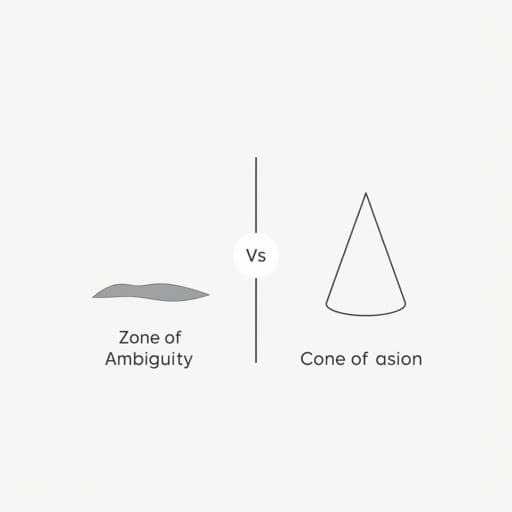
Understanding how humans localize sound is a fascinating area of study in auditory neuroscience. When we hear a sound, our brains rely on subtle differences in timing and intensity between our two ears to determine where the sound originates. However, this process is not always straightforward. Certain spatial configurations can create confusion for the auditory system, leading to phenomena known as the zone of ambiguity and the cone of confusion. These concepts are critical for understanding auditory perception, designing hearing aids, and developing 3D audio technologies. Exploring the differences between the zone of ambiguity and the cone of confusion helps clarify how humans interpret sound in complex environments.
Basics of Sound Localization
Sound localization is the process by which the brain determines the location of a sound source in three-dimensional space. This process relies primarily on two cues
- Interaural Time Difference (ITD)The slight difference in arrival time of a sound at each ear.
- Interaural Level Difference (ILD)The difference in sound intensity reaching each ear, often caused by the head casting an acoustic shadow.
These cues work together to allow humans to detect both the azimuth (horizontal angle) and elevation (vertical angle) of a sound source. While ITD and ILD are highly effective for sounds located in the horizontal plane, vertical localization and front-back discrimination present unique challenges, leading to ambiguous spatial zones.
What is the Cone of Confusion?
The cone of confusion is a concept in auditory perception describing a set of spatial points where sounds produce identical interaural time and level differences. Imagine a cone extending outward from each ear any sound located on the surface of this cone will generate the same ITD and ILD cues, making it difficult for the brain to distinguish between them based solely on binaural differences. The apex of the cone is at the ear, and the base extends outward in space.
Characteristics of the Cone of Confusion
- It arises because ITD and ILD cues alone are insufficient to uniquely localize sound sources in three dimensions.
- Sounds on the front and back sides of the head can be confused, producing similar binaural signals.
- Head movements and spectral cues from the outer ear (pinna) help resolve this ambiguity.
The cone of confusion is particularly relevant in the horizontal and vertical planes, where a sound directly in front or behind a listener may produce nearly identical ITD and ILD values. This creates the classic problem of front-back confusion in sound localization studies.
Understanding the Zone of Ambiguity
While the cone of confusion refers to specific spatial locations where binaural cues are identical, the zone of ambiguity extends this idea to a broader area where sound localization becomes uncertain. The zone of ambiguity encompasses regions in space where the auditory system struggles to distinguish between two or more potential sound sources due to overlapping cues or insufficient information. Unlike the precise geometric cone, the zone of ambiguity can vary based on the frequency of the sound, environmental acoustics, and individual anatomy.
Factors Influencing the Zone of Ambiguity
- FrequencyLow-frequency sounds rely more on ITD, while high-frequency sounds rely on ILD, affecting the size and shape of the ambiguous zone.
- ReverberationEchoes and reflections in a room can blur localization cues, enlarging the zone of ambiguity.
- Pinna EffectsIndividual differences in the shape of the outer ear affect how spectral cues contribute to resolving ambiguity.
In practice, the zone of ambiguity represents areas where the brain cannot confidently assign a sound to a single location. This uncertainty is particularly noticeable in environments with complex acoustics, such as concert halls or urban streets, where multiple reflections and overlapping sound sources are present.
Comparing Cone of Confusion and Zone of Ambiguity
Although both concepts relate to challenges in sound localization, they differ in scope and definition. The cone of confusion is a geometric construct, defining a precise set of points producing identical ITD and ILD cues. The zone of ambiguity, in contrast, is more general and refers to spatial regions where the auditory system experiences uncertainty. Key differences include
- PrecisionThe cone of confusion is a clearly defined geometric surface, while the zone of ambiguity is a broader, more variable area influenced by multiple factors.
- ResolutionHead movements, spectral cues, and visual information can help resolve the cone of confusion, whereas the zone of ambiguity may persist even with additional cues.
- ApplicationThe cone of confusion is often used in psychoacoustic research and auditory modeling, while the zone of ambiguity is relevant in practical scenarios like 3D audio design, virtual reality, and hearing aid optimization.
Illustrative Example
Consider a listener trying to locate a speaker in a large hall. If the speaker is directly behind the listener, the ITD and ILD cues are identical to a speaker placed directly in front, forming a cone of confusion. However, if the hall has multiple reflective surfaces, echoes may create overlapping cues, producing a broader zone of ambiguity where the listener cannot accurately determine the speaker’s location. Here, the cone of confusion is a subset of the zone of ambiguity, highlighting the geometric versus practical distinction.
Resolving Ambiguity
The auditory system uses several strategies to resolve both the cone of confusion and the zone of ambiguity
- Head MovementsSlight rotations of the head change ITD and ILD values, helping differentiate front from back sources.
- Pinna CuesThe outer ear modifies the frequency spectrum of incoming sounds differently depending on their elevation and azimuth, providing additional localization information.
- Visual IntegrationSeeing a sound source helps the brain resolve uncertainty in ambiguous auditory cues.
- Experience and LearningRepeated exposure to certain environments allows the brain to interpret cues more accurately over time.
These mechanisms illustrate the brain’s remarkable ability to overcome limitations in binaural sound localization and reduce the impact of ambiguity in everyday listening situations.
Applications in Technology
Understanding the cone of confusion and the zone of ambiguity has practical implications in technology
- Virtual RealityAccurate 3D audio rendering requires simulating cues that resolve the cone of confusion and reduce ambiguity for immersive experiences.
- Hearing AidsDevices can be designed to enhance directional cues, helping users localize sounds more effectively in challenging environments.
- Robotics and AIAuditory sensors in robots benefit from models that account for zones of ambiguity, improving spatial awareness.
- Acoustic EngineeringRoom design can minimize ambiguous regions and optimize sound clarity in theaters, studios, and public spaces.
The cone of confusion and the zone of ambiguity are fundamental concepts in understanding auditory spatial perception. While the cone of confusion describes precise points in space producing identical binaural cues, the zone of ambiguity represents broader regions where sound localization is uncertain. Both phenomena highlight the limitations of human hearing and the importance of additional cues, such as head movements, pinna effects, and visual information, in resolving spatial uncertainty. Insights from these concepts are crucial not only for auditory neuroscience but also for applications in virtual reality, acoustic engineering, and assistive listening devices. By studying how the brain navigates these challenges, researchers and engineers can create technologies that enhance spatial hearing and provide more immersive auditory experiences.