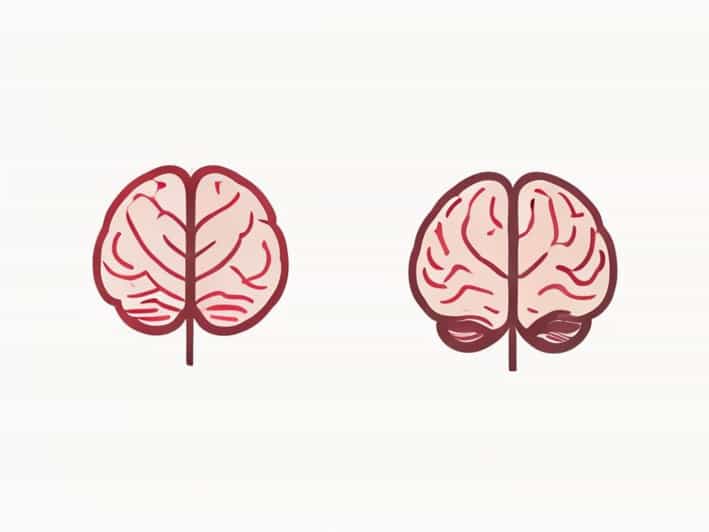
The human brain is divided into many regions that work together to shape how we think, move, feel, and perceive the world. Two important regions often discussed in neuroscience are the anterior and posterior cortices. These areas of the cerebral cortex are located toward the front and back of the brain, and each plays a unique role in cognitive processing, sensory perception, memory, and motor planning. Understanding these cortices can help clarify how brain functions are organized and how different parts of the mind contribute to behavior, decision-making, and awareness. While the brain is complex, learning about the anterior and posterior cortices offers insight into how humans interact with their environment and respond to internal experiences.
Understanding the Cerebral Cortex
The cerebral cortex is the outermost layer of the brain and is responsible for high-level processing. It is divided into several lobes, each with specialized functions, but researchers often categorize it into larger functional regions, including the anterior and posterior cortices. These regions communicate continuously, forming networks that support memory, language, movement, and emotion.
In general terms, the anterior cortex is associated with planning, decision-making, and voluntary movement, while the posterior cortex focuses more on interpreting sensory information and constructing understanding of the external world. Both are essential to daily functioning.
The Anterior Cortex
The anterior cortex is located in the front part of the brain, including areas such as the prefrontal cortex and motor-related regions. It is commonly linked to executive functions, which are the skills needed to plan, organize, and regulate behavior. This region plays a major role in determining how we act, make choices, and solve problems.
Functions of the Anterior Cortex
- Decision-making and judgment
- Emotional regulation
- Planning and organization
- Voluntary muscle movement
- Social reasoning and behavior
The anterior cortex allows individuals to pause and think rather than act on impulse. In social interactions, this region supports empathy, understanding social cues, and predicting consequences of actions. This is why it is sometimes referred to as the control center of the brain.
The Prefrontal Cortex
The prefrontal cortex, part of the anterior region, is especially important for adult reasoning skills. It develops slowly, finishing major development in early adulthood. Because of this, younger individuals may show differences in self-control or decision-making compared to older adults.
Motor Cortex
Another part of the anterior cortex is the primary motor cortex, which controls voluntary movements. When a person decides to move their hand, speak, or perform coordinated actions, the motor cortex sends signals to muscles throughout the body.
The Posterior Cortex
The posterior cortex is located in the back part of the brain and includes the parietal, temporal, and occipital lobes. This region integrates sensory information from sight, sound, touch, and spatial awareness. It helps create our understanding of the environment and supports memory and perception.
Functions of the Posterior Cortex
- Processing visual information
- Interpreting sound and language
- Spatial awareness and movement coordination
- Memory storage and retrieval
- Recognizing objects and faces
While the anterior cortex focuses on planning action, the posterior cortex helps determine what is happening around us. It answers questions such as What am I seeing? and Where is this located in space? before the anterior cortex decides how to respond.
The Occipital Lobe
The occipital lobe, part of the posterior cortex, is the primary visual processing center. It receives signals from the eyes and helps interpret shapes, colors, and depth. This region allows us to recognize objects and navigate our environment visually.
The Parietal Lobe
The parietal lobe integrates sensory information such as touch, temperature, and spatial awareness. It helps the brain build a sense of the body and its position, supporting coordination and physical interaction with objects.
The Temporal Lobe
The temporal lobe plays a key role in hearing, language comprehension, and memory formation. It supports recognizing sounds, understanding conversations, and storing long-term memories.
How the Anterior and Posterior Cortices Work Together
Although these two regions have different primary functions, they constantly interact. For example, when you see a cup (posterior cortex), decide to reach for it (anterior cortex), and then physically move your hand (motor cortex in the anterior region), both cortices are involved.
This cooperation is essential for
- Learning new skills
- Interpreting information and responding appropriately
- Maintaining balance between emotional reaction and logical reasoning
Disruption in communication between these regions may contribute to neurological or psychological conditions. For example, difficulty controlling impulses or emotions may involve reduced function in the anterior cortex. Likewise, problems with visual interpretation or memory can arise from issues in the posterior cortex.
Development and Adaptability of the Cortices
Both regions of the cortex are highly adaptable, especially early in life. Through experiences, learning, and repeated actions, neural connections strengthen. This process, known as neuroplasticity, allows the brain to reorganize and adjust to new challenges, injuries, or skills.
The anterior cortex develops more slowly, especially the prefrontal cortex. This gradual development supports the idea that reasoning, self-regulation, and planning abilities strengthen during adolescence and early adulthood.
Research and Modern Understanding
Modern neuroscience continues to explore the relationship between the anterior and posterior cortices. Advances in brain imaging technology allow researchers to observe how these regions activate during tasks. Many findings suggest that strong communication between these areas supports mental flexibility, creativity, and problem-solving.
Researchers also study disorders such as Alzheimer’s disease, attention deficit conditions, and brain injuries to better understand how changes in cortical function affect behavior and cognition.
The anterior and posterior cortices represent two major functional regions of the human brain. The anterior cortex is responsible for planning, decision-making, social reasoning, and movement control, while the posterior cortex supports sensory processing, memory, and perception of the world. Together, they allow humans to think, perceive, act, and respond in meaningful ways. Understanding their roles provides valuable insight into how the brain organizes behavior and adapts to experience. Continued study of these cortical regions not only deepens knowledge of human thought and behavior but also guides advancements in medicine, psychology, education, and cognitive science.