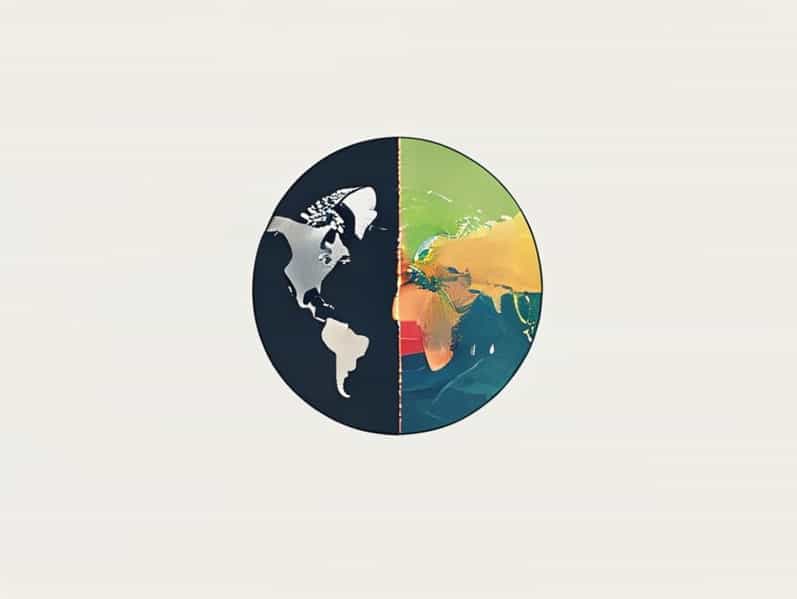
The Earth is divided into two primary hemispheres known as the Eastern and Western Hemispheres, a division that plays a crucial role in geography, navigation, and global understanding. These hemispheres are defined by the Prime Meridian and the 180th meridian, which split the world into roughly equal halves. The distinction between the Eastern and Western Hemispheres affects time zones, climate patterns, cultural development, and international relations. Understanding these hemispheres provides a foundation for exploring global geography and appreciating how human and natural systems are organized across the planet. From the distribution of continents to the spread of civilizations, the Eastern and Western Hemispheres have shaped the way humans interact with the Earth.
Defining the Eastern and Western Hemispheres
The Eastern Hemisphere primarily includes Asia, Africa, Australia, and most of Europe, while the Western Hemisphere consists of the Americas, portions of Europe and Africa, and surrounding oceans. The Prime Meridian, running through Greenwich, England, serves as the starting point for the Eastern Hemisphere, extending eastward to the 180th meridian. Conversely, the Western Hemisphere extends westward from the Prime Meridian to the same 180th meridian. This division is largely geographic, but it has significant implications for culture, trade, and geopolitics.
Geographic Features
The Eastern Hemisphere is home to the largest and most diverse continents, including Africa and Asia, which contain a variety of climates, biomes, and geographic landmarks. Deserts like the Sahara, mountains like the Himalayas, and rivers like the Nile characterize the Eastern Hemisphere’s landscape. The Western Hemisphere, on the other hand, features the Americas with extensive mountain ranges such as the Rockies and Andes, vast plains, and large river systems like the Amazon and Mississippi. Both hemispheres contain unique ecosystems and natural resources that have influenced human settlement and economic development.
Time Zones and Global Positioning
The division into Eastern and Western Hemispheres plays a critical role in timekeeping and global positioning. Time zones are calculated based on longitudinal divisions, starting from the Prime Meridian in the Eastern Hemisphere. This system allows for standardized time coordination across the globe, which is essential for international travel, business, and communication. Understanding the hemispheres helps explain why time differences exist between continents and why global coordination requires careful planning.
Impact on Navigation
Historically, the division of hemispheres was essential for navigation and exploration. Early explorers used the concepts of longitude and latitude to chart their courses across unknown territories. Navigators needed to know whether they were in the Eastern or Western Hemisphere to accurately calculate distances and map new lands. Modern GPS technology continues to rely on these geographic divisions to provide precise location data for transportation, commerce, and personal use.
Cultural and Historical Significance
The Eastern and Western Hemispheres have experienced distinct cultural and historical developments. The Eastern Hemisphere has been the cradle of some of the world’s earliest civilizations, including Mesopotamia, Egypt, India, and China. These regions contributed significantly to science, mathematics, philosophy, and governance systems. The Western Hemisphere, comprising North and South America, was shaped by indigenous civilizations like the Maya, Aztec, and Inca before European colonization introduced new cultural, political, and technological influences. Understanding these hemispheres helps contextualize global history and the spread of cultural practices.
Trade and Economy
Geographic hemispheres also influence global trade and economic relationships. The Eastern Hemisphere includes major economic powers like China, Japan, and India, while the Western Hemisphere hosts large economies such as the United States and Brazil. Trade routes historically developed along the hemispheric division, connecting continents through maritime and land networks. Today, hemispheric understanding remains important for international business, logistics, and global market strategies.
Climate and Environmental Patterns
The division between the Eastern and Western Hemispheres affects climate and environmental patterns as well. The Eastern Hemisphere experiences a wide range of climates from tropical regions near the equator to temperate and polar regions. Africa and Asia, for instance, exhibit deserts, rainforests, and tundra. In the Western Hemisphere, climates range from the tropical rainforests of the Amazon to the arid deserts of North America and the polar regions of Canada and Greenland. Ocean currents, wind patterns, and seasonal variations are also influenced by hemispheric positioning, affecting agriculture, wildlife, and human activity.
Natural Disasters and Risk Management
Understanding which hemisphere a region belongs to is critical for managing natural disasters. Hurricanes, typhoons, earthquakes, and volcanic eruptions are distributed differently across hemispheres. For example, typhoons are common in the Eastern Hemisphere, particularly in Southeast Asia, while hurricanes frequently affect the Western Hemisphere, especially in the Caribbean and the Gulf of Mexico. Disaster preparedness and international aid efforts rely on geographic knowledge to plan responses and mitigate risks effectively.
Educational and Scientific Applications
The concept of Eastern and Western Hemispheres is fundamental in education, geography, and earth sciences. Students learn to identify continents, oceans, and major geographic landmarks within each hemisphere. Scientific studies, including environmental research, astronomy, and meteorology, use hemispheric divisions to analyze data, track climate trends, and understand global patterns. The hemispheres also help explain phenomena such as the Coriolis effect, which influences wind and ocean currents differently in the two halves of the globe.
Hemispheres in Astronomy
In astronomy, the division of hemispheres assists in locating celestial bodies. Observatories in the Eastern Hemisphere monitor different portions of the sky compared to those in the Western Hemisphere. This global cooperation allows scientists to track stars, planets, and other celestial events efficiently. Understanding hemispheric positions is essential for accurate observation, navigation, and space exploration.
The division of the Earth into Eastern and Western Hemispheres is more than a geographic convenience; it shapes human understanding of culture, history, climate, and global interactions. From early exploration to modern GPS navigation, from ancient civilizations to contemporary trade networks, the concept of hemispheres influences nearly every aspect of life on Earth. By studying the Eastern and Western Hemispheres, we gain insight into the distribution of natural resources, environmental patterns, and cultural heritage, enhancing our comprehension of the planet as a complex, interconnected system. Appreciating these hemispheric divisions allows us to navigate the world more effectively, respect its diversity, and understand the shared challenges and opportunities that unite humanity across the globe.