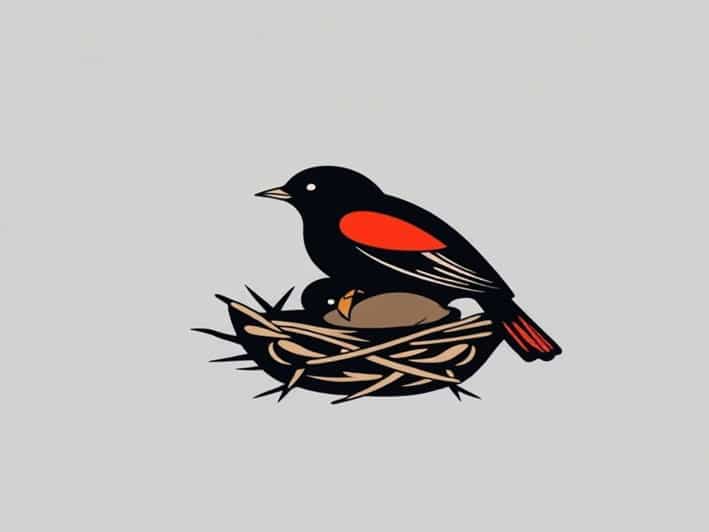
The red-winged blackbird is one of the most recognizable and widespread birds in North America, known for its striking black plumage accented with vibrant red and yellow shoulder patches. While adult birds are often admired for their bold displays and melodic calls, their nestlings represent a delicate and fascinating stage of life that many bird enthusiasts and ornithologists study closely. Observing red-winged blackbird nestlings provides insight into the species’ growth, parental care, and early development, revealing the complex behaviors and environmental interactions that ensure their survival. These young birds, though small and vulnerable, play a critical role in understanding the lifecycle of one of North America’s most iconic songbirds.
Appearance and Identification of Nestlings
Red-winged blackbird nestlings are visually distinct from their parents, lacking the vivid red shoulder patches and glossy black feathers. Instead, they display soft, downy plumage in shades of gray and brown, providing camouflage against predators while they remain in the nest. Their beaks are slightly disproportionate compared to their body size, a characteristic common among altricial bird species, which are born relatively undeveloped and reliant on parental care. Identifying these nestlings requires attention to subtle features such as gape color, eye size, and feather patterns, which gradually change as they grow.
Growth and Development
From hatching to fledging, red-winged blackbird nestlings undergo rapid development. Initially, they are entirely dependent on their parents for food, warmth, and protection. During the first week, the nestlings’ growth is remarkable, with feathers beginning to emerge and their body size increasing substantially. By the second week, wing and tail feathers develop more fully, preparing them for eventual flight. Throughout this period, the nestlings’ vocalizations become more pronounced, signaling hunger or distress to their attentive parents. Understanding these developmental stages is essential for both scientific study and responsible wildlife observation.
Red-Winged Blackbird Nesting Habits
Red-winged blackbirds are known for their distinctive nesting behaviors. The female typically builds a cup-shaped nest using grasses, reeds, and other plant materials, often positioning it in dense vegetation near water sources such as marshes, ponds, or riverbanks. This strategic placement provides concealment from predators and easy access to abundant food sources. Nestlings remain in the nest for approximately 10 to 14 days after hatching, during which they grow rapidly and learn essential survival skills from parental care. The nest’s design and location play a critical role in ensuring the young birds’ safety and successful development.
Parental Care
Both parents play a role in ensuring the survival of the nestlings, though the female primarily incubates the eggs and feeds the young. Adult red-winged blackbirds bring a steady supply of insects, spiders, and seeds to the nestlings, providing the necessary nutrients for rapid growth. The male’s role often involves defending the territory and warning against potential threats. This cooperative care ensures that the nestlings are fed consistently and protected until they are ready to leave the nest. Observing these interactions highlights the complex social behaviors and instincts that support the next generation of birds.
Fledging and Learning to Fly
The fledging stage is a critical period for red-winged blackbird nestlings. As they approach two weeks of age, they begin to practice wing movements and prepare for their first flight. Fledglings are often clumsy and vulnerable at this stage, requiring continued parental guidance. The parents may encourage exploration while keeping a watchful eye for predators. This period is essential for developing coordination, flight strength, and foraging skills, which will be crucial for survival once the young birds leave the nest. Understanding the fledging process provides insight into the challenges these birds face in their early life.
Survival Challenges
Red-winged blackbird nestlings face numerous survival challenges. Predators such as snakes, raccoons, and larger birds pose a significant threat, particularly while the nestlings are still in the nest. Weather conditions, including heavy rain or cold temperatures, can also impact survival rates. Additionally, human activity near nesting sites may disturb the parents and reduce the care provided to young birds. Researchers often study these factors to understand population dynamics and to implement conservation strategies that protect both nestlings and adult birds.
Behavioral Observations
Behavioral studies of red-winged blackbird nestlings reveal intriguing patterns. Nestlings display begging behaviors that include loud calls, gaping beaks, and stretching, which stimulate parents to feed them. These behaviors are not random but are adaptive strategies that maximize the chances of receiving sufficient nourishment. Observing these interactions can also provide insight into the developmental milestones of the species, including growth rates, feather development, and responses to environmental stimuli. Such knowledge contributes to a greater understanding of avian biology and ecology.
Human Interaction and Ethical Considerations
While observing red-winged blackbird nestlings can be educational and rewarding, it is essential to maintain ethical practices. Disturbing nests or handling young birds can have negative consequences, including abandonment or increased vulnerability to predators. Birdwatchers and researchers are encouraged to observe from a distance, use binoculars, and avoid touching nestlings. By respecting the natural behaviors and habitats of these birds, humans can enjoy the study of nestlings without jeopardizing their survival.
Ecological Role of Nestlings
Red-winged blackbird nestlings play a vital role in their ecosystems. As they grow, they help maintain insect populations by consuming insects provided by their parents. Once fledged, they contribute to seed dispersal and become prey for higher predators, thereby supporting the ecological balance. Studying nestlings also allows scientists to monitor population health, reproductive success, and the effects of environmental changes on the species. This understanding is crucial for ensuring the long-term conservation of red-winged blackbirds and the habitats they depend upon.
Conservation Efforts
Conservation efforts for red-winged blackbirds focus on preserving wetland habitats and minimizing disturbances during the breeding season. Protecting nesting areas ensures that nestlings can grow and develop in safe environments. Environmental organizations may conduct surveys, habitat restoration, and educational programs to raise awareness about the importance of wetlands and the species that inhabit them. By supporting these efforts, communities contribute to the survival of red-winged blackbirds and the ecological health of their ecosystems.
The red-winged blackbird nestling represents a critical and captivating stage in the life of this widespread North American bird. From their delicate appearance and rapid growth to the complex parental care and fledging process, nestlings offer insight into avian development and ecological dynamics. Observing these young birds helps researchers, birdwatchers, and conservationists understand the species’ behavior, challenges, and survival strategies. By studying and protecting red-winged blackbird nestlings, we gain a deeper appreciation for the intricate web of life in wetland ecosystems and the role that each generation plays in maintaining biodiversity and ecological balance.