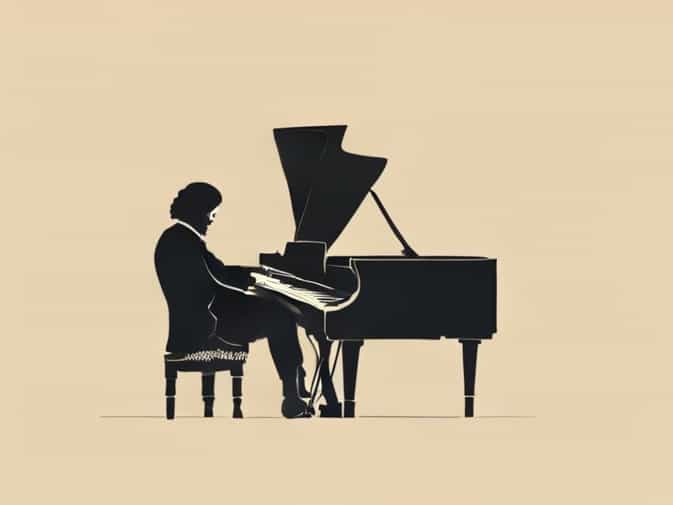
Ludwig van Beethoven is widely celebrated as one of the greatest composers in history, but many often wonder about his skills as a pianist. Born in Bonn, Germany, in 1770, Beethoven displayed extraordinary musical talent from a young age, quickly gaining recognition not only for his compositions but also for his exceptional ability to play the piano. His performances were renowned for their technical mastery, emotional depth, and dynamic expression, making him one of the most influential pianist-composers of the classical and early romantic eras. Understanding Beethoven’s piano skills provides insight into his compositional genius and the way he transformed the piano into a vehicle for profound musical expression.
Early Musical Training
Beethoven’s journey as a pianist began in his childhood. His father, Johann van Beethoven, recognized his son’s talent and took on the role of his first teacher, although his teaching methods were often strict and demanding. Beyond his father’s instruction, Beethoven studied with several prominent musicians in Bonn, including Christian Gottlob Neefe, who introduced him to the works of composers like Bach and Mozart. This early training laid the foundation for Beethoven’s technical prowess and deep understanding of piano composition, allowing him to develop a highly expressive and virtuosic performance style that would later define his career.
Beethoven as a Young Pianist
By his teenage years, Beethoven was already performing publicly and gaining recognition for his piano skills. He impressed audiences with his ability to execute complex passages with precision and musicality, often improvising with creativity and flair. His reputation as a pianist led him to Vienna in his early twenties, a city renowned for its musical culture and home to some of the most respected musicians of the time. There, Beethoven would not only establish himself as a pianist but also as a composer, building a career that combined both disciplines.
Professional Career as a Pianist
In Vienna, Beethoven’s piano performances drew widespread acclaim. His concerts showcased both his technical skill and interpretive depth, captivating audiences with innovative renditions of classical works and his own compositions. Beethoven’s pianistic abilities were so impressive that he earned invitations to perform for royalty and prominent patrons. His performances often included improvisation, a common practice of the era, allowing him to display his creativity and connect emotionally with listeners. This dual role as composer and performer elevated the piano to a new level, inspiring future generations of pianists and composers alike.
Piano Composition and Performance
Beethoven’s piano compositions reflect his intimate understanding of the instrument. His sonatas, such as the Moonlight Sonata, Appassionata, and Waldstein, remain landmarks of piano literature, combining technical challenges with expressive storytelling. These works demonstrate his mastery of dynamics, articulation, and phrasing, aspects he understood deeply through personal performance experience. The virtuosic nature of many of his pieces indicates that Beethoven composed with a performer’s perspective in mind, often pushing the boundaries of what the piano could achieve in terms of range, power, and emotional impact.
The Role of Improvisation
Improvisation was a central part of Beethoven’s identity as a pianist. Unlike many composers of his time who relied solely on written music, Beethoven excelled at creating spontaneous musical ideas during performances. Audiences admired his ability to take a simple theme and transform it into elaborate variations on the spot, demonstrating both creativity and technical skill. This talent as an improviser not only enhanced his reputation as a pianist but also informed his compositional process, influencing the inventive structures and dramatic contrasts evident in his piano works.
Technical Mastery and Expression
- Finger DexterityBeethoven developed remarkable control over the keyboard, allowing him to execute fast runs, trills, and intricate passages with clarity.
- Dynamic RangeHis performances showcased extreme contrasts in volume, from delicate pianissimo to powerful fortissimo, adding emotional intensity to his music.
- Expressive TimingBeethoven employed rubato and flexible pacing to heighten dramatic effect, a hallmark of his interpretive style.
- Pedaling TechniquesAdvanced use of the damper pedal allowed him to create resonance and sustain, enhancing the expressive possibilities of the piano.
Challenges and Triumphs
Despite his extraordinary talent, Beethoven faced significant challenges, most notably his gradual hearing loss. Beginning in his late twenties, his hearing impairment worsened, eventually leaving him almost completely deaf. Remarkably, he continued to compose and even perform piano pieces with remarkable clarity and emotion. Though his public performances became limited due to deafness, his understanding of the piano and music allowed him to maintain a level of artistry and innovation that few could match. Beethoven’s resilience as a pianist and composer under such circumstances remains a testament to his genius and determination.
Legacy as a Pianist
Beethoven’s impact as a pianist is inseparable from his legacy as a composer. He transformed the piano repertoire, introducing new technical demands, expressive possibilities, and structural innovations. Pianists today study his works not only to master technical challenges but also to explore interpretive depth. Beethoven’s approach to phrasing, dynamics, and emotional expression continues to influence performers and teachers, making him an enduring figure in the world of piano performance.
Ludwig van Beethoven was indeed a pianist, renowned for his technical skill, improvisational brilliance, and interpretive depth. His experiences as a performer informed his compositions, resulting in some of the most celebrated piano music in history. From his early performances in Bonn to his triumphs in Vienna, Beethoven’s pianistic abilities were central to his identity and artistic legacy. Despite challenges like progressive hearing loss, his mastery of the piano and innovative compositions left an indelible mark on the music world, influencing countless pianists and composers for generations. Understanding Beethoven as a pianist enriches appreciation of his genius and highlights the inseparable link between his performance skills and compositional achievements.