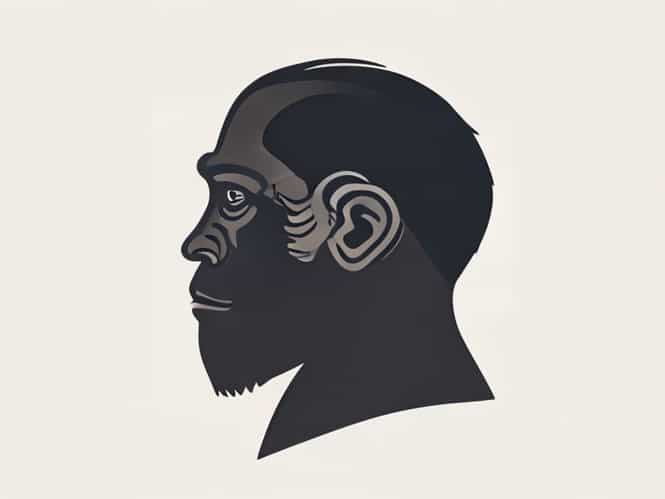
Australopithecus afarensis is one of the most well-known and significant early human ancestors, playing a crucial role in understanding human evolution. Living approximately between 3.9 and 2.9 million years ago in East Africa, particularly in regions that are now Ethiopia, Kenya, and Tanzania, this species provides invaluable insights into the transition from tree-dwelling primates to bipedal hominins. Fossil discoveries of Australopithecus afarensis, including the famous specimen known as Lucy, have helped scientists reconstruct their physical characteristics, behaviors, and environment, shedding light on how early humans adapted to changing climates and landscapes. This species bridges the gap between more primitive australopithecines and the later Homo genus, making it a cornerstone in the study of human ancestry.
Physical Characteristics of Australopithecus afarensis
Australopithecus afarensis exhibited a combination of both ape-like and human-like traits, reflecting its transitional evolutionary status. They were relatively small in stature, with adult males averaging around 4 feet 10 inches to 5 feet 5 inches in height and weighing between 88 to 110 pounds, while females were generally smaller. The skulls of Australopithecus afarensis were relatively small, with a brain size averaging about 375 to 550 cubic centimeters, roughly one-third the size of a modern human brain. Despite their smaller cranial capacity, their facial features showed adaptations for survival in their environment, including a pronounced jaw, large molars, and a flat nose.
Bipedalism and Locomotion
One of the defining characteristics of Australopithecus afarensis is their ability to walk upright on two legs. Fossil evidence, particularly the structure of their pelvis, leg bones, and footprints found at Laetoli in Tanzania, demonstrates that they were habitual bipeds. However, their arms were relatively long compared to modern humans, suggesting that they still retained the ability to climb trees efficiently. This dual adaptation allowed them to navigate both open savannas and forested areas, giving them a versatile advantage in finding food and avoiding predators.
Diet and Feeding Habits
The diet of Australopithecus afarensis was diverse and opportunistic, reflecting their adaptability to different environments. Analysis of dental wear patterns and isotopic data suggests that they primarily consumed a combination of fruits, leaves, seeds, and possibly tubers and nuts. The large molars and thick enamel were well-suited for grinding tough plant materials, while evidence also suggests they may have occasionally consumed small animals or insects. This flexible diet helped them survive in fluctuating climates and changing landscapes, an important factor in their evolutionary success.
Fossil Discoveries and Key Specimens
Australopithecus afarensis has been extensively studied due to several well-preserved fossil finds. The most famous specimen is Lucy, discovered in 1974 in the Afar region of Ethiopia by paleoanthropologist Donald Johanson. Lucy’s skeleton, about 40% complete, provided groundbreaking evidence of bipedalism in early hominins. Other significant discoveries include the Dikika child, a nearly complete juvenile skeleton, which offered insights into growth patterns and development, and the Laetoli footprints, preserved in volcanic ash, which demonstrated that these hominins walked upright long before the appearance of the genus Homo.
Importance of the Laetoli Footprints
The Laetoli footprints, dated to approximately 3.6 million years ago, are one of the most compelling pieces of evidence for bipedal locomotion in Australopithecus afarensis. These footprints, made by at least two individuals walking side by side, show a modern human-like gait with arches in the feet and a heel-to-toe stride. The footprints also provide clues about group behavior, suggesting that Australopithecus afarensis may have traveled in small social groups for protection and foraging purposes.
Behavior and Social Structure
While direct evidence of social behavior is limited, inferences can be made from fossil sites and comparative studies with modern primates. Australopithecus afarensis likely lived in small social groups, similar to chimpanzees or baboons, which would have provided protection against predators and facilitated cooperative foraging. Sexual dimorphism, indicated by size differences between males and females, suggests possible dominance hierarchies within groups. Their relatively small brain size implies that complex social interactions were limited, but tool use and communication through gestures were plausible.
Reproduction and Growth
Studies of juvenile fossils, such as the Dikika child, indicate that Australopithecus afarensis experienced a slower growth rate than modern apes but faster than modern humans. This intermediate pattern suggests that they had a prolonged childhood, which may have been important for learning social behaviors and survival skills. Reproductive strategies likely involved close mother-infant bonds, with extended periods of care for each offspring to increase survival rates in a challenging environment.
Habitat and Environmental Adaptation
Australopithecus afarensis inhabited a range of environments, from open savannas to wooded areas. Fossil evidence, including the types of plants and animals found at excavation sites, indicates that they were highly adaptable and capable of exploiting diverse ecological niches. Their bipedalism allowed them to travel efficiently across long distances in search of food, water, and shelter. The mixed features of tree-climbing and ground-walking suggest that they could evade predators by retreating into trees while still efficiently foraging on the ground.
Significance in Human Evolution
Australopithecus afarensis is crucial for understanding the evolutionary path leading to modern humans. Their adaptations to bipedalism mark a significant step in the divergence from other primates. The species bridges the gap between earlier, more ape-like australopithecines and the later Homo species, highlighting the evolutionary changes in locomotion, brain development, and social behavior. By studying Australopithecus afarensis, scientists gain insight into the selective pressures that shaped the human lineage and the origins of behaviors that define our species today.
Australopithecus afarensis stands as one of the most important species in the study of human evolution. From their small stature and ape-like features to their ability to walk upright, they embody a key stage in the transition from tree-dwelling primates to fully bipedal humans. Fossils like Lucy, the Dikika child, and the Laetoli footprints provide a window into their lives, illustrating their adaptability, social structure, and environmental strategies. Understanding Australopithecus afarensis not only illuminates the story of our distant ancestors but also emphasizes the remarkable evolutionary journey that eventually led to the emergence of Homo sapiens. The study of this species continues to inspire research and curiosity, reminding us of the deep roots and complex history of human development.