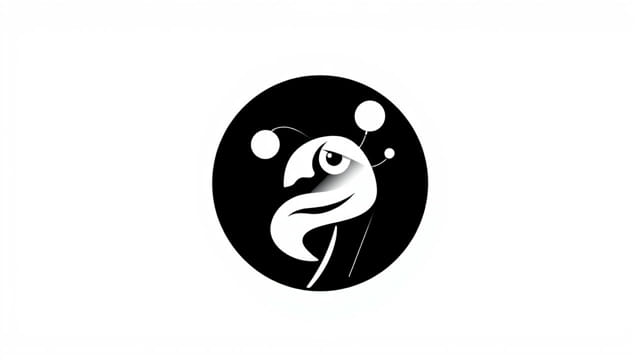
In the history of modern art, few figures stand out as vividly as Hans Arp, the German-French artist who made significant contributions to both the Dada and Surrealist movements. Known for his playful spirit, organic forms, and commitment to abstraction, Arp’s work bridged chaos and harmony. His art challenged traditional notions of aesthetics and narrative, and continues to inspire contemporary artists around the world. Born in Strasbourg, Arp’s multilingual and multicultural background shaped his creative identity, allowing him to fluidly shift between media, styles, and artistic philosophies.
Early Life and Background of Hans Arp
Origins in Strasbourg
Hans Arp, also known as Jean Arp in French-speaking circles, was born on September 16, 1886, in Strasbourg, a city that changed national allegiance between Germany and France multiple times. This dual heritage influenced Arp’s open, non-linear approach to language and culture. He studied art in Strasbourg, Weimar, and Paris, eventually integrating into the thriving avant-garde communities of early 20th-century Europe.
Influences and Artistic Development
Before his involvement with Dadaism, Arp was influenced by Symbolism and the decorative styles of Art Nouveau. His early drawings and poems reveal a sensitivity to both visual rhythm and poetic metaphor. He became increasingly drawn to abstraction and embraced a multidisciplinary approach, working in sculpture, painting, poetry, and collage.
Dada Movement and Hans Arp’s Role
Origins of Dada
The Dada movement began in Zurich, Switzerland, during World War I. It emerged as a reaction to the brutality of the war and the perceived failure of traditional values and institutions. Dada was anarchic, irrational, and experimental. Artists used nonsense, chance, and absurdity as tools of disruption and critique.
Arp’s Contribution to Dada
Hans Arp was a central figure in the Zurich Dada group, alongside Hugo Ball, Tristan Tzara, and others. He introduced the idea of chance operations in art, using random processes to create compositions that challenged rationality and control. One famous example is his Collage with Squares Arranged According to the Laws of Chance, a piece in which Arp dropped colored squares onto paper and glued them where they landed.
- Emphasized chance over logic
- Rejected traditional techniques
- Blended poetry and visual art
- Helped shape Dada exhibitions in Zurich and beyond
Transition to Surrealism
Exploring Dreams and the Subconscious
By the early 1920s, many Dadaists began to shift their focus toward Surrealism, a movement influenced by Sigmund Freud’s theories of the unconscious mind. While Arp never fully aligned himself with any one group, he participated in Surrealist exhibitions and shared many of the movement’s goals. His work retained an element of spontaneity but evolved into a more biomorphic, fluid visual language.
Visual Style and Surrealist Themes
Hans Arp’s sculptures and paintings often featured abstract, organic shapes that resembled forms found in nature seeds, shells, clouds, and human figures yet they defied categorization. He believed that art should emerge naturally, like a plant growing from the earth. This philosophy reflected Surrealism’s emphasis on unlocking creativity from within the subconscious rather than imposing it through reason.
Key Works by Hans Arp
Notable Artworks
- Collage with Squares Arranged According to the Laws of Chance (191617): A revolutionary work that discarded traditional composition.
- Human Concretion (1935): A smooth, biomorphic sculpture that reflects Arp’s organic aesthetic.
- Constellation According to the Laws of Chance (1930): A series of wooden reliefs exploring randomness and form.
Poetry and Writings
Hans Arp was also an accomplished poet. His writings often played with language, rhythm, and surreal imagery. He believed poetry, like visual art, could transcend conventional meaning and tap into something more primal and intuitive. His work in both German and French illustrates his flexibility with language and symbolism.
Philosophy and Artistic Vision
Rejection of Rationality
Arp rejected the rigid structures of academic art and embraced intuition and nature. He viewed the artist not as a master but as a collaborator with materials, chance, and environment. His preference for organic shapes and natural growth patterns was a conscious opposition to the geometric precision of other modernist movements like Constructivism.
Art as Living Form
Rather than seeking to represent reality, Arp aimed to generate forms that echoed the rhythms of life. He believed that form should emerge as naturally as a tree grows or a river flows. His smooth, curving sculptures suggest constant motion and transformation, resonating with the natural world’s ongoing evolution.
Legacy and Influence
Impact on Modern Art
Hans Arp’s influence extends well beyond Dada and Surrealism. His embrace of abstraction, his innovative use of chance, and his belief in organic form inspired numerous art movements, including Abstract Expressionism, Minimalism, and Conceptual Art. Artists like Jean Dubuffet, Barbara Hepworth, and Isamu Noguchi cited Arp’s work as a major influence.
Museums and Collections
Arp’s works are held in major institutions around the world, including:
- The Museum of Modern Art, New York
- The Tate Modern, London
- The Pompidou Center, Paris
- The Arp Museum in Rolandseck, Germany
Later Years and Death
Continued Creativity
Hans Arp remained creatively active throughout his life. In the postwar period, he continued to produce poetry, sculpture, and collage. His late works, while retaining the organic elegance of earlier pieces, gained a greater serenity and formal refinement.
Death and Posthumous Recognition
Hans Arp died on June 7, 1966, in Basel, Switzerland. Since then, retrospectives and academic studies have deepened appreciation for his multidisciplinary contributions. His legacy remains vital in discussions of both Dada and Surrealist art, as well as in broader conversations about abstraction and modernism.
Hans Arp was a visionary artist who transcended boundaries of nation, language, medium, and movement. As a German Dadaist and Surrealist, he introduced radical ideas that forever changed the landscape of modern art. His dedication to chance, nature, and poetic expression resonates as strongly today as it did a century ago. Whether viewed through his playful collages or his sinuous sculptures, Arp’s art invites viewers to see the world not as fixed and orderly, but as a dance of forms fluid, spontaneous, and alive. In doing so, he reminds us that beauty can arise from unpredictability and that imagination is a force of nature in itself.