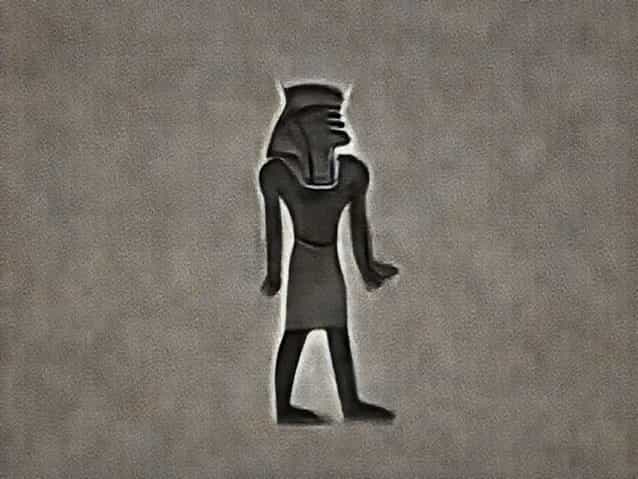
The discovery and study of Egyptian hieroglyphs in Australia has sparked curiosity among historians, archaeologists, and enthusiasts alike. While Egypt is thousands of miles away, some researchers have suggested that symbols resembling Egyptian hieroglyphs appear on certain ancient rock carvings, artifacts, or illustrations in remote parts of Australia. These claims have led to discussions about possible cultural exchange, migration theories, or symbolic coincidences. Whether as part of legitimate historical inquiry or speculative theories, the idea of Egyptian hieroglyphs in Australia offers a fascinating lens through which to explore ancient civilizations, symbolism, and human creativity across continents.
Understanding Egyptian Hieroglyphs
Egyptian hieroglyphs are a system of writing used in ancient Egypt, consisting of pictorial symbols that convey sounds, words, or concepts. Developed over 5,000 years ago, hieroglyphs were used primarily for monumental inscriptions, religious texts, and administrative records. Their complexity and beauty have fascinated scholars for centuries, and the Rosetta Stone played a crucial role in deciphering their meaning in the 19th century. Understanding hieroglyphs involves recognizing the different types of symbols, including phonograms, ideograms, and determinatives.
Key Features of Hieroglyphs
- Pictorial symbols representing sounds, objects, or concepts.
- Combination of phonetic and ideographic writing systems.
- Used in temples, tombs, and official inscriptions.
- Rich symbolism associated with religious, cultural, and political contexts.
- Deciphered through comparative studies and key artifacts like the Rosetta Stone.
Claims of Egyptian Hieroglyphs in Australia
Some researchers and enthusiasts have pointed to rock carvings, petroglyphs, and unusual symbols found in remote areas of Australia as resembling Egyptian hieroglyphs. Locations such as the Kimberley region and certain desert sites have been examined for these carvings. While mainstream archaeology typically attributes these symbols to indigenous Australian art and storytelling, some fringe theories suggest possible ancient connections between Egypt and Australia. These claims, however, are widely debated and often criticized due to lack of concrete evidence.
Examples and Interpretations
- Rock carvings resembling animals, humans, or geometric shapes that some interpret as hieroglyphic symbols.
- Artifacts with markings that appear to echo Egyptian iconography.
- Stories and oral traditions from local communities that are compared to Egyptian myths.
- Speculative theories proposing ancient seafaring or cultural exchanges between continents.
- Photographs and sketches circulated in books, documentaries, and online forums.
Scientific Perspective and Criticism
From a scientific and archaeological standpoint, claims of Egyptian hieroglyphs in Australia are met with skepticism. Most experts argue that similarities between Australian rock art and Egyptian symbols are coincidental or result from common human tendencies in symbolic representation. Indigenous Australian art has a rich history spanning tens of thousands of years, with its own cultural significance, styles, and meanings. Scholars emphasize the importance of understanding these symbols within the context of Aboriginal culture rather than imposing external interpretations.
Critical Considerations
- Indigenous Australian rock art has distinct styles and symbolic systems.
- Coincidental resemblance does not imply historical connection.
- No archaeological evidence supports direct contact between ancient Egyptians and Australia.
- Research must respect indigenous knowledge and oral histories.
- Misinterpretation can undermine the value of local cultural heritage.
Exploring Ancient Connections Theories
Despite the skepticism, some theorists explore possible ancient connections between Egypt and distant lands like Australia. These hypotheses often involve long-distance sea travel, lost civilizations, or diffusion of symbolic systems. While compelling as speculative thought experiments, these theories remain largely unsupported by empirical evidence. Nevertheless, they spark imagination and encourage interdisciplinary exploration in history, archaeology, and anthropology, highlighting humanity’s enduring fascination with tracing connections across time and geography.
Theoretical Approaches
- Diffusionist theories proposing cultural exchange across oceans.
- Speculations about ancient maritime capabilities enabling long-distance travel.
- Comparative analysis of symbols to explore potential shared meanings.
- Integration of mythology, folklore, and symbolic interpretation.
- Encouraging dialogue between mainstream archaeology and alternative theories.
Preservation and Study of Rock Art
Regardless of external influences, the study and preservation of Australian rock art is a crucial endeavor. Indigenous rock art offers insight into thousands of years of human history, spirituality, and environmental adaptation. Researchers use techniques like 3D imaging, pigment analysis, and dating methods to document and understand these artworks. Protecting these sites ensures that cultural heritage is maintained, while responsible study prevents the spread of unverified claims or misinterpretations.
Methods for Preservation
- Digital documentation using photography and 3D scanning.
- Pigment analysis to understand materials and techniques.
- Dating methods to establish age and historical context.
- Collaboration with indigenous communities for accurate interpretation.
- Legal protection and conservation measures to prevent damage or vandalism.
The idea of Egyptian hieroglyphs in Australia remains a topic of intrigue, blending history, archaeology, and speculative thought. While mainstream science attributes symbolic similarities to coincidence and the rich tradition of Aboriginal art, the discussion highlights humanity’s fascination with ancient civilizations and symbolic expression. Whether through rigorous research or imaginative exploration, examining these symbols encourages appreciation of cultural heritage, critical thinking, and respect for the artistry and history of indigenous Australians. The ongoing dialogue between evidence-based scholarship and speculative interpretation ensures that the story of human creativity and cross-cultural curiosity continues to captivate audiences around the world.