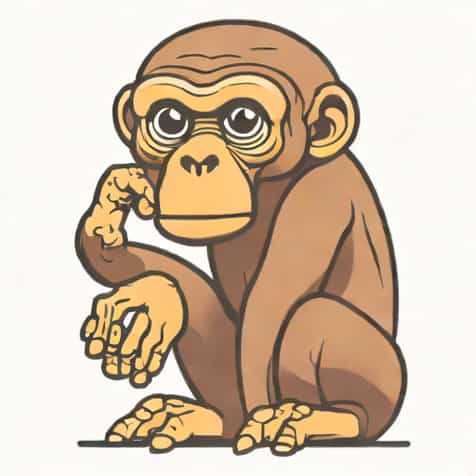
Australopithecus is one of the most fascinating genera in the study of human evolution, offering a window into the early stages of our ancestral development. When people ask what we know about Australopithecus, the answer spans anatomy, behavior, habitat, and the fossil discoveries that changed our understanding of how humans evolved. Although these early hominins lived millions of years ago, the clues they left behind help scientists trace major steps such as bipedal walking, changes in diet, and the development of more complex social behaviors.
Understanding Australopithecus in Human Evolution
A Key Genus in the Hominin Family
Australopithecus refers to a group of early hominins who lived between about 4 million and 2 million years ago. They are not modern humans, nor are they apes, but they share features with both. Their fossils have been found mainly in East Africa and South Africa, making these regions central to the story of early human evolution. Scientists believe Australopithecus represents a transitional stage between earlier ape-like ancestors and later Homo species.
One of the most important features of Australopithecus is its ability to walk upright, or bipedalism. This adaptation distinguishes hominins from other primates and marks a major evolutionary shift. Understanding how and why Australopithecus walked on two legs helps scientists piece together how traits like tool use and larger brains evolved later.
Different Species of Australopithecus
The genus includes several species, each with unique characteristics
-
Australopithecus afarensis– The species of the famous fossil Lucy, known for its small brain but effective bipedal movement.
-
Australopithecus africanus– Discovered in South Africa, it had a slightly larger brain and a more rounded skull.
-
Australopithecus anamensis– One of the oldest known species, showing early signs of upright walking.
-
Australopithecus sediba– A more recent discovery that shows features bridging Australopithecus and early Homo.
Each species contributes important evidence that helps fill gaps in the evolutionary timeline and shows the diversity that existed within early hominins.
Anatomy and Physical Features
Body Structure and Bipedalism
One of the most studied aspects of Australopithecus is the structure of its body. Fossils show a mix of human-like and ape-like traits. The pelvis, spine, and leg bones suggest that Australopithecus walked upright on two legs. This ability likely helped them travel longer distances, reach food in open environments, and free their hands for gathering items.
However, their arms were long compared to their legs, indicating that they still climbed trees frequently. This combination suggests that Australopithecus lived in mixed environments, navigating between forested areas and open grasslands. Their skeletal structure shows that early human ancestors did not rely solely on ground movement but maintained flexibility in their daily survival strategies.
Skull and Brain Size
The skull shape of Australopithecus reveals a great deal about its capabilities. While the face projected forward more than that of modern humans, the teeth and jaws were adapted for a varied diet that included tough vegetation. Their brains were small, averaging between 400 and 500 cubic centimeters-larger than chimpanzees but much smaller than humans.
This information helps scientists understand the gradual increase in brain size that occurred over millions of years. The development of larger brains in later hominins was linked to more complex behavior, but Australopithecus represents an earlier stage where physical adaptation was more important for survival.
Behavior and Lifestyle
Diet and Food Sources
Australopithecus likely had an omnivorous diet, although plant-based foods made up a large portion of what they ate. Studies of their teeth and jawbones show they could chew tough roots, nuts, and fibrous plants. Some evidence also suggests they may have eaten fruit, seeds, and small amounts of animal protein.
The variety in their diet shows how adaptable these early hominins were, a trait that likely helped them survive in environments that changed due to climate shifts. This flexibility also hints at why Australopithecus played such an important role in the evolutionary path leading to modern humans.
Tools and Cultural Behavior
Most scientists agree that Australopithecus did not create advanced tools. However, some species may have used natural objects such as sticks or stones for simple tasks like digging or cracking seeds. Although these behaviors do not leave clear fossil evidence, they help explain how early hominins might have interacted with their surroundings.
More complex tool use appears later in the Homo genus, but the foundations for problem-solving and environmental adaptation may have existed much earlier. This makes Australopithecus an important starting point for studying cognitive evolution.
Fossil Discoveries and Their Importance
The Discovery of Lucy
One of the most famous fossils in the world is Lucy, an Australopithecus afarensis specimen discovered in 1974 in Ethiopia. Her skeleton is about 40 percent complete, which is extraordinary for a hominin fossil. Lucy showed clear evidence of bipedalism and transformed the scientific understanding of how early humans walked.
Lucy’s discovery confirmed that upright walking occurred before larger brains evolved. This overturned earlier theories that assumed brain development came first. Because of this, Australopithecus became central to many discussions surrounding early hominin evolution.
Findings Across Africa
Fossils of Australopithecus have been found in Ethiopia, Kenya, Tanzania, and South Africa. Each discovery offers details about how these ancient hominins lived, migrated, and adapted to different environments. These findings reinforce the idea that Africa is the cradle of human evolution and highlight the diversity among early hominin populations.
Why Australopithecus Matters Today
Connecting the Past to the Present
Studying Australopithecus helps modern researchers understand the origins of traits that define humans today. From walking on two legs to developing hands capable of fine movement, many physical characteristics can be traced back to this early genus. Even though Australopithecus did not make tools or develop language, it laid the groundwork for later evolutionary changes.
By understanding what we know about Australopithecus, scientists can trace how early hominins survived, adapted, and eventually gave rise to the species that would become human. Their fossils act as a bridge between the distant past and the modern world, offering a clearer picture of our shared origins.
Australopithecus may have lived millions of years ago, but the information we gather from its fossils continues to shape the story of human evolution. Their upright walking, anatomical features, and adaptability reveal the early steps that led to modern humans. Every new discovery adds another piece to the puzzle, making Australopithecus one of the most important groups in the study of our ancestral past. Through their remains, we gain a deeper understanding of how humans came to be-one evolutionary step at a time.