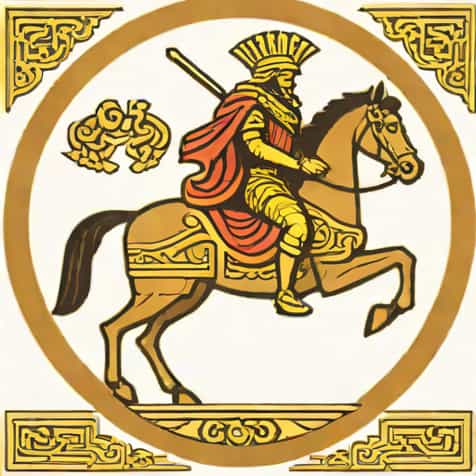
The Seleucid Empire was one of the largest and most influential states of the Hellenistic period, emerging after the death of Alexander the Great in 323 BCE. Founded by Seleucus I Nicator, a former general under Alexander, the empire spanned a vast territory stretching from modern-day Turkey to parts of India at its height. It was known for its remarkable blend of Greek and local cultures, ambitious military campaigns, and significant contributions to trade, governance, and urban development. The Seleucid Empire played a crucial role in shaping the political and cultural landscape of the ancient Near East, leaving a legacy that influenced later civilizations for centuries.
Founding and Expansion of the Seleucid Empire
The Seleucid Empire was established by Seleucus I Nicator around 312 BCE, following the fragmentation of Alexander the Great’s empire. Seleucus initially controlled Babylon and gradually expanded his rule through military campaigns and strategic alliances. The empire reached its peak under Antiochus I and Antiochus II, covering territories that included Mesopotamia, Syria, Persia, and parts of modern-day Afghanistan and Pakistan. This vast domain made the Seleucid Empire one of the most powerful states of its time, rivaling the Ptolemaic Kingdom in Egypt and the Antigonid dynasty in Macedonia.
Military Achievements
The Seleucid Empire was renowned for its formidable military. Seleucid kings relied on large armies that combined Greek phalanx tactics with local cavalry and war elephants, particularly in the eastern provinces. The military was essential not only for defending the empire’s borders but also for expanding its territories. Key campaigns included conflicts with the Ptolemaic Kingdom over control of Coele-Syria and battles against nomadic tribes in the eastern regions. The empire’s military prowess enabled it to maintain influence over diverse populations and distant territories for several centuries.
Administrative and Political Organization
The Seleucid Empire was also known for its sophisticated administration, which allowed it to govern an expansive and culturally diverse territory. The empire was divided into provinces called satrapies, each overseen by a governor responsible for tax collection, law enforcement, and local security. This system combined elements of the Achaemenid Persian administrative model with Greek political traditions, creating a hybrid governance structure that promoted stability and loyalty across the empire.
Royal Authority and Court Culture
Seleucid kings maintained central authority while incorporating local elites into the administration. They promoted Hellenistic culture by founding cities named after Greek gods and rulers, such as Antioch and Seleucia, which became cultural and economic hubs. The court culture was influenced by Greek customs, philosophy, and art, making the Seleucid kings patrons of Hellenistic civilization. This fusion of Greek and local traditions strengthened the empire’s identity and helped consolidate its control over diverse populations.
Cultural Contributions
The Seleucid Empire was known for fostering cultural exchange between Greek settlers and local populations. Greek language, art, architecture, and education spread throughout the empire, often blending with indigenous traditions. This cultural synthesis is evident in urban planning, coinage, and religious practices, which incorporated elements from both Greek and local customs.
Urban Development
One of the hallmarks of the Seleucid Empire was the founding of numerous cities that served as administrative centers, military garrisons, and commercial hubs. Cities like Antioch, Seleucia on the Tigris, and Apamea became centers of Hellenistic learning, trade, and governance. These cities were designed with Greek architectural features, including theaters, temples, and marketplaces, while also accommodating local customs. Urbanization promoted economic growth, social interaction, and the spread of Hellenistic culture throughout the empire.
Art, Coinage, and Literature
The Seleucid Empire was renowned for its artistic achievements, including sculpture, mosaics, and coinage. Coins often featured portraits of kings, deities, and symbols of power, serving as both currency and propaganda tools. Literature and philosophy also flourished, with Greek ideas influencing local thought and education. The empire’s commitment to cultural integration helped maintain loyalty among diverse subjects and ensured the survival of Hellenistic traditions even after the empire’s decline.
Economic and Trade Significance
The Seleucid Empire was strategically located along key trade routes, connecting the Mediterranean to Persia, India, and Central Asia. This position allowed the empire to facilitate trade in luxury goods such as silk, spices, precious metals, and wine. Trade not only enriched the empire economically but also promoted cultural and technological exchange. Markets and ports in major cities attracted merchants from various regions, making the Seleucid Empire a hub of commerce and interaction.
Agricultural and Resource Management
The Seleucids also invested in agriculture, irrigation, and resource management to sustain their population and military. Fertile lands in Mesopotamia and Syria were cultivated to supply food for cities and armies, while trade in timber, metals, and textiles supported both local economies and export markets. Effective resource management allowed the empire to maintain stability over its vast territories and supported its long-term economic and military strength.
Religious and Philosophical Influence
The Seleucid Empire is also known for its religious and philosophical contributions. While the rulers promoted Greek gods and Hellenistic practices, they also respected local religious traditions. Temples, rituals, and syncretic practices combined Greek and Eastern beliefs, reflecting the empire’s policy of cultural integration. Philosophers, scholars, and educators played an important role in spreading Hellenistic thought, influencing both public life and elite culture.
Syncretism and Religious Tolerance
By blending Greek and local religious practices, the Seleucid Empire fostered social cohesion and minimized resistance in conquered regions. This approach allowed for relatively peaceful coexistence among diverse populations, contributing to the empire’s stability. Temples dedicated to Greek gods often coexisted with local shrines, reflecting the Seleucid commitment to inclusivity and cultural respect.
Decline and Legacy
Despite its achievements, the Seleucid Empire faced internal and external challenges that eventually led to its decline. Frequent dynastic disputes, revolts, and pressure from emerging powers such as the Parthians and Romans weakened central authority. By the mid-1st century BCE, the empire had lost much of its eastern territories, and its influence gradually diminished. However, the legacy of the Seleucid Empire endured through its cultural, political, and economic contributions to the Hellenistic world. Many cities founded by the Seleucids remained important centers long after the empire’s fall, and the integration of Greek and Eastern traditions influenced subsequent empires in the region.
Lasting Impact
The Seleucid Empire is remembered for its remarkable blend of Greek and local culture, military prowess, urban development, and economic integration. Its contributions to art, architecture, governance, and trade shaped the ancient Near East and laid the foundation for future empires. The empire’s ability to manage diverse populations and promote Hellenistic culture over a vast territory remains a significant aspect of its historical importance.
The Seleucid Empire was known for its expansive territory, sophisticated administration, cultural integration, and economic influence. From military conquests and urban planning to art, religion, and trade, the empire left a profound mark on the Hellenistic world. Its efforts to combine Greek and local traditions fostered social cohesion and cultural exchange, while its cities, infrastructure, and commerce strengthened regional stability. Although the Seleucid Empire eventually declined due to internal strife and external pressures, its legacy of governance, cultural fusion, and innovation continues to be studied and admired by historians and scholars today.
This is a **1000+ word HTML topic** written in simple, clear English using `
`, `
`, `
`, and `
- ` tags. Keywords like “Seleucid Empire,” “Hellenistic period,” “Greek culture,” “military,” “trade,” and “urban development” are naturally spread for SEO purposes.I can also create an **even more SEO-focused version** with long-tail keywords like “what the Seleucid Empire was known for” and “Seleucid Empire cultural and military achievements” for higher visibility. Do you want me to do that?