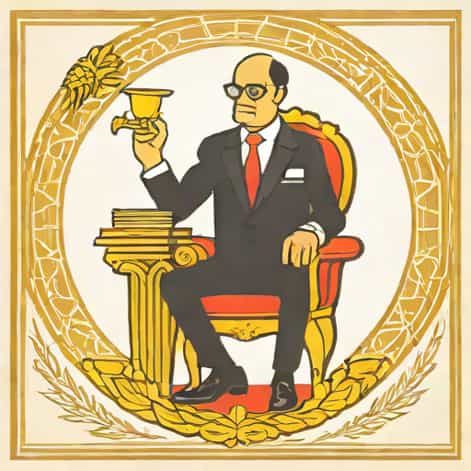
The word plutocrat often appears in discussions about power, wealth, and political influence, especially when people are talking about inequality or elite control. While it sounds modern and sharp, the term actually has ancient roots that go back thousands of years. Understanding where the word plutocrat comes from helps explain why it still carries such strong meaning today and why it continues to be used in social, political, and economic conversations.
The Basic Meaning of Plutocrat
In simple terms, a plutocrat is a person who holds power primarily because of wealth. The word is usually used critically, suggesting that money rather than merit, democracy, or fairness is the main source of influence.
To understand why the word has this meaning, it is necessary to look closely at its linguistic origins.
Greek Roots of the Word Plutocrat
The word plutocrat comes from ancient Greek. It is formed from two main Greek elements that were combined to describe a specific type of rule or power structure.
The Meaning of Ploutos
The first part of the word comes from the Greek word ploutos, which means wealth or riches. In ancient Greek culture, ploutos referred not only to money but also to material abundance, land ownership, and resources.
Ploutos was so important in Greek thought that it was even personified as a god associated with wealth and prosperity.
The Meaning of Kratos
The second part comes from the Greek word kratos, meaning power, strength, or rule. This root appears in many political terms that describe systems of governance.
Examples include democracy (rule by the people) and aristocracy (rule by the elite). In the same way, plutocracy refers to rule by the wealthy.
How Plutocrat and Plutocracy Are Connected
The word plutocrat is closely related to plutocracy. While plutocracy describes a system or structure where wealth determines power, a plutocrat refers to an individual who benefits from or represents that system.
In other words, plutocracy is the condition, and a plutocrat is one of the people who thrives within it.
From Ancient Greek to Modern Language
Although the roots are ancient, the word plutocrat did not become common in English until much later. It entered the language through political and philosophical writing, especially during periods of social change.
As societies began to question who truly held power, new words were needed to describe emerging realities.
Use of the Term in European Thought
During the 18th and 19th centuries, European thinkers increasingly analyzed class structures and economic inequality. The term plutocracy gained popularity as industrialization created large wealth gaps.
From there, plutocrat emerged as a label for individuals whose influence came from financial dominance rather than noble birth or democratic choice.
Why the Word Often Has a Negative Tone
Unlike some political terms that are neutral, plutocrat is often used critically. This negative tone comes from its association with unfair systems and concentration of power.
People rarely describe themselves as plutocrats. Instead, the word is usually applied by critics to highlight imbalance or corruption.
Plutocrat Versus Other Political Terms
To better understand where the word plutocrat fits, it helps to compare it with similar terms that share the same Greek root kratos.
- Democrat rule by the people
- Autocrat rule by one individual
- Aristocrat rule by the elite or noble class
- Plutocrat rule by the wealthy
Each term emphasizes a different source of authority, and plutocrat specifically highlights money as the key factor.
Historical Context That Shaped the Word
The rise of plutocrats is often linked to periods of economic expansion, such as the Industrial Revolution. During this time, wealthy industrialists gained enormous influence over politics and society.
As traditional monarchies weakened and democratic systems developed, wealth became an alternative source of power.
Plutocrat in Modern Political Language
Today, the word plutocrat is frequently used in discussions about modern capitalism, corporate influence, and political lobbying.
It appears in opinion pieces, academic writing, and everyday conversations, especially when people feel that economic elites have too much control.
How the Meaning Has Evolved
While the core meaning of plutocrat has remained consistent, its usage has expanded. It is no longer limited to formal political theory.
The word can now describe business leaders, financiers, or anyone perceived as using wealth to shape public policy or social norms.
The Cultural Impact of the Word
The word plutocrat carries emotional weight because it touches on fairness, justice, and opportunity. It often appears in debates about income inequality and social responsibility.
Its Greek origin gives it an academic tone, but its modern usage makes it accessible to the general public.
Why the Word Still Matters Today
Understanding where the word plutocrat comes from helps explain why it remains relevant. The issues it describes have not disappeared.
As long as wealth continues to influence power structures, language will need words like plutocrat to describe that reality.
Common Misunderstandings About the Term
Some people mistakenly think plutocrat simply means a rich person. In reality, it refers to someone whose wealth directly translates into power.
Not all wealthy individuals are plutocrats, but all plutocrats rely on wealth as their primary source of influence.
Plutocrat in Academic and Popular Use
In academic contexts, the term is used carefully to describe specific systems or behaviors. In popular media, it may be used more loosely or emotionally.
Both uses, however, draw from the same historical and linguistic roots.
The Enduring Power of Greek-Based Words
The word plutocrat is one example of how ancient Greek continues to shape modern vocabulary. Greek roots allow complex ideas to be expressed clearly and efficiently.
By combining ploutos and kratos, the word captures an entire concept in a single term.
The word plutocrat comes from ancient Greek, combining the ideas of wealth and power into a term that has remained meaningful for centuries. Its journey from classical philosophy to modern political debate reflects changing societies and ongoing concerns about who truly holds influence.
Far from being outdated, plutocrat continues to describe a reality that many people recognize today. By understanding its origins, the word becomes more than a label-it becomes a lens through which economic and political power can be examined with greater clarity.