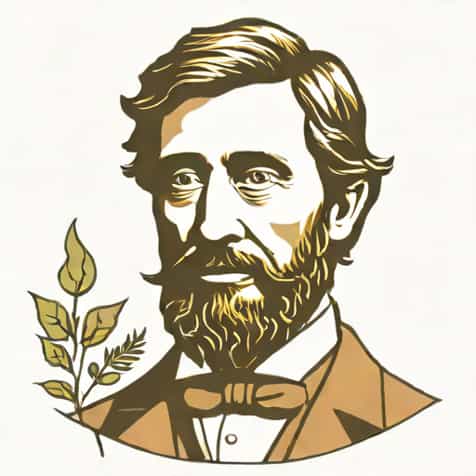
Henry David Thoreau, an iconic figure of 19th-century American literature and philosophy, is widely known for his reflective works on nature, society, and individual conscience. His writings, including Walden and Civil Disobedience, explore the interconnectedness of the human spirit and the natural world, emphasizing personal freedom, self-reliance, and moral integrity. The question of whether Thoreau was a Romanticist requires careful examination of his literary style, philosophical beliefs, and engagement with the core themes of Romanticism, such as emotion, imagination, reverence for nature, and the critique of industrial society. Understanding Thoreau’s alignment with Romantic ideals offers insight into his enduring influence on American thought and literature.
Thoreau’s Engagement with Nature
Thoreau’s intimate relationship with nature is central to his work and reflects the Romantic emphasis on the natural world as a source of inspiration and spiritual renewal. During his two-year experiment at Walden Pond, Thoreau immersed himself in the rhythms of the natural environment, observing seasonal changes, wildlife behavior, and the harmony of ecological systems. Through detailed description and personal reflection, he conveyed the spiritual and emotional significance of nature, demonstrating a Romantic sensibility that values emotional depth, individual experience, and aesthetic appreciation.
Nature as a Teacher
- Thoreau viewed nature as a source of wisdom and moral guidance, aligning with Romantic ideals.
- He emphasized the importance of observing and learning from the natural world.
- Nature provides a context for personal reflection and self-discovery.
- This perspective contrasts with purely utilitarian views of nature common in industrializing America.
Individualism and Self-Reliance
One of the hallmarks of Romanticism is the celebration of individualism and the inner life. Thoreau’s writings consistently advocate for personal autonomy, self-reliance, and the cultivation of one’s moral and intellectual faculties. In Walden, he emphasizes simplicity and deliberate living, encouraging readers to resist societal pressures and to seek fulfillment through inner development and direct engagement with the natural world. These themes reflect the Romantic focus on personal authenticity, imagination, and the pursuit of higher ideals beyond material concerns.
Thoreau’s Philosophical Independence
- Thoreau rejected conformity and societal expectations, valuing independent thought.
- He believed that individuals should follow their conscience and moral intuition.
- Self-reliance, in Thoreau’s view, fosters a deeper connection with both nature and the self.
- This emphasis on personal freedom aligns with the Romantic critique of social and industrial constraints.
Emotion and Moral Reflection
Romanticism places significant emphasis on emotion, imagination, and moral introspection. Thoreau’s writings are suffused with reflective and emotional engagement with the world, demonstrating a deep concern for ethical and spiritual matters. In essays such as Civil Disobedience, he argues for the moral responsibility of individuals to resist unjust laws and government practices, illustrating a fusion of emotional conviction and rational reflection. This focus on conscience, moral integrity, and heartfelt engagement with societal issues resonates strongly with Romantic ideals of ethical and emotional depth.
Conscience as a Romantic Virtue
- Thoreau emphasizes the primacy of personal conscience over legal or social conventions.
- He advocates for action guided by moral intuition and emotional insight.
- Romanticism celebrates the connection between feeling, imagination, and ethical understanding.
- Thoreau’s work exemplifies this integration of emotional depth and moral reasoning.
Critique of Industrial Society
Romanticism often involves a critique of industrialization and modern society, emphasizing the alienation of individuals from nature and authentic experience. Thoreau’s work exemplifies this critical perspective, as he frequently contrasts the artificiality, materialism, and social constraints of urban life with the purity and spiritual richness of natural living. By advocating simplicity, deliberate living, and a return to natural rhythms, Thoreau articulates a distinctly Romantic critique of contemporary society and a vision of life grounded in authenticity and connection with the natural world.
Urban vs. Natural Life
- Thoreau critiques the mechanical routines and material focus of urban environments.
- He presents nature as a source of renewal, creativity, and ethical guidance.
- His Romantic perspective values imagination, reflection, and the emotional resonance of natural settings.
- Thoreau’s emphasis on simplicity anticipates later environmental and transcendentalist thought.
Influence of Romantic and Transcendental Thought
Thoreau was influenced by European Romantic writers such as Wordsworth and Emerson, whose work emphasized intuition, nature, and the moral significance of individual experience. His integration of Romantic ideas into an American context, however, was uniquely his own, blending poetic sensibility with philosophical inquiry. By synthesizing Romantic ideals with transcendentalist thought, Thoreau created a literary and philosophical approach that celebrates emotional engagement, ethical reflection, and reverence for the natural world.
Transcendentalism and Romanticism
- Thoreau’s writings reflect the transcendentalist belief in the inherent goodness of nature and the individual.
- He employs Romantic literary techniques, including vivid imagery and emotional resonance.
- The fusion of these traditions emphasizes personal growth, moral clarity, and spiritual insight.
- Thoreau’s work demonstrates how Romanticism can be adapted to the American philosophical landscape.
Legacy as a Romantic Thinker
Thoreau’s legacy as a Romanticist is evident in his emphasis on emotional depth, imagination, individual conscience, and reverence for nature. His literary style, philosophical convictions, and ethical teachings align closely with the core tenets of Romanticism. By valuing personal experience, moral reflection, and the beauty of the natural world, Thoreau contributed a distinctly American voice to the Romantic tradition, inspiring generations of writers, philosophers, and environmental thinkers. His work continues to resonate for its celebration of freedom, authenticity, and the transformative power of nature.
Enduring Influence
- Thoreau inspired the development of environmental literature and nature writing in America.
- His emphasis on personal conscience influenced social and political movements, including civil rights and nonviolent protest.
- Thoreau’s Romantic sensibility continues to inform literary, philosophical, and ecological thought.
- He remains a central figure in discussions of the relationship between human experience and the natural world.
Henry David Thoreau can be considered a Romanticist due to his profound engagement with nature, celebration of individualism, and focus on emotional and moral reflection. His writings consistently explore themes central to Romanticism, including the spiritual and ethical significance of the natural world, the value of personal conscience, and the critique of industrialized society. By integrating Romantic ideals with transcendentalist thought, Thoreau developed a distinctive philosophical and literary approach that continues to influence American culture and thought. His work exemplifies the enduring power of Romanticism to inspire ethical reflection, emotional depth, and a profound connection with nature.