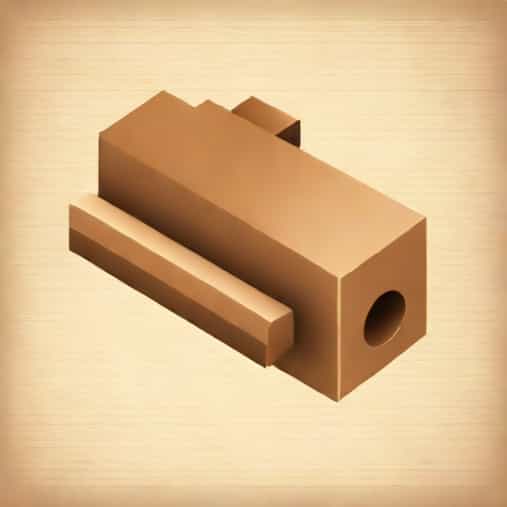
In woodworking and carpentry, few joints are as time-tested and reliable as the mortise and tenon joint. This classic method of joining two pieces of wood has been used for thousands of years in furniture making, architecture, and framing. Known for its strength and simplicity, a mortise and tenon joint connects two wooden components at a right angle-typically a horizontal rail and a vertical post-creating a firm and lasting bond without relying heavily on nails or screws. Understanding how this joint works, its types, and its benefits can help anyone appreciate the craftsmanship behind solid wood construction.
What Is a Mortise and Tenon Joint?
A mortise and tenon joint consists of two main parts the mortise and the tenon. The mortise is a rectangular cavity or hole cut into one piece of wood, while the tenon is a projecting piece shaped to fit snugly into that cavity. When assembled, the tenon slides into the mortise, forming a tight and stable connection. This joint is commonly used in furniture such as tables, chairs, and cabinets, as well as in timber framing for buildings.
The strength of this joint comes from the precise fit between the mortise and the tenon. When properly constructed, it resists both tension and compression forces, making it ideal for load-bearing structures. Traditional woodworkers often use glue or wooden pegs to secure the joint further, though even without these additions, a well-fitted mortise and tenon can hold firmly.
History and Traditional Use
The mortise and tenon joint has been around for thousands of years, appearing in ancient Egyptian furniture, Chinese temples, and medieval European timber frames. Archaeological discoveries have shown that this joint was used as early as 2500 BCE in the construction of wooden coffins and boats. Its enduring use throughout history is a testament to its effectiveness and versatility.
Even with the invention of modern metal fasteners and industrial tools, woodworkers continue to use the mortise and tenon joint for its beauty, durability, and traditional appeal. Many artisans consider it a mark of skilled craftsmanship, as it requires precision and attention to detail.
Parts of the Mortise and Tenon Joint
1. The Mortise
The mortise is the socket or hole that receives the tenon. It is typically rectangular but can vary in size and shape depending on the design. Cutting a mortise requires careful measurement to ensure that the tenon fits snugly without gaps. The depth of the mortise is also critical; too shallow and the joint will be weak, too deep and the structure might lose integrity.
2. The Tenon
The tenon is the tongue-like projection that fits into the mortise. It is usually cut at the end of one wooden piece and shaped to match the mortise’s dimensions. The shoulders of the tenon-flat surfaces that meet the outer face of the mortised piece-help provide alignment and stability, ensuring that the joint stays flush and square when assembled.
Types of Mortise and Tenon Joints
Over the centuries, woodworkers have developed several variations of the mortise and tenon joint, each suited to different structural needs and aesthetic preferences. Some of the most common types include
- Through Mortise and TenonThe tenon passes completely through the mortised piece, and its end is visible on the opposite side. This type provides maximum strength and is often used in heavy-duty applications like timber framing.
- Blind Mortise and TenonThe tenon fits into a closed mortise that does not pass through the entire piece of wood. It offers a cleaner appearance, often used in fine furniture where visible joints are undesirable.
- Stub TenonA short tenon used where full-depth mortising is unnecessary, typically in lightweight frames or decorative elements.
- Wedged Mortise and TenonA wedge is inserted into the tenon after assembly to expand it within the mortise, locking the joint firmly in place. This technique adds mechanical strength.
- Haunched TenonA variation where a small haunch or projection is added to the tenon to prevent twisting and increase the surface area for gluing.
How to Make a Mortise and Tenon Joint
Creating a precise mortise and tenon joint requires accuracy, patience, and the right tools. The basic process includes marking, cutting, fitting, and assembling the two parts.
1. Marking the Joint
Start by marking the mortise and tenon dimensions carefully on both pieces of wood. Traditional woodworkers use a marking gauge or knife to ensure clean lines and precise measurements. The tenon should be slightly smaller than the mortise to ensure a snug but not overly tight fit.
2. Cutting the Mortise
The mortise can be cut by hand using a chisel and mallet, or by using modern tools like a mortising machine or drill press. The key is to maintain consistent depth and straight sides. Clean up any rough edges with a sharp chisel to ensure smooth insertion of the tenon.
3. Cutting the Tenon
The tenon is typically cut with a saw-such as a tenon saw or dovetail saw-along the marked lines. The shoulders should be square and even, as they determine how well the joint aligns. Test the tenon frequently during the cutting process to make sure it fits perfectly into the mortise.
4. Fitting and Assembly
Once both parts are ready, test the fit by inserting the tenon into the mortise. It should slide in firmly without excessive force. Apply wood glue for added strength, and clamp the joint until the glue sets. In some cases, wooden pegs or wedges are added for extra reinforcement.
Advantages of a Mortise and Tenon Joint
The mortise and tenon joint has remained popular for centuries because of its many advantages
- It provides exceptional strength and stability, especially for right-angle joints.
- The design distributes stress evenly, reducing the risk of splitting or loosening over time.
- It has a clean and elegant appearance with minimal hardware visible.
- The joint can last for generations if crafted and maintained properly.
- It allows for flexibility in design, suitable for both traditional and modern woodworking.
Disadvantages and Challenges
Despite its many strengths, the mortise and tenon joint also presents some challenges
- It requires skill and precision, making it difficult for beginners to execute perfectly.
- The process can be time-consuming compared to simpler joints like dowels or screws.
- Improperly fitted joints may weaken the structure or cause alignment issues.
However, with patience and practice, these difficulties can be overcome, and the results are well worth the effort. Many craftsmen see the creation of a perfect mortise and tenon joint as a sign of true woodworking mastery.
Modern Applications
Even in the age of modern tools and industrial construction methods, the mortise and tenon joint continues to be used in high-quality furniture, timber framing, and fine woodworking. It is particularly valued in custom furniture making and restoration work, where authenticity and strength matter most. The joint’s timeless design also appeals to those who appreciate sustainable craftsmanship, as it relies primarily on wood rather than synthetic fasteners.
A mortise and tenon joint represents more than just a woodworking technique-it is a symbol of craftsmanship, precision, and durability. From ancient temples to contemporary furniture, this joint has proven its worth through centuries of use. Its ability to combine simplicity with strength makes it one of the most enduring methods of wood joinery. For anyone interested in woodworking, learning how to craft a proper mortise and tenon joint is not just a skill but an art that connects today’s makers with a long tradition of skilled artisans throughout history.