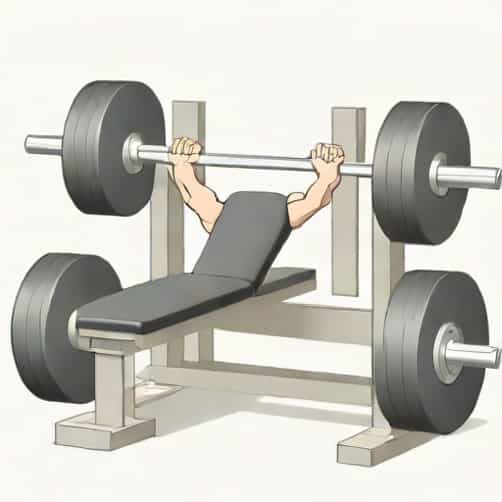
The dumbbell flat bench press is a popular exercise that targets the chest muscles while engaging the shoulders and triceps. Many people choose dumbbells over a barbell because each arm has to work independently, helping to correct muscle imbalances and improve control. Whether someone is a beginner learning basic movements or an experienced lifter looking to refine strength training routines, the dumbbell flat bench press remains a foundational workout. It is often used to build upper body size, increase pushing strength, and enhance muscle stability. Understanding the correct technique, benefits, and variations can help ensure the movement is both effective and safe.
Understanding the Dumbbell Flat Bench Press
The dumbbell flat bench press is performed while lying flat on a bench, holding a dumbbell in each hand. The motion is similar to the barbell bench press, but because the arms move freely, there is greater range of motion and increased muscle engagement. This makes the exercise excellent for developing balanced strength and improving overall chest activation.
Muscles Worked
This exercise primarily targets the pectoralis major, the large muscle that makes up most of the chest. Secondary muscle groups include
- Triceps brachii, located at the back of the upper arm
- Anterior deltoids, located at the front of the shoulders
- Serratus anterior, which stabilizes the shoulder blades
- Core muscles that assist in stabilizing the torso
Because the dumbbell flat bench press requires coordination, it is more demanding on stabilizer muscles than the barbell version.
How to Perform the Dumbbell Flat Bench Press Correctly
Good technique ensures maximum muscle engagement while reducing the risk of injury. Here is a step-by-step guide to executing the movement properly
- Lie flat on a bench with your feet planted firmly on the floor.
- Hold a dumbbell in each hand, resting them on your thighs to begin.
- Use your legs to help lift the dumbbells into starting position above your chest.
- Your palms should face forward, and your elbows should be slightly below shoulder level.
- Lower the dumbbells slowly until your elbows reach about a 90-degree angle or slightly deeper.
- Press the dumbbells upward in a controlled motion, avoiding locking the elbows at the top.
- Repeat for the desired number of reps.
A slow and controlled pace helps maintain proper muscle tension and prevents the shoulders from taking over the movement.
Breathing Technique
Breathing plays a major role during strength training. For the dumbbell flat bench press
- Inhale as you lower the weight toward your chest.
- Exhale as you push the weights back upward.
Maintaining steady breathing helps stabilize the core and increases lifting efficiency.
Benefits of the Dumbbell Flat Bench Press
There are several advantages to including this exercise in a workout routine
Improved Muscle Balance
Because each arm works on its own, the dumbbell flat bench press helps identify and correct strength imbalances. This is especially helpful for sports training and bodybuilding.
Greater Range of Motion
Dumbbells allow the arms to move deeper at the bottom of the movement compared to a barbell, leading to increased chest stretch and muscle engagement.
Increased Stabilization Strength
The body must work harder to stabilize dumbbells, improving joint support and control skills useful both in training and daily activities.
Common Mistakes and How to Avoid Them
- Arching the back too muchKeep the lower back neutral and maintain a light arch, but avoid overextending.
- Elbows flaring outKeep elbows at about a 45-degree angle to reduce shoulder strain.
- Lowering the weights too fastSlow, controlled motion prevents injury.
- Using weights that are too heavySelect a weight that allows full range of motion without compromising form.
Correcting these mistakes ensures progress while protecting joint health.
Variations of the Dumbbell Flat Bench Press
Several variations can help target the chest differently or add new challenges.
Dumbbell Incline Bench Press
Performed on a bench set at an incline, this variation targets the upper chest and shoulders more intensely.
Dumbbell Decline Bench Press
With the bench at a decline, the lower chest is emphasized, creating balanced development.
Single-Arm Dumbbell Bench Press
One dumbbell is pressed at a time, increasing core and shoulder stability demands.
Recommended Sets and Repetitions
Training goals influence how many sets and reps to perform
- Muscle growth (hypertrophy)3 5 sets of 8 12 reps
- Strength training4 6 sets of 4 6 reps with heavier weights
- Endurance2 3 sets of 12 20 reps with lighter weights
Rest periods can range from 60 seconds to 2.5 minutes depending on intensity and goals.
Safety Tips
- Use a spotter when lifting heavy weights.
- Warm up with light sets before working at full intensity.
- Stop if you feel sharp or unusual pain.
- Keep shoulders retracted to protect the shoulder joints.
Proper safety habits allow long-term training without unnecessary injury risk.
The dumbbell flat bench press is a versatile, effective exercise for building chest strength, improving muscle balance, and developing upper body control. Its ability to target the chest muscles more evenly than some barbell routines makes it a valuable addition to any workout program. By practicing correct form, adjusting weight appropriately, and exploring variations, individuals of all fitness levels can benefit from this movement. Whether the goal is strength, size, or simply overall conditioning, the dumbbell flat bench press is a reliable and beneficial exercise that supports long-term progress and overall upper body performance.