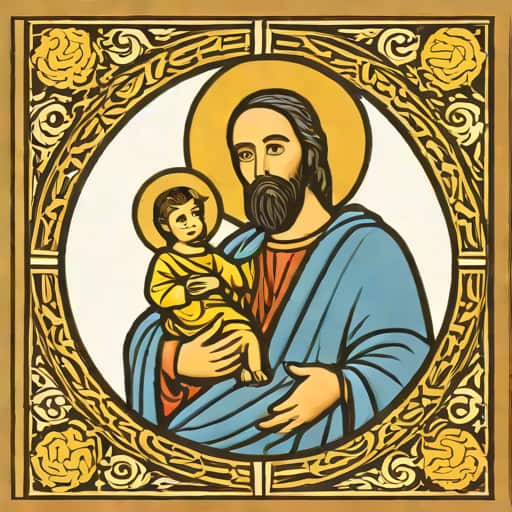
John 14 is one of the most profound chapters in the New Testament, where Jesus comforts His disciples and teaches about the way to the Father, the promise of the Holy Spirit, and the peace that comes from abiding in Him. For students of the Bible, pastors, and scholars, using Strong’s Concordance alongside John 14 provides a deeper understanding of the original Greek words, their meanings, and how they illuminate the text. Strong’s Concordance is a valuable tool for Bible study because it allows readers to connect English translations with original Hebrew and Greek words, giving insight into the nuances of scripture. Analyzing John 14 with Strong’s references can enhance comprehension, reveal richer interpretations, and strengthen personal or academic study of the Bible.
Introduction to Strong’s Concordance
Strong’s Concordance, created by James Strong in 1890, is a reference system that indexes every word in the King James Version (KJV) of the Bible. It assigns a unique number to each Hebrew and Greek word, allowing readers to trace every occurrence of that word throughout the scripture. This makes it easier to study the Bible in its original languages without needing advanced knowledge of Hebrew or Greek. For example, Greek words in the New Testament, such as those found in John 14, are indexed so that readers can explore the range of meanings and contextual usage, enriching their understanding of Jesus’ teachings.
Features of Strong’s Concordance
- Unique numbering system for every Hebrew and Greek word.
- Comprehensive listing of every English word in the KJV and its corresponding original language word.
- Definitions and explanations of original Hebrew and Greek words.
- Cross-references for each occurrence of a word in the Bible.
- Facilitates word studies and in-depth scriptural analysis.
Key Verses in John 14
John 14 contains several pivotal verses that are often studied for their theological significance. Verses such as John 146, where Jesus says, I am the way, the truth, and the life, are rich with meaning and can be explored deeply using Strong’s Concordance. By looking at the Greek words underlying key terms like way (á½Î´ÏÏ, hodos), truth (á¼Î»Î®Î¸ÎµÎ¹Î±, aletheia), and life (ζÏή, zoe), readers gain insight into the original context and nuance that may not be fully captured in translation.
Examples of Strong’s Concordance Usage in John 14
- John 141 – Let not your heart be troubledThe Greek word for troubled is ÏαÏάÏÏÏ (tarasso, Strong’s G5011), which conveys the idea of being agitated or disturbed, offering a deeper understanding of the emotional state Jesus addresses.
- John 142 – In my Father’s house are many mansionsThe word mansions is μονή (monÄ, Strong’s G3441), indicating abiding places or dwelling spaces, which highlights the promise of spiritual habitation and eternal security.
- John 146 – I am the wayá½Î´ÏÏ (hodos, Strong’s G3598) is translated as way but can also mean a road, path, or journey, emphasizing the direction and guidance Jesus provides.
- John 146 – the truthá¼Î»Î®Î¸ÎµÎ¹Î± (aletheia, Strong’s G225) conveys not just factual truth but ultimate reality, emphasizing the divine nature of Christ’s words.
- John 146 – the lifeζÏή (zoe, Strong’s G2222) refers to eternal or abundant life, pointing to both spiritual vitality and eternal existence through Christ.
Studying John 14 with Strong’s Concordance
Using Strong’s Concordance for John 14 enables readers to conduct word studies that reveal the depth of Jesus’ teaching. By examining Greek words, their occurrences elsewhere in the New Testament, and their semantic range, students can better understand theological concepts such as salvation, the nature of God, and the promise of the Holy Spirit. For instance, studying the Greek term ÏαÏάκληÏÎ¿Ï (paraklÄtos, Strong’s G3875) in John 1416, translated as Helper or Comforter, offers insight into the Holy Spirit’s role in guiding, counseling, and advocating for believers.
Benefits of Using Strong’s Concordance
- Clarifies original meanings of words used in John 14.
- Enhances understanding of theological concepts.
- Enables comparison of the same Greek word across different New Testament passages.
- Supports academic research and sermon preparation.
- Encourages more accurate Bible interpretation without relying solely on English translations.
Applications for Preachers and Bible Students
Preachers, teachers, and Bible students often use Strong’s Concordance in their study of John 14 to prepare lessons, sermons, or personal reflections. For example, understanding the original Greek of peace (εἰÏήνη, eirÄnÄ, Strong’s G1515) in John 1427 can provide a richer understanding of the peace Christ promises, which is not merely the absence of conflict but a deep, spiritual tranquility. Similarly, examining believe (ÏιÏÏεÏÏ, pisteuÅ, Strong’s G4100) helps students appreciate the nuances of faith, trust, and reliance on Jesus as expressed in this chapter.
Practical Tips for Using Strong’s Concordance with John 14
- Identify key verses or terms to study in-depth.
- Look up the Strong’s numbers for Greek words to understand their original meaning.
- Cross-reference other Bible passages using the same Strong’s number for broader context.
- Take notes on variations in translation and semantic range to enrich study material.
- Use Strong’s Concordance alongside Bible commentaries for complementary insights.
John 14 is a chapter filled with profound spiritual teachings, promises, and comforting messages from Jesus. By studying this chapter using Strong’s Concordance, readers gain access to the original Greek meanings, enhancing comprehension and appreciation of the text. Strong’s tool allows for a deeper exploration of key words such as way, truth, life, peace, and Helper, revealing layers of theological insight that may be missed in translation alone. Whether for personal study, teaching, or sermon preparation, combining John 14 with Strong’s Concordance provides a more informed, nuanced, and spiritually enriching engagement with scripture, fostering a closer understanding of Christ’s words and promises.