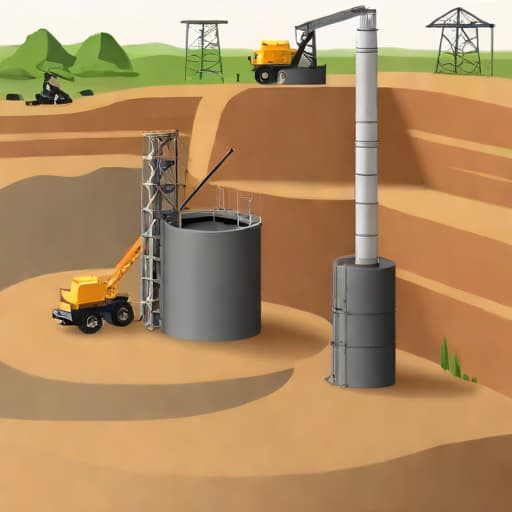
The Kapurdi lignite mines are significant lignite mining operations located in the Barmer district of Rajasthan, India. These mines form part of one of the country’s major lignite resource bases, supplying fuel essential for power generation and industrial use. Lignite, also known as brown coal, is a lowgrade form of coal that is widely used in thermal power plants located close to the mining sites. The Kapurdi mining block, along with adjacent blocks like Jalipa, has been developed to support a large thermal power project and contribute to regional energy needs. Understanding the location, development, production, and social and environmental aspects of the Kapurdi lignite mines sheds light on their importance for local communities, economic development, and the energy sector in western India.
Location and Geological Background
The Kapurdi lignite mines are situated in the Great Indian Desert of the Thar region, north of Barmer town in Rajasthan. The mining block lies along National Highway 15 and is roughly 18.5 kilometers from the district headquarters, with the nearest railway station at Uttarlai, about 11 kilometers away. The mining lease area spans thousands of hectares and covers several villages in this arid region. The Thar Desert’s geological formations have proven rich in lignite deposits, with studies estimating significant reserves in both Kapurdi and neighboring Jalipa blocks, amounting to hundreds of millions of tonnes of geological resource. These deposits were explored through extensive drilling and geological surveys over several decades.
What Is Lignite?
Lignite, often referred to as brown coal, is a lowerrank coal formed from naturally compressed peat. It contains higher moisture content and lower carbon concentration than bituminous coal, making it less energy dense. However, lignite is abundant in certain regions like Barmer and is suitable for use in nearby thermal power plants due to the proximity of the fuel source, which reduces transportation costs and improves overall efficiency of power generation.
Development and Operational History
The Kapurdi lignite mining operations were incorporated under Barmer Lignite Mining Company Limited (BLMCL), a joint venture formed by Rajasthan State Mines and Minerals Limited (RSMML) and Raj WestPower Limited (RWPL), a subsidiary of JSW Energy. The organization was established with the specific mandate to develop, operate, and extract lignite from the Kapurdi and Jalipa blocks. Commercial production from the Kapurdi mine began in October 2011, and before that, land acquisition and planning were completed in the late 2000s. The mines operate as open cast surface mines, which involve removing overlying soil and rock to access lignite seams.
Mining and Production
Since commencing operations, the Kapurdi lignite mines have steadily produced significant quantities of lignite that are supplied under a longterm fuel supply agreement to the Raj WestPower thermal power project in Barmer. The arrangement ensures that the nearby power plant has a secure, reliable source of fuel for generating electricity, enhancing energy security in the region. Estimates suggest that the existing lignite reserves at Kapurdi and Jalipa are sufficient to meet the power project’s needs for multiple decades, potentially more than 45 years of operation at current consumption rates.
Infrastructure Integration
One of the key advantages of the Kapurdi lignite mines is their integration with the adjoining thermal power plant, which uses fluidized bed combustion (CFBC) technology to burn lignite efficiently. This proximity between mine and plant reduces the need for extensive transportation, lowering operational costs and environmental impact. Additionally, infrastructure such as dedicated water pipelines from distant sources supports plant operations in the arid desert region, illustrating coordinated planning between mining and energy generation projects.
Economic and Social Impact
The development of the Kapurdi lignite mines has had significant economic implications for Barmer district and surrounding areas. By establishing a stable supply of fuel for power generation, the project supports local employment, stimulates ancillary services, and contributes to regional development. The mining company has also engaged in corporate social responsibility initiatives to improve medical, educational, and community infrastructure in nearby villages. These activities are intended to enhance quality of life and provide opportunities for skills development and social support where traditional livelihoods may be limited.
Employment and Local Economy
- Direct and indirect employment opportunities created for residents in mining and plant operations
- Boost to local businesses providing goods and services to support mining infrastructure
- Growth of transport, logistics, and construction sectors linked to mining activities
The mines thus serve as economic anchors in a region where agricultural opportunities are constrained by the desert environment, increasing the importance of mining and related industries for sustained livelihoods.
Environmental Considerations
Lignite mining and associated thermal power generation raise environmental concerns due to land alteration, dust emissions, and potential impacts on soil and water resources. Open cast mining modifies the landscape and requires careful rehabilitation planning to restore vegetation and soil stability after mining operations conclude. To address these concerns, environmental clearance and mine closure plans have been approved by relevant ministries, with measures incorporated for land reclamation and mitigation of ecosystem impacts.
Approved Environmental Plans
Both Kapurdi and Jalipa mines received environmental clearance from the Ministry of Environment and Forests, outlining steps for environmental management during and after mining. These plans include strategies for minimizing dust, managing waste materials, and ultimately restoring lands once mining concludes. Such measures are important for balancing economic development with longterm ecological health.
Challenges and Criticism
Despite its economic and energy contributions, the Kapurdi lignite mines have faced criticism and concerns from some community representatives over environmental and social issues. Allegations have included inadequate implementation of environmental safeguards, dust control, and fulfillment of promised development commitments to local communities. Critics argue that mining activities and land acquisition have affected common grazing lands, water bodies, and traditional living patterns, raising debates about sustainable mining practices and corporate responsibility. These discussions reflect broader challenges that many large mining projects face in balancing growth with environmental and social equity.
Environmental Management vs. Local Impact
Mining advocates emphasize employment and energy benefits, while environmental advocates stress the importance of strict pollution control, monitoring, and inclusive development to ensure that mining operations do not unduly harm local ecosystems and rural livelihoods. Ongoing dialogue between stakeholders is essential for addressing these complex issues as the project progresses.
Future Prospects
Looking ahead, the Kapurdi lignite mines are expected to continue supplying fuel to the Barmer power project as part of India’s broader effort to meet growing energy demands. Advances in mining technologies, improved environmental management practices, and expanded community engagement may shape the future of lignite mining in the region. With substantial reserves and established infrastructure, Kapurdi and adjacent blocks remain central to regional energy planning, offering a model for integrated mining and power generation in arid zones of India.
The Kapurdi lignite mines represent a major lignite resource and mining operation in Rajasthan’s Barmer district, supporting local economic development and regional power generation. Situated within the Thar Desert, these mines supply fuel directly to a large thermal power station, illustrating a strategic integration between resource extraction and energy production. While the project has brought employment and infrastructure growth, it also faces environmental and social challenges that require careful management. By balancing economic benefits with responsible environmental practices and community engagement, the Kapurdi lignite mines continue to play a significant role in India’s energy landscape and the development of Rajasthan’s mineral sector.