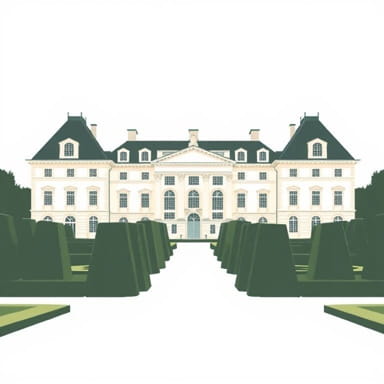
Located just outside of Paris, the Gardens of Versailles are an iconic example of formal French garden design and remain one of the most remarkable landscape achievements in history. Created in the 17th century to complement the grand Palace of Versailles, the gardens are a symbol of power, symmetry, and royal ambition. Covering nearly 2,000 acres, they reflect not only the taste of King Louis XIV but also the skill and vision of landscape architect André Le Nôtre. The gardens draw millions of visitors every year and have become a UNESCO World Heritage Site due to their cultural and artistic significance.
Historical Background of the Gardens
The origin of the Gardens of Versailles dates back to 1661, when Louis XIV decided to transform his father’s hunting lodge into a majestic palace that would reflect the strength and prestige of the French monarchy. To match the grandeur of the palace, the king ordered the redesign of the surrounding landscape. This responsibility fell to André Le Nôtre, already famous for his mastery in creating elaborate formal gardens.
Le Nôtre’s vision was vast in scale and meticulous in execution. He worked closely with architects and engineers to reshape the terrain, dig canals, plant trees, and design fountains that demonstrated the triumph of human artistry over nature. The project took several decades and required thousands of laborers, but the end result was a harmonious blend of order, geometry, and beauty.
Principles of French Formal Garden Design
The Gardens of Versailles are a textbook example of the French formal garden, orjardin à la française. This style is marked by strict symmetry, long axial views, and an intentional structuring of space to reflect control and rationality. Nature is not allowed to grow wild but is instead shaped and trimmed into idealized forms.
- Symmetry and geometric patterns dominate the layout.
- Long straight paths lead the eye toward focal points such as statues or fountains.
- Hedges and trees are carefully pruned into defined shapes.
- Water features like canals, basins, and fountains are used to add motion and reflection.
These elements worked together to create an immersive and majestic experience, making the viewer feel both awe and serenity.
Main Features of the Gardens of Versailles
The Grand Canal
One of the most striking features of the Gardens of Versailles is the Grand Canal, which stretches over a mile in length. This man-made waterway provided a reflective surface that enhanced the visual impact of the palace and was also used for boating by the royal court. Its cross shape divides the garden and emphasizes the sense of endless perspective that Le Nôtre intended.
The Orangery
The Orangery at Versailles is both a practical and decorative structure. It was designed to house orange trees and other delicate plants during the winter months. During the warmer seasons, the plants were moved outside to line the terraces, adding fragrance and color to the garden. The design is a testament to the combination of architectural skill and botanical care that define the entire estate.
The Fountains and Water Shows
The Gardens of Versailles contain more than 50 fountains, many of which are adorned with statues representing mythological figures. Among the most famous is the Fountain of Apollo, where the sun god emerges from the water in a chariot pulled by horses. This imagery was deliberately chosen by Louis XIV, who styled himself as the ‘Sun King.’ The fountains were powered by an ingenious system of reservoirs and pumps, and on designated days, visitors can still enjoy the spectacular musical water shows.
Groves and Hidden Spaces
In addition to wide open spaces and grand avenues, the Gardens of Versailles also feature smaller, enclosed groves that provide contrast and intimacy. These groves, orbosquets, were often used for entertainment and private gatherings. Each grove had its own theme, decorative elements, and fountains. The Grove of the Domes and the Ballroom Grove are especially notable for their artistic charm.
Symbolism and Royal Power
The layout of the gardens served a greater purpose than aesthetic pleasure it was a visual representation of the absolute power of the monarchy. Everything was placed with intention, and the whole environment reflected harmony, logic, and control. The central axis, aligned with the sun, emphasized Louis XIV’s claim as the center of the universe. By walking through the gardens, visitors were meant to feel the reach and sophistication of the king’s rule.
Even the engineering marvels behind the water features, such as the Marly Machine, were designed to demonstrate technological dominance and progress. In this way, the gardens became a stage where political power and artistic genius met.
The Evolution and Preservation of the Gardens
While the original vision of the gardens has remained largely intact, different rulers added their own touches over the years. During the reign of Louis XV, areas like the Queen’s Grove were modified, and under Louis XVI, further botanical interests shaped parts of the layout. Following the French Revolution, the estate fell into decline, but restoration efforts in the 19th and 20th centuries helped bring it back to life.
Today, the Gardens of Versailles are preserved and maintained by a dedicated team of gardeners and historians. Their work ensures that modern visitors can experience the same wonder that 17th-century nobles once felt. Seasonal changes, replanting efforts, and historical research are all part of the ongoing mission to keep the gardens both authentic and vibrant.
Visiting the Gardens Today
A trip to the Gardens of Versailles offers more than a scenic stroll. It is a journey into the past, where art, politics, and nature intersect. Whether admiring the symmetry of the parterre, relaxing by the Grand Canal, or witnessing a fountain display, visitors are continually surrounded by layers of history and design.
The gardens remain free to enter on most days, making them accessible to anyone who wishes to explore one of the world’s greatest landscape achievements. Guided tours, audio guides, and seasonal events further enrich the experience, offering insights into how the gardens were created, used, and preserved.
Legacy and Global Influence
The Gardens of Versailles influenced generations of landscape designers across Europe and beyond. The French formal garden style spread to Italy, Germany, and Russia, inspiring estates like Peterhof and Schönbrunn. Even in contemporary landscape architecture, the emphasis on order, proportion, and harmony can be traced back to Versailles.
More than just a royal pleasure ground, the Gardens of Versailles continue to serve as a model of artistic excellence and a symbol of how landscape design can express cultural ideals. They remain a living monument to the ambition of Louis XIV and the creative genius of André Le Nôtre.