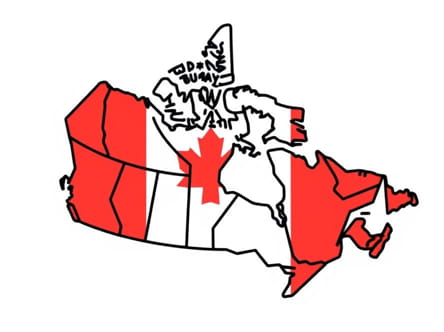
In the history of Canadian politics, few issues have been as emotionally charged and nationally significant as Quebec’s efforts to separate from Canada. The movement for Quebec sovereignty emerged from a deep sense of cultural identity, historical grievances, and political aspirations. With its French-speaking majority, distinct civil law system, and strong Catholic heritage, Quebec has long viewed itself as a unique nation within a broader federal structure. Over the decades, attempts to assert this identity have culminated in political campaigns and referendums aiming to achieve independence from Canada. The journey reflects the complex relationship between national unity and regional identity.
Historical Context of Quebec Nationalism
Quebec’s desire for independence did not arise suddenly. It was shaped by centuries of cultural evolution and historical events. The roots of Quebec nationalism stretch back to 1763, when France ceded New France (including Quebec) to Britain through the Treaty of Paris.
Preservation of Language and Culture
Despite British rule, Quebec maintained its French language, Catholic religion, and civil law traditions. This cultural resilience fostered a strong sense of identity separate from the English-speaking majority in Canada.
Confederation and Concerns
When Canada became a federation in 1867, Quebec joined under the condition that its distinct culture would be protected. Over time, many Francophone Quebecers felt that federal policies favored English-speaking provinces and undermined Quebec’s autonomy.
The Rise of the Separatist Movement
The 20th century saw a growing dissatisfaction among Quebecers, particularly during the Quiet Revolution of the 1960s a period of rapid modernization and secularization in Quebec society. This era gave birth to a more assertive form of Quebec nationalism.
Formation of the Parti Québécois
Founded in 1968 by René Lévesque, the Parti Québécois (PQ) became the political voice for Quebec sovereignty. The party combined demands for independence with progressive social policies. In 1976, the PQ won the provincial election, placing Quebec’s separation on the national agenda.
Language Laws and Identity
The Quebec government introduced Bill 101 in 1977, establishing French as the official language of the province. This law was seen as a move to protect Francophone culture, but also sparked tensions with Anglophones and immigrants.
The 1980 Referendum
The first major attempt at Quebec separation came with the 1980 referendum. The PQ asked voters to support a mandate to negotiate sovereignty-association with Canada, meaning political independence with economic ties remaining intact.
Campaign and Results
- Federalists, led by Prime Minister Pierre Trudeau, argued for a united Canada and promised constitutional reform.
- Sovereigntists promoted Quebec’s right to self-determination and cultural preservation.
- On May 20, 1980, the proposal was defeated, with 60% voting ‘No’ and 40% voting ‘Yes’.
Though unsuccessful, the referendum energized the sovereignty movement and influenced national policy, including the patriation of the Canadian Constitution in 1982 done without Quebec’s formal approval.
The 1995 Referendum
Fifteen years after the first vote, a second referendum was held. By this time, dissatisfaction had grown due to economic concerns, constitutional debates, and lingering cultural tensions.
The Referendum Question
On October 30, 1995, Quebecers were asked whether they agreed that Quebec should become sovereign after offering a new economic and political partnership with Canada.
Narrow Margin and Impact
- The result was incredibly close: 50.58% voted ‘No’ and 49.42% voted ‘Yes’.
- The narrow defeat stunned both federalists and separatists.
- After the vote, emotional reactions spread across the province and the nation.
This near-success showed the strength of the sovereignty movement and left lasting political and emotional scars. Many Quebecers felt their aspirations had been dismissed, while others feared the breakup of Canada had come dangerously close.
Aftermath and Federal Responses
In response to the growing tensions, the Canadian government sought to clarify the legal and constitutional issues surrounding any future moves toward independence.
Clarity Act of 2000
Passed by the federal Parliament, the Clarity Act stated that any future referendum must involve a clear question and a clear majority. It also emphasized that separation would require negotiation and approval by the Canadian Parliament.
Supreme Court Ruling
In 1998, the Supreme Court of Canada ruled that Quebec could not unilaterally declare independence under Canadian or international law. However, it acknowledged that a clear majority on a clear question would compel the federal government to negotiate in good faith.
The Sovereignty Debate Today
Although the intensity of the independence movement has decreased since the 1990s, the idea of Quebec sovereignty remains alive in politics and public discourse.
Shifts in Public Opinion
- Surveys show fluctuating support for sovereignty, often influenced by economic issues and generational change.
- Younger Quebecers tend to be more focused on environmental and social issues than sovereignty.
- Many Quebecers now support greater autonomy rather than full independence.
Modern Political Parties
The Parti Québécois still advocates for sovereignty but has lost some influence to other parties like Coalition Avenir Québec (CAQ), which promotes nationalism within Canada rather than separation. Meanwhile, the Bloc Québécois continues to represent Quebec interests in the federal parliament.
A Complex Path Toward Identity
Quebec’s attempts to separate from Canada highlight the deep cultural and political differences that exist within a diverse federation. The referendums of 1980 and 1995 reflect both the strength of Quebec nationalism and the resilience of Canadian unity. While full independence has not been achieved, the movements have forced Canada to evolve, negotiate, and re-express its commitment to multiculturalism and federalism. Quebec’s journey remains a powerful example of how identity, democracy, and negotiation continue to shape the future of nations.