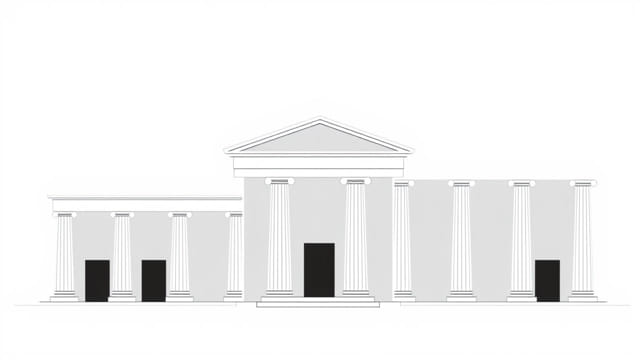
Doric columns have long been a symbol of strength, simplicity, and classical beauty in architecture. Originating in ancient Greece, these sturdy columns are characterized by their plain capitals, fluted shafts, and lack of elaborate bases. In the United States, Doric columns became especially prominent during the 18th and 19th centuries as architects embraced the Neoclassical and Greek Revival styles. Today, numerous buildings across America still feature Doric columns, representing a fusion of democratic ideals and timeless architectural aesthetics. This topic explores significant buildings with Doric columns in America, highlighting their design, cultural significance, and enduring legacy.
Understanding Doric Columns
Key Characteristics
Doric columns are the simplest of the three classical orders of ancient Greek architecture (the others being Ionic and Corinthian). Their defining traits include:
- Simple, round capitalswithout scrolls or elaborate carvings
- Fluted shafts(usually 20 flutes)
- No base, unlike Ionic and Corinthian columns
- Proportional strength, often appearing more muscular and sturdy
Influence on American Architecture
In early America, especially during the formation of the republic, Doric columns symbolized strength, order, and a connection to democratic values rooted in Greek civilization. These columns were widely used in government buildings, educational institutions, and monumental architecture to convey authority and permanence.
Notable American Buildings Featuring Doric Columns
The Lincoln Memorial (Washington, D.C.)
One of the most iconic examples of Doric column use in the United States is the Lincoln Memorial. Designed by architect Henry Bacon and completed in 1922, the memorial was inspired by the Parthenon in Athens. It features 36 massive exterior Doric columns, each representing a state in the Union at the time of Lincoln’s death. The simplicity and grandeur of the Doric style reflect Lincoln’s strength of character and his role in preserving the nation.
The United States Capitol (Washington, D.C.)
Although the U.S. Capitol combines multiple architectural styles, including Corinthian and Composite, parts of its design especially earlier versions and auxiliary buildings include Doric elements. Some of the porticos and auxiliary features showcase Doric columns, representing order and democratic governance.
Monticello (Charlottesville, Virginia)
Thomas Jefferson’s estate, Monticello, is another significant building where Doric columns play a role. Jefferson, a fan of classical architecture, incorporated many Greco-Roman elements in his home’s design. While Monticello’s main façade leans toward Ionic columns, Doric influences are evident in nearby outbuildings and design motifs throughout the estate.
University of Virginia Rotunda (Charlottesville, Virginia)
Also designed by Thomas Jefferson, the Rotunda at the University of Virginia showcases classical architectural features. The use of Doric columns in some of the adjacent buildings and the university’s original academic village reflects Jefferson’s belief in classical education and enlightenment ideals.
Philadelphia Museum of Art (Philadelphia, Pennsylvania)
The main building of the Philadelphia Museum of Art, completed in the 1920s, features grand Doric columns across its entrance portico. The building, inspired by Greek temples, symbolizes the importance of classical ideals in culture and art. The imposing columns frame the museum as a temple of human creativity and history.
Federal Hall (New York City, New York)
Located on Wall Street, Federal Hall was built in 1842 as a U.S. Customs House and now serves as a memorial to George Washington’s inauguration. Its massive Doric columns dominate the building’s front, echoing the solemnity and historical weight of the events it commemorates. The columns add a powerful sense of gravitas and timeless dignity to the structure.
Custom House (New Orleans, Louisiana)
The U.S. Custom House in New Orleans is one of the oldest and most impressive federal buildings in the South. Its Doric-style columns line the front façade, projecting authority and formality. Constructed primarily in the mid-19th century, the building showcases how Greek Revival architecture influenced public buildings beyond Washington, D.C.
Doric Columns in Southern Plantation Architecture
Antebellum Mansions
Throughout the American South, Doric columns became a staple of plantation house design. These grand homes, built during the antebellum period, often featured large, columned porticos designed to impress. The Doric order’s sturdy look fit well with the ideals of wealth, strength, and classical education that the landowners sought to portray.
- Oak Alley Plantation (Louisiana): Known for its dramatic row of oak trees leading to the mansion, this estate includes a columned portico with classical influences, including Doric columns.
- Belle Meade Plantation (Tennessee): Another example of Greek Revival architecture with Doric columns featured prominently at the entrance.
Modern Interpretations and Legacy
Neoclassical Resurgence
During the early 20th century, the Neoclassical style saw a resurgence in American architecture, especially for banks, courthouses, and civic buildings. Doric columns were frequently employed to communicate trust, permanence, and stability in institutions.
Educational and Cultural Buildings
Colleges, universities, and libraries across the United States often adopted Doric columns to suggest intellectual rigor and moral clarity. Buildings like these are scattered across campuses nationwide, from Harvard to state universities, integrating tradition into modern education.
Private Residences and Civic Structures
While not as common in modern residential construction, some homes, especially those styled after Georgian or Colonial Revival trends, still incorporate Doric-style columns on porches or entrances. Likewise, local courthouses and city halls often retain or revive these classical elements to reinforce institutional dignity.
Why Doric Columns Endure in American Architecture
Simplicity and Strength
Doric columns are visually simple yet symbolically powerful. Their unadorned design is both accessible and elegant, making them adaptable across architectural scales from grand monuments to modest civic buildings.
Cultural and Historical Connection
The adoption of Greek architectural forms in the U.S. was not merely aesthetic. The young American republic saw itself as an ideological descendant of Athenian democracy, and Greek columns especially the dignified Doric style became physical symbols of that lineage.
Visual Identity and Recognition
Buildings with Doric columns are instantly recognizable and communicate a sense of order, discipline, and respect. This makes them popular in contexts where those values are central, such as law, governance, history, and education.
Buildings with Doric columns in America are far more than architectural choices they are expressions of national ideals, historical continuity, and cultural identity. From iconic monuments like the Lincoln Memorial to quiet Southern plantations and academic institutions, Doric columns have helped shape the American landscape. Their simplicity, elegance, and strength continue to inspire awe, serving as reminders of the enduring influence of classical architecture in modern society.