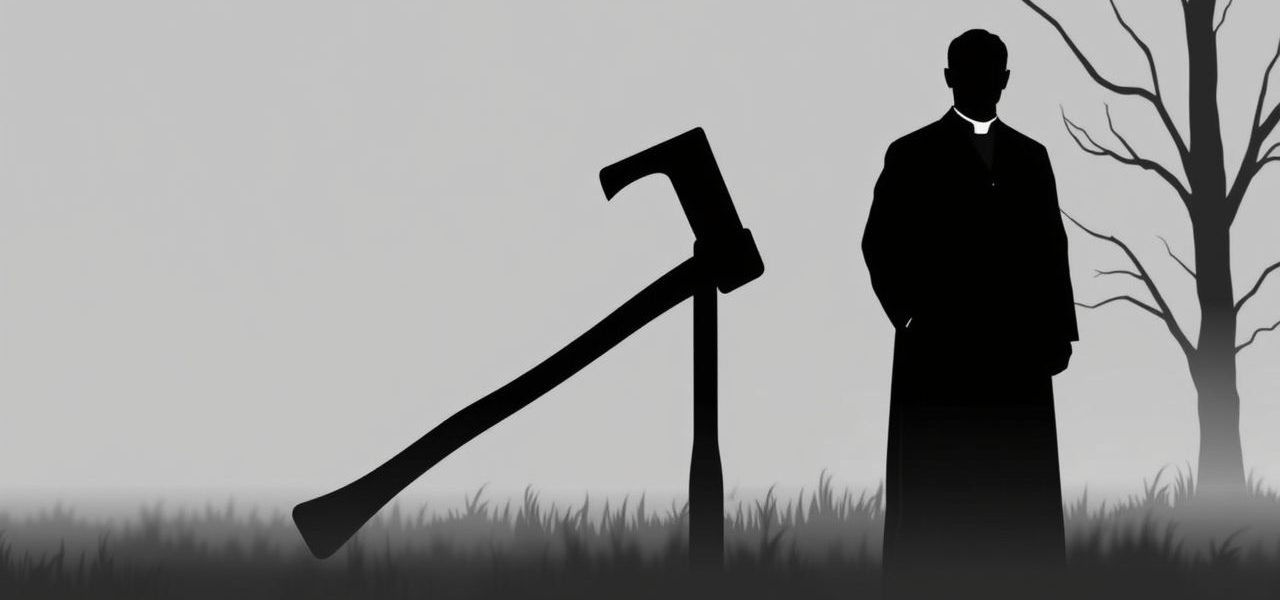
On the night of June 9, 1912, the small town of Villisca, Iowa, was shattered by a brutal and mysterious crime. Eight people, including six children, were savagely murdered in their beds with an axe. The case, now known as the Villisca Axe Murders, remains one of the most chilling unsolved crimes in American history. One of the most controversial figures linked to the murders was Reverend George Kelly, a traveling preacher with a troubled past. His strange behavior, confessions, and trial continue to fuel debate over his potential guilt more than a century later.
The Villisca Axe Murders: A Gruesome Discovery
On the morning of June 10, 1912, neighbor Mary Peckham noticed something odd at the Moore residence. The house was unusually quiet, and none of the children came out to do their chores. When she failed to get a response at the door, she called Ross Moore, the brother of Josiah Moore, the homeowner. Ross entered the house and discovered a horrific scene: the entire Moore family and two young guests, the Stillinger sisters, had been bludgeoned to death in their beds.
Each victim had been struck multiple times in the head with the blunt side of an axe. Windows were covered, mirrors draped, and all the victims were found under bedcovers or with clothes placed over their heads. The murder weapon was discovered in the house, wiped clean and left leaning against a wall. The sheer brutality and ritualistic elements of the crime shocked the community and sparked a nationwide manhunt.
The Victims
- Josiah B. Moore, age 43
- Sarah Moore, age 39
- Herman Moore, age 11
- Katherine Moore, age 10
- Boyd Moore, age 7
- Paul Moore, age 5
- Lena Stillinger, age 12
- Ina Stillinger, age 8
Who Was Reverend George Kelly?
Reverend George Kelly was a traveling preacher from England who had come to Villisca to attend the Children’s Day services at the Moore family’s church the night before the murders. He was known for his erratic behavior and fragile mental health. Standing just over five feet tall, Kelly was a peculiar figure, deeply religious but prone to emotional instability. He had previously been accused of sexual misconduct and suffered from severe psychological issues, including reported hallucinations and paranoia.
Despite his role as a preacher, Kelly’s reputation was stained by bizarre outbursts and inappropriate letters to women. His presence in Villisca at the time of the murders, combined with his past behavior, soon made him a person of interest to investigators.
Suspicious Behavior After the Murders
In the days following the murders, Reverend Kelly exhibited behavior that raised eyebrows. He left town early the next morning on a train and allegedly told fellow passengers about the Villisca murders before news had been widely circulated. This detail alone made law enforcement question how he could have known the specifics of the crime so soon.
Furthermore, Kelly wrote bizarre letters to investigators and others involved in the case, including one in which he claimed to have been in the house during the murders but was not responsible. His obsession with the crime and eagerness to insert himself into the investigation became increasingly alarming.
The Confession and Arrest
Two years after the murders, in 1914, Kelly was finally arrested. During an intense and prolonged interrogation, he allegedly confessed to the killings, stating that he was commanded by God to slay utterly. However, his confession was inconsistent and quickly recanted. Critics of the investigation argue that the confession was coerced and unreliable, given Kelly’s mental state.
Despite these issues, Kelly was charged with the murder of one of the Stillinger girls. His trial in 1917 became a national sensation. The prosecution painted him as a mentally disturbed man driven by religious delusion and repressed sexual urges. The defense, however, emphasized his history of mental illness and pointed out the lack of physical evidence tying him to the scene.
The Trial Outcome
Reverend George Kelly’s first trial ended in a hung jury. In a second trial held shortly thereafter, he was acquitted. Despite his confession, the jury found the case too weak, with insufficient evidence to convict. Kelly walked free, and the Villisca Axe Murders remain officially unsolved to this day.
Other Suspects and Theories
While Reverend Kelly is the most well-known suspect, other individuals have also been linked to the crime over the years. Some theories suggest the murders were the work of a transient serial killer who hopped trains and left similar crime scenes in other towns. A few have connected the crime to William Mansfield, a man suspected of multiple axe murders in Illinois and Kansas.
Another theory involves Henry Moore (unrelated to the Moore family), who was convicted of similar axe murders and had traveled through the Midwest during that time. None of these suspects were ever charged in connection with the Villisca killings, leaving the case clouded in speculation and mystery.
Unanswered Questions
- Why were all the victims covered after death?
- Why were the mirrors and windows obscured?
- Was the motive religious, personal, or the work of a random killer?
- Why did the killer linger in the house, even cooking food that was left untouched?
The Lasting Legacy of Reverend Kelly
Reverend George Kelly died in 1951, never officially labeled as the murderer. His role in the case continues to captivate true crime enthusiasts, historians, and paranormal investigators. Some believe he was a scapegoat, mentally unfit to stand trial or even confess truthfully. Others are convinced his unstable mind made him capable of carrying out such a horrific act.
The Villisca Axe Murders have inspired books, documentaries, and ghost stories. The Moore house still stands today and is open for tours, attracting thousands of visitors annually. It has become one of the most infamous crime scenes in American history, partly because of Reverend Kelly’s eerie connection to the events and the lingering uncertainty surrounding his guilt or innocence.
The Villisca Axe Murders remain a haunting chapter in early 20th-century crime history. Reverend George Kelly, with his erratic behavior, religious fervor, and questionable confessions, continues to be a key figure in the case. Whether he was the true killer or a convenient suspect in a town desperate for answers, the truth may never be fully known. What endures is the chilling legacy of one of America’s most baffling unsolved crimes and the enduring question: did Reverend Kelly wield the axe that ended eight innocent lives?