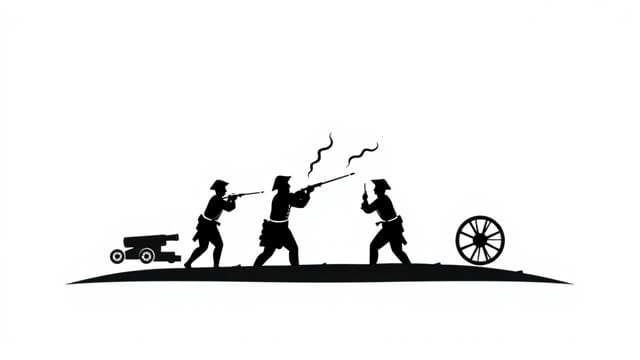
The first battle of the Revolutionary War marked the beginning of open armed conflict between the American colonists and British forces. Taking place in April 1775, this confrontation at Lexington and Concord represented more than just a military clash it symbolized the determination of the American people to stand against what they saw as tyranny and oppression. The engagement was the spark that ignited a long and difficult war for independence. Understanding the causes, events, and aftermath of this first battle offers insight into how the American Revolution began and why it endured for so many years.
Background and Tensions Leading to Conflict
Colonial Grievances Against British Rule
For over a decade before the Revolutionary War began, American colonists had grown increasingly frustrated with British policies. The Stamp Act, Townshend Acts, and Tea Act were just a few of the measures that led to widespread protest. Colonists objected to taxation without representation, believing they should not be taxed by a Parliament in which they had no elected representatives.
Formation of Militia and Increased British Surveillance
As tensions rose, the colonies began forming militias composed of ordinary citizens trained to respond quickly in times of emergency. These local defense units, known as Minutemen, were ready to fight at a moment’s notice. In response, British authorities increased surveillance and attempted to suppress the buildup of arms and ammunition in the colonies.
The British Plan to Seize Colonial Weapons
General Gage’s Orders
In April 1775, British General Thomas Gage, the military governor of Massachusetts, received secret orders to seize and destroy colonial military supplies stored in Concord. Gage hoped to prevent armed rebellion by disarming the colonists before it could begin. He dispatched approximately 700 British troops from Boston under the cover of darkness on the night of April 18.
Paul Revere’s Midnight Ride
The colonists were not caught off guard. Thanks to an intelligence network that included Paul Revere, William Dawes, and Samuel Prescott, the alarm was raised throughout the countryside. Revere’s famous ride warned the militias in Lexington and Concord that the Regulars are coming, giving them precious time to prepare for the confrontation.
Battle at Lexington
The Skirmish on the Green
At dawn on April 19, 1775, British troops arrived in Lexington and encountered about 70 colonial Minutemen on the village green. Led by Captain John Parker, the militia was heavily outnumbered. The confrontation was tense, and while the colonial force did not intend to initiate combat, a shot was fired from an unknown source. This shot heard ’round the world became the symbolic beginning of the Revolutionary War.
The British responded with a volley, killing eight Minutemen and wounding several others. The surviving militia scattered, and the British continued their march toward Concord. Although the encounter was brief, the skirmish at Lexington demonstrated the colonists’ willingness to stand up to British troops with arms.
Battle at Concord
Searching for Supplies
Upon reaching Concord, British soldiers searched homes and buildings for weapons and ammunition but found very little, as most had been moved or hidden in advance. The colonial militia had now grown in number, as word of the confrontation in Lexington spread rapidly.
The North Bridge Encounter
At Concord’s North Bridge, around 400 colonial militiamen faced off against a smaller British force. This time, the Americans took the initiative, and the two sides exchanged fire. The British were driven back across the bridge, marking the first time colonial forces forced the British into retreat in open combat. Several soldiers on both sides were killed or wounded.
British Retreat and Harassment
As the British retreated toward Boston, thousands of colonial militia from surrounding towns joined the pursuit. The retreat turned into a running battle along the 18-mile route back to the city. The colonists used guerrilla tactics firing from behind trees, stone walls, and buildings. By the time the British reached Boston, they had suffered over 250 casualties, while the Americans had about 90 killed or wounded.
Aftermath and Significance
The Beginning of the Revolutionary War
The events of April 19, 1775, marked the official outbreak of the Revolutionary War. While earlier events like the Boston Massacre and Boston Tea Party had heightened tensions, the battles at Lexington and Concord represented the first instances of organized, armed resistance to British authority.
Unification of the Colonies
News of the battles spread rapidly throughout the colonies, inspiring many to take up arms. Even moderate colonists who had hoped for reconciliation began to support the cause of independence. The Second Continental Congress soon convened, and within weeks, colonial militias surrounded Boston in what became known as the Siege of Boston.
British Miscalculations
The British government underestimated the resolve and preparedness of the colonial population. Rather than quelling rebellion, the expedition to Lexington and Concord galvanized it. The show of resistance convinced many British officials that the conflict would not be easily resolved.
Legacy of the First Battle
Symbolism and Historical Memory
Lexington and Concord have become enduring symbols of American patriotism and self-determination. Monuments, reenactments, and historical narratives continue to commemorate the courage of the Minutemen and the significance of their actions in shaping American history.
Military Lessons and Mobilization
The battle demonstrated the effectiveness of local militias and their commitment to the revolutionary cause. It also exposed weaknesses in British command and logistical planning. In the months that followed, both sides would mobilize and prepare for a much larger and longer conflict than anyone had initially imagined.
The first battle of the Revolutionary War, fought at Lexington and Concord, was more than just the opening of a military campaign. It represented a fundamental turning point in the relationship between the American colonies and Great Britain. Ordinary citizens took extraordinary risks to defend their rights, signaling the birth of a movement that would eventually lead to the creation of the United States. These early confrontations set the tone for the Revolutionary War and laid the foundation for a new nation built on the ideals of liberty, resistance to oppression, and democratic self-governance.