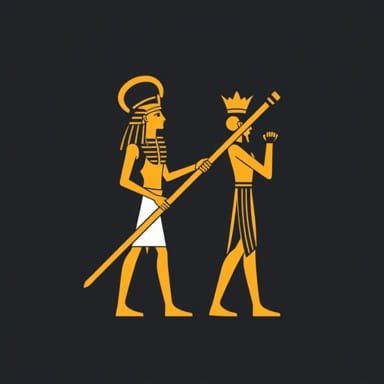
The Egyptian crook and flail are among the most iconic symbols of ancient Egyptian royalty and power. These two objects, often depicted in the hands of pharaohs and gods in tomb paintings, statues, and carvings, represent authority, leadership, and the responsibilities of the ruler. The crook, shaped like a shepherd’s staff, and the flail, a tool with three strands, together embody the balance between guidance and discipline. Understanding their meaning and historical significance provides insight into ancient Egyptian culture, religion, and the role of the pharaoh as both a protector and provider for his people.
The Crook: Symbol of Shepherd Leadership
The crook, also called the ‘heka,’ resembles a shepherd’s staff with a curved top. It symbolizes the pharaoh’s role as the shepherd of the Egyptian people, guiding and protecting them like a shepherd leads a flock. The crook was an emblem of benevolent leadership, care, and responsibility.
Origins and Use
In ancient Egypt, shepherds were essential for managing livestock, which was vital for the economy and sustenance. The crook’s design was practical for herding animals and guiding them safely. The pharaoh’s adoption of this symbol indicated that he was responsible for the wellbeing of his subjects, leading them with wisdom and care.
The Flail: Sign of Authority and Discipline
The flail, known as the ‘nekhakha,’ consists of three beaded strands attached to a handle. Historically, it was an agricultural tool used for threshing grain separating the edible part of cereals from the chaff. In the royal context, the flail represents the pharaoh’s power to maintain order, enforce laws, and provide prosperity through agriculture.
Symbolic Meaning
While the crook emphasizes guidance, the flail stresses discipline and authority. It signifies the pharaoh’s ability to enforce justice and control over the land’s resources. The flail also reflects the importance of agriculture in sustaining Egypt’s civilization, highlighting the ruler’s role in securing food and wealth.
Combined Symbolism of the Crook and Flail
Often shown crossed over the chest of pharaoh statues or held in the hands of deities like Osiris, the crook and flail together symbolize a perfect balance of leadership qualities. They convey that a good ruler must be both a loving guide and a firm enforcer, nurturing his people while ensuring order and stability.
Religious Significance
In Egyptian mythology, the god Osiris, ruler of the afterlife, is frequently depicted holding the crook and flail. This association gave these symbols divine authority, reinforcing the pharaoh’s status as a god-king on earth. The imagery linked earthly power with spiritual legitimacy.
Historical Depictions and Artifacts
The crook and flail appear in numerous Egyptian artworks spanning dynasties. From the famous golden mask of Tutankhamun to temple reliefs and papyrus manuscripts, these symbols are consistently present wherever royal power is represented.
Pharaohs Who Used the Symbols
Many pharaohs, including Ramses II, Akhenaten, and Tutankhamun, are depicted with the crook and flail. These images reinforced their role as rulers responsible for their people’s prosperity and protection. The symbols were often made of precious materials like gold and lapis lazuli to highlight their sacred status.
The Crook and Flail in Modern Culture
Today, the crook and flail remain powerful symbols associated with ancient Egypt. They appear in museums, literature, movies, and popular culture as representations of pharaonic power and mystique. Scholars and enthusiasts study these symbols to better understand ancient Egyptian governance and belief systems.
Educational and Cultural Importance
Teaching about the crook and flail offers a window into how ancient Egyptians viewed leadership, combining practical governance with religious authority. The symbols remind us that ancient rulers sought to balance kindness with strength, a lesson relevant across cultures and eras.
Summary of the Crook and Flail
- The crook symbolizes the pharaoh as a shepherd guiding and protecting his people.
- The flail represents authority, discipline, and the power to ensure agricultural prosperity.
- Together, they embody balanced leadership and divine right.
- The symbols are closely linked to the god Osiris and royal iconography.
- They continue to be important cultural and historical symbols today.
The Egyptian crook and flail are much more than ancient artifacts; they represent a philosophy of rulership that combines care, guidance, and firm authority. These symbols reveal how the pharaoh was seen not only as a political leader but also as a divine shepherd responsible for the harmony and wellbeing of the land and its people. Their enduring presence in art and culture highlights the lasting legacy of ancient Egyptian civilization and its sophisticated understanding of power and responsibility.