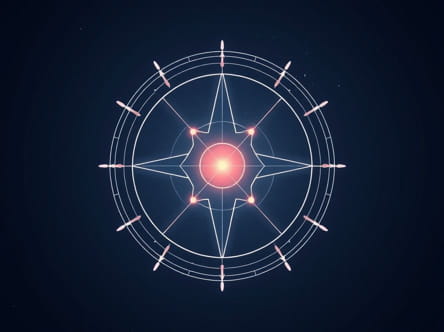
The Cognitive Theoretic Model of the Universe, often abbreviated as CTMU, presents a unique framework for understanding reality that integrates concepts from philosophy, mathematics, physics, and cognitive science. This model proposes that the universe itself functions as a self-processing and self-configuring entity, with structure and consciousness interwoven into its fundamental nature. Unlike traditional scientific models that separate observer from observed, the CTMU suggests that cognition is an intrinsic aspect of the universe, allowing for a unified explanation of both physical laws and conscious experience. By exploring this theory, researchers and thinkers gain insights into the interconnectedness of reality, the role of information in physical processes, and the potential for a coherent explanation of phenomena ranging from quantum mechanics to human cognition.
Origins and Development of the CTMU
The Cognitive Theoretic Model of the Universe was developed by Christopher Langan, an independent thinker known for his work in cognitive theory and philosophy. Langan’s model emerged from the intersection of formal logic, metaphysics, and theoretical physics, with the aim of providing a comprehensive framework for understanding the universe. Central to the CTMU is the notion that reality is a form of self-processing language, where the universe operates as a complex cognitive system capable of generating and sustaining itself through intrinsic logical structures. This model challenges traditional mechanistic views of the cosmos, offering a more holistic understanding that accounts for consciousness, information, and causality.
Philosophical Foundations
The CTMU draws heavily on metaphysical and logical principles. At its core is the concept of Self-Configuring Self-Processing Language” (SCSPL), which posits that reality can be viewed as a language that defines its own structure and dynamics. This philosophical approach integrates elements of idealism and rationalism, suggesting that information and cognition are fundamental constituents of existence. By framing the universe as a self-referential system, the CTMU provides a theoretical bridge between subjective experience and objective physical processes.
Mathematical and Logical Structure
Mathematics and logic are integral to the CTMU framework. Langan employs formal logical structures to model how the universe processes information and maintains coherence. The model incorporates concepts from set theory, topology, and meta-mathematics to describe the universe as a self-contained, self-referential system. By representing reality as a language with its own syntax and rules, the CTMU offers a method for analyzing complex phenomena, including the behavior of matter, energy, and consciousness. This logical rigor distinguishes the CTMU from more speculative or purely philosophical models of reality.
Key Concepts in the CTMU
The Cognitive Theoretic Model of the Universe introduces several novel concepts that provide a framework for understanding both physical and cognitive phenomena. These concepts emphasize the interconnectedness of reality and the role of information in shaping the universe.
Self-Configuring Self-Processing Language (SCSPL)
SCSPL is the core principle of the CTMU, asserting that the universe operates as a language capable of defining and modifying itself. In this framework, every aspect of reality, from fundamental ptopics to complex organisms, can be understood as expressions of an underlying linguistic structure. SCSPL allows for the integration of physical laws and conscious processes, suggesting that cognition and reality are not separate but intrinsically linked. By modeling the universe as a self-processing language, the CTMU provides a mechanism for explaining how order, complexity, and consciousness emerge naturally from the fabric of reality.
Self-Containment and Teleology
The CTMU posits that the universe is self-contained and teleological, meaning it possesses inherent goals or purposes that guide its evolution. This teleological perspective does not imply conscious intent in the human sense but suggests that the universe follows intrinsic patterns that optimize coherence, stability, and complexity. By recognizing these underlying goals, the CTMU offers explanations for phenomena such as the fine-tuning of physical constants, the emergence of life, and the development of intelligent systems. Teleology within the CTMU is tightly linked to the self-configuring nature of the universe, where each state of reality is both a product of prior conditions and a contributor to future states.
Reality as Information
In the CTMU, information is considered a fundamental component of reality, on par with matter and energy. Every event, process, or entity can be described in terms of information processing within the SCSPL framework. This informational perspective aligns with contemporary scientific theories such as quantum information theory, where the behavior of ptopics is understood in terms of informational states. By emphasizing the primacy of information, the CTMU provides a unified language for describing physical laws, consciousness, and the emergence of complex systems.
Implications for Physics and Cosmology
The Cognitive Theoretic Model of the Universe has profound implications for our understanding of physics and cosmology. By integrating cognitive principles with physical laws, the CTMU provides a framework for explaining phenomena that traditional models struggle to address. Researchers exploring this model gain new insights into the structure of space-time, the nature of causality, and the role of consciousness in the universe.
Quantum Mechanics and Nonlocality
The CTMU offers a perspective on quantum mechanics that emphasizes the self-processing nature of reality. Nonlocal phenomena, such as entanglement, can be interpreted as manifestations of the universe’s inherent informational coherence. In this context, distant ptopics remain correlated because they are components of a single self-referential system, governed by the rules of SCSPL. This approach provides a conceptual framework for understanding quantum phenomena without resorting to purely probabilistic or observer-dependent interpretations.
Cosmological Considerations
The CTMU also has implications for cosmology, including the origin, evolution, and large-scale structure of the universe. By treating the cosmos as a self-configuring system, the model offers explanations for the apparent fine-tuning of physical constants, the emergence of structure in the early universe, and the conditions necessary for life. This perspective suggests that the universe’s evolution is guided by intrinsic patterns that optimize coherence and complexity, providing a complementary approach to conventional cosmological theories such as the Big Bang and inflationary models.
Applications in Cognitive Science and Philosophy
Beyond physics and cosmology, the CTMU has significant relevance for cognitive science and philosophy. By framing consciousness as an intrinsic aspect of the universe, the model provides insights into the nature of perception, cognition, and self-awareness. Philosophers and scientists can explore how mental processes are connected to the structure of reality, offering potential solutions to long-standing questions about the mind-body relationship and the origins of intelligence.
Consciousness and Self-Reference
The CTMU emphasizes the self-referential nature of consciousness, suggesting that individual awareness is a microcosmic reflection of the universe’s cognitive structure. This perspective aligns with theories in cognitive science that consider consciousness as an emergent property of information processing. By modeling consciousness as an integral component of a self-processing universe, the CTMU bridges the gap between subjective experience and objective reality.
Philosophical Implications
Philosophically, the CTMU challenges traditional dualistic views that separate mind and matter. It proposes a monistic framework in which cognition, information, and physical reality are interconnected aspects of a unified system. This approach has implications for metaphysics, epistemology, and ethics, encouraging a holistic understanding of existence and the relationship between knowledge, action, and the universe.
Critiques and Controversies
While the Cognitive Theoretic Model of the Universe presents a comprehensive and ambitious framework, it has also faced criticism. Some scholars argue that the model’s complexity and abstract nature make it difficult to test empirically. Others question the application of cognitive and linguistic metaphors to physical reality, suggesting that the theory may be more philosophical than scientific. Nevertheless, the CTMU continues to attract interest for its innovative approach and its potential to unify diverse domains of knowledge.
The Cognitive Theoretic Model of the Universe offers a groundbreaking perspective on the nature of reality, integrating physics, cognition, and philosophy into a coherent framework. By proposing that the universe functions as a self-configuring, self-processing language, the CTMU provides novel insights into the interconnectedness of consciousness, information, and physical phenomena. From quantum mechanics to cosmology and cognitive science, this model challenges traditional boundaries and encourages a holistic understanding of existence. While controversial and complex, the CTMU remains a valuable conceptual tool for those exploring the fundamental questions of reality, offering a rich framework for research, reflection, and philosophical inquiry into the nature of the universe.