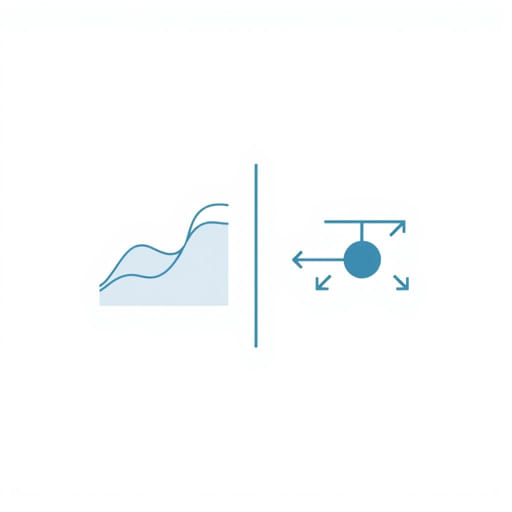
In the field of research and data analysis, understanding the relationship between variables is fundamental. Two concepts that are frequently discussed but often confused are correlation and causation. While correlation indicates a statistical association between two variables, causation implies that one variable directly affects the other. Misinterpreting these concepts can lead to flawed conclusions, incorrect policy decisions, and misleading interpretations in scientific studies, economics, medicine, and social research. Grasping the difference between correlation and causation is crucial for any analyst, researcher, or professional working with data to ensure valid results and accurate interpretations.
Understanding Correlation
Correlation measures the degree to which two variables move together. It is a statistical concept used to identify relationships between variables without implying that one causes the other. The correlation coefficient, often represented asr, ranges from -1 to +1, where +1 indicates a perfect positive correlation, -1 indicates a perfect negative correlation, and 0 indicates no correlation. Positive correlation means that as one variable increases, the other tends to increase as well, while negative correlation means that as one variable increases, the other tends to decrease.
Types of Correlation
- Positive CorrelationVariables increase or decrease together. For example, hours studied and exam scores often show positive correlation.
- Negative CorrelationOne variable increases while the other decreases. For example, the number of hours spent on social media may negatively correlate with study time.
- No CorrelationChanges in one variable do not predict changes in another variable.
Understanding Causation
Causation, also known as cause-and-effect, occurs when a change in one variable directly produces a change in another variable. Establishing causation requires more than just statistical association; it often involves controlled experiments, longitudinal studies, and rigorous analysis to rule out confounding factors. Unlike correlation, causation implies a directional relationship where the independent variable has a direct effect on the dependent variable.
Examples of Causation
- Smoking and lung cancer Extensive research has shown that smoking causes an increased risk of lung cancer.
- Exercise and physical fitness Regular exercise directly improves cardiovascular health and muscle strength.
- Vaccination and immunity Receiving vaccines causes the body to develop immunity against specific diseases.
Key Differences Between Correlation and Causation
While correlation and causation are related, confusing them can result in incorrect conclusions. Some key differences include
- DirectionalityCorrelation does not indicate which variable affects the other, whereas causation specifies a directional influence.
- Proof RequiredCorrelation can be observed in data alone, while causation requires controlled experiments or additional evidence.
- Potential ConfoundersCorrelation may be influenced by a third variable, but causation accounts for confounding factors to establish a direct effect.
- ImplicationsCorrelation suggests association, useful for prediction, whereas causation implies actionable influence and interventions.
Common Misinterpretations
Many studies and media reports confuse correlation with causation. For example, an observed correlation between ice cream sales and drowning incidents might lead someone to incorrectly conclude that ice cream consumption causes drowning. In reality, both variables are influenced by a third factor hot weather. This demonstrates the danger of assuming causation based solely on correlation.
Methods to Determine Causation
Several methods can help researchers move from correlation to establishing causation
- Controlled ExperimentsRandomized controlled trials (RCTs) assign participants randomly to treatment or control groups, helping isolate the causal effect of a variable.
- Longitudinal StudiesObserving the same subjects over time can reveal causal relationships by tracking how changes in one variable affect another.
- Statistical ControlsUsing regression analysis or other techniques can account for confounding variables that might affect the observed relationship.
- Granger CausalityIn time-series data, this method tests whether past values of one variable can predict current values of another, suggesting potential causal influence.
Importance in Research and Decision Making
Distinguishing between correlation and causation is vital across disciplines. In public health, policy decisions based on causal relationships can save lives, whereas misinterpreted correlations might lead to ineffective interventions. In economics, understanding causal links helps design effective fiscal and monetary policies. In education, recognizing causal effects of teaching methods on learning outcomes ensures better educational strategies. Analysts and researchers must apply rigorous methods and critical thinking to ensure that data interpretations lead to valid conclusions.
Examples of Practical Applications
- Medical ResearchIdentifying causal links between lifestyle choices and disease development for treatment and prevention strategies.
- MarketingUnderstanding whether advertising campaigns actually drive sales rather than just correlating with market trends.
- Social SciencesStudying the causal impact of education programs on community development and social behavior.
- Environmental StudiesDetermining whether specific pollutants cause health issues or simply correlate with industrial activity.
Challenges in Establishing Causation
Despite its importance, establishing causation can be complex. Ethical considerations often prevent certain experiments, observational data may include hidden confounders, and statistical techniques cannot fully guarantee causality. Researchers must combine multiple approaches, including experimental design, theoretical reasoning, and robust statistical analysis, to support causal claims. Recognizing these challenges is essential to maintain scientific rigor and avoid misleading conclusions.
Understanding the difference between correlation and causation is a cornerstone of effective research and data analysis. Correlation identifies associations that can guide predictions, while causation determines direct effects that inform interventions and policy decisions. Misinterpreting these concepts can have serious consequences in medicine, economics, social sciences, and beyond. By applying careful analysis, experimental designs, and information-based methods, researchers can accurately distinguish between mere relationships and true causal links, leading to better understanding, smarter decisions, and actionable insights in diverse fields of study.