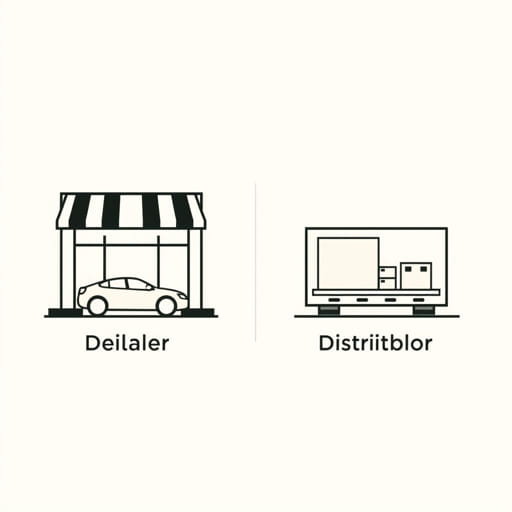
Understanding the difference between a dealer and a distributor is essential in business, especially in the context of supply chains, marketing, and sales. These two roles are often confused because they both act as intermediaries between the manufacturer and the end customer. However, their responsibilities, functions, and relationships with the manufacturer are quite different. Knowing how they operate helps businesses make smarter decisions about logistics, inventory, pricing, and territory control. This topic explores the detailed differences between dealers and distributors in a way that’s easy to understand and useful for business professionals, students, and entrepreneurs.
Definition of Dealer and Distributor
What Is a Distributor?
A distributor is a company or individual who purchases goods directly from a manufacturer with the goal of reselling them to retailers, dealers, or sometimes directly to customers. Distributors usually buy in bulk and act as a bridge between the manufacturer and other intermediaries in the sales chain.
What Is a Dealer?
A dealer is typically a business or individual who purchases products from a distributor or wholesaler and sells them directly to the end user or consumer. Dealers may operate through physical stores or online platforms, and they often serve as the final point in the distribution chain before a product reaches the customer.
Key Differences Between Dealer and Distributor
1. Relationship with Manufacturer
Distributorshave a direct relationship with manufacturers. They often sign agreements that give them the exclusive right to distribute a certain product within a specific region or market.
Dealersgenerally do not have a direct relationship with manufacturers. Instead, they obtain products from distributors or wholesalers.
2. Volume of Purchase
Distributors usually purchase in bulk, often in thousands of units, because they resell to multiple dealers or retailers. Their bulk purchasing gives them access to better pricing from manufacturers.
Dealers buy in smaller quantities, based on customer demand and local market needs. Their purchases are based on short-term sales goals and limited shelf space.
3. Sales Target and Area Coverage
Distributors are often assigned large regions or multiple territories. They may be responsible for distributing products to several cities or even entire countries.
Dealers usually serve a smaller, localized area. They target specific customer segments and tend to be located closer to the final consumer.
4. Marketing and Promotion Responsibilities
Distributors are often required to conduct promotional activities, organize trade shows, and provide technical training for dealers. They may even contribute to advertising efforts for the brand.
Dealers focus more on local sales and customer interaction. They may promote products within their store or website but don’t usually handle large-scale marketing campaigns.
5. After-Sales Service
In many industries, distributors are responsible for providing training, spare parts, and service support to the dealers. They also manage warranty claims and technical support on behalf of the manufacturer.
Dealers provide basic customer service, such as product demonstrations, installation, and sometimes maintenance. However, more complex service issues are typically referred to the distributor or the manufacturer.
6. Credit and Financial Risk
Distributors often offer credit to dealers and carry higher financial risks. They manage large inventories and may have to store goods for extended periods before they are sold.
Dealers usually purchase on a smaller scale and often pay upfront or on short-term credit. Their financial risk is lower compared to distributors.
Roles and Responsibilities
Distributor Responsibilities
- Purchase goods in bulk from manufacturers
- Distribute products to multiple dealers or retailers
- Handle product warehousing and logistics
- Provide technical support and service training
- Assist in regional marketing and promotional activities
Dealer Responsibilities
- Sell products to end customers
- Offer product advice and demonstrations
- Handle basic installation and customer support
- Place reorders based on demand and inventory
- Build customer relationships and brand loyalty
Examples Across Industries
Automotive Industry
In the automotive sector, the car manufacturer sells vehicles to a distributor, who then supplies them to car dealers. The dealer is the one customers interact with when buying a car. The distributor may also provide training and support to the dealer.
Electronics Industry
Large electronics brands like Samsung or Sony appoint regional distributors to manage the flow of products across countries or regions. Local electronics stores, or dealers, purchase from these distributors and sell to consumers.
Pharmaceutical Industry
Drug manufacturers sell to licensed pharmaceutical distributors, who then supply medicines to drugstores and pharmacies. The pharmacy, acting as a dealer, sells directly to patients and consumers.
Legal and Contractual Differences
Distributors often sign formal contracts with manufacturers, outlining exclusive rights, pricing agreements, delivery schedules, and obligations for marketing and support. These contracts are legally binding and may include clauses for performance expectations.
Dealers might have less formal arrangements, especially in smaller markets. However, in high-value or regulated industries like automobiles or pharmaceuticals, dealership agreements can also be comprehensive and subject to compliance laws.
Advantages and Disadvantages
Advantages of Distributors
- High volume purchases result in better pricing
- Strong bargaining power with manufacturers
- Opportunities to control multiple markets
Disadvantages of Distributors
- Higher capital investment required
- Responsible for warehousing and logistics
- Carry more risk in case of low demand
Advantages of Dealers
- Closer connection with end customers
- Lower financial commitment than distributors
- Flexibility in selling and retail operations
Disadvantages of Dealers
- Limited pricing control due to dependence on distributor
- Smaller profit margins compared to distributors
- Less influence over manufacturer policies and promotions
Summary Table: Dealer vs Distributor
| Criteria | Distributor | Dealer |
|---|---|---|
| Buys From | Manufacturer | Distributor |
| Sells To | Dealer or retailer | End customer |
| Purchase Volume | Large scale (bulk) | Small scale (retail size) |
| Territory | Wide region | Localized |
| Marketing Role | Regional promotions and support | Local advertising and display |
The difference between a dealer and a distributor lies in their position in the supply chain, the volume of goods they handle, and their relationship with the manufacturer. While distributors act as intermediaries between manufacturers and dealers, dealers bring products directly to the customer. Both play critical roles in making products available to the public, each with unique responsibilities and business dynamics. Understanding these distinctions is key for businesses planning market strategies, expanding operations, or building long-term partnerships in sales and distribution channels.