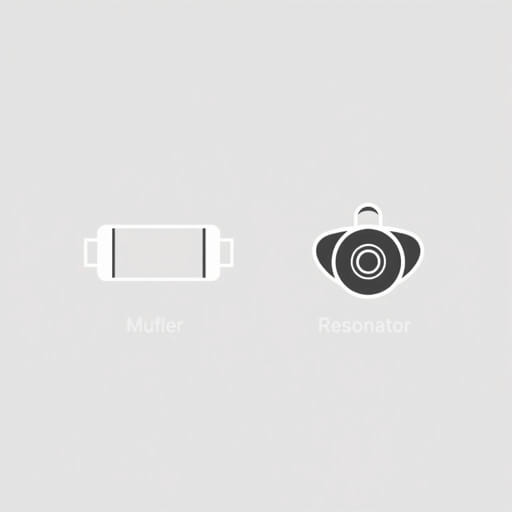
Every vehicle’s exhaust system plays a key role in managing engine sound and emissions, and two important components in that system are the muffler and the resonator. While many people assume they are the same or serve the same purpose, there are significant differences between a muffler and a resonator. Each part contributes uniquely to the overall performance, sound, and efficiency of a vehicle’s exhaust system. Understanding the difference between muffler and resonator helps car owners, enthusiasts, and mechanics make better choices when modifying or maintaining their vehicles for sound quality, fuel economy, or engine performance.
Function and Purpose
What is a Muffler?
A muffler is a component located in the exhaust system of a vehicle that reduces the noise produced by the engine. It contains a series of chambers, perforated tubes, or baffles designed to cancel out or absorb sound waves. The primary goal of a muffler is noise reduction. As exhaust gases pass through it, the muffler minimizes the harsh sound produced by combustion before it exits the tailpipe.
What is a Resonator?
A resonator is another part of the exhaust system that helps tune the sound created by the engine. It doesn’t necessarily reduce noise as much as a muffler but changes the tone or quality of the exhaust note. Resonators work using the principle of sound wave resonance to cancel specific frequencies, particularly those that cause droning or annoying sounds. This makes the driving experience smoother and more pleasant.
Position in the Exhaust System
Both mufflers and resonators are installed along the exhaust path, but they are located in different positions:
- Resonator: Usually placed before the muffler, closer to the engine. It acts as a pre-treatment to the exhaust noise.
- Muffler: Located at the end of the exhaust system, just before the tailpipe. It is the final step in reducing sound before it exits the vehicle.
The combination of these two components creates a well-balanced and optimized exhaust tone, especially in performance or luxury vehicles.
Sound Characteristics
Sound Reduction in Mufflers
Mufflers are designed primarily to suppress engine noise. They often make use of sound-dampening materials and specific chamber designs that absorb sound waves. A muffler can significantly reduce the volume of exhaust noise, turning loud engine roars into quiet purrs or more controlled sounds. This is why mufflers are required by law in most regions to keep vehicles within acceptable noise limits.
Sound Tuning in Resonators
Resonators are not as effective in reducing the overall volume, but they are essential for tuning sound frequencies. They help eliminate high-pitched or droning sounds that might be irritating, especially at highway speeds. Some resonators are tuned to eliminate certain harmonics, providing a deeper and more refined exhaust note. In performance cars, this can enhance the auditory experience without being excessively loud.
Construction and Design
Muffler Design
Mufflers are typically larger in size and have multiple chambers or fiberglass packing. There are various types of mufflers including:
- Chambered mufflers
- Straight-through or glasspack mufflers
- Turbo mufflers
Each type has a different approach to noise suppression and backpressure management. The materials used include stainless steel or aluminized steel to resist corrosion due to exhaust gases.
Resonator Design
Resonators are generally cylindrical and smaller than mufflers. They feature hollow interiors and may include tuning tubes or mesh that redirects or reflects sound waves to cancel specific tones. Some resonators are incorporated into the same housing as the muffler, especially in OEM (original equipment manufacturer) exhaust systems.
Performance Impact
Performance-conscious drivers often pay attention to how mufflers and resonators affect horsepower and torque.
- Mufflers: Because of their noise-reducing design, some mufflers can create backpressure, which may slightly reduce engine efficiency. However, performance mufflers are designed to balance noise suppression with minimal restriction.
- Resonators: Have minimal effect on performance since their main purpose is sound tuning rather than restriction. In some setups, they can help smooth out airflow, slightly improving efficiency.
In high-performance setups, choosing the right combination of muffler and resonator can optimize both sound and power output.
Legal and Regulatory Considerations
In many countries and regions, mufflers are a legal requirement to ensure that vehicles do not exceed acceptable noise levels. Driving without a muffler, or with one that is excessively loud, may result in fines or inspection failures.
Resonators, on the other hand, are usually optional and not mandated by law. They are added for comfort, sound tuning, and performance, but most regulations do not require their presence as long as the vehicle stays within the legal noise limit.
Customization and Modification
Removing or Replacing Mufflers
Some car owners remove mufflers to increase exhaust noise, but this often leads to a loud, harsh sound and may violate noise regulations. Replacing a stock muffler with a performance muffler can offer a more aggressive sound while staying within legal limits.
Adding or Upgrading Resonators
Upgrading or adding a resonator can significantly improve sound quality without increasing volume. Performance resonators can be selected to match specific engine frequencies, offering a deep, rumbling tone that enhances the driving experience.
Maintenance and Longevity
- Mufflers: Prone to rust and corrosion due to constant exposure to moisture and heat. Regular inspections are necessary to detect leaks or cracks.
- Resonators: Also susceptible to corrosion but tend to last longer because they have fewer internal parts. Maintenance is generally minimal unless damage occurs from road debris or age.
Proper maintenance of both components ensures smooth engine performance, legal compliance, and enjoyable sound quality.
Summary of Key Differences
| Aspect | Muffler | Resonator |
|---|---|---|
| Main Function | Reduces overall noise | Tunes or refines sound tone |
| Position | End of exhaust system | Before muffler |
| Impact on Sound | Volume reduction | Frequency smoothing |
| Effect on Performance | Can create backpressure | Minimal performance impact |
| Legal Requirement | Often required by law | Not usually required |
Choosing Between Muffler and Resonator
Understanding the difference between muffler and resonator is important for anyone looking to modify or maintain their vehicle’s exhaust system. While both components work together to shape the exhaust sound, they serve different functions. The muffler focuses on reducing overall volume to meet legal and comfort standards, while the resonator tunes specific frequencies for a smoother and more enjoyable sound. Whether your goal is to enhance performance, achieve a specific exhaust tone, or simply stay within legal noise limits, selecting the right combination of muffler and resonator is key to a well-functioning and satisfying driving experience.