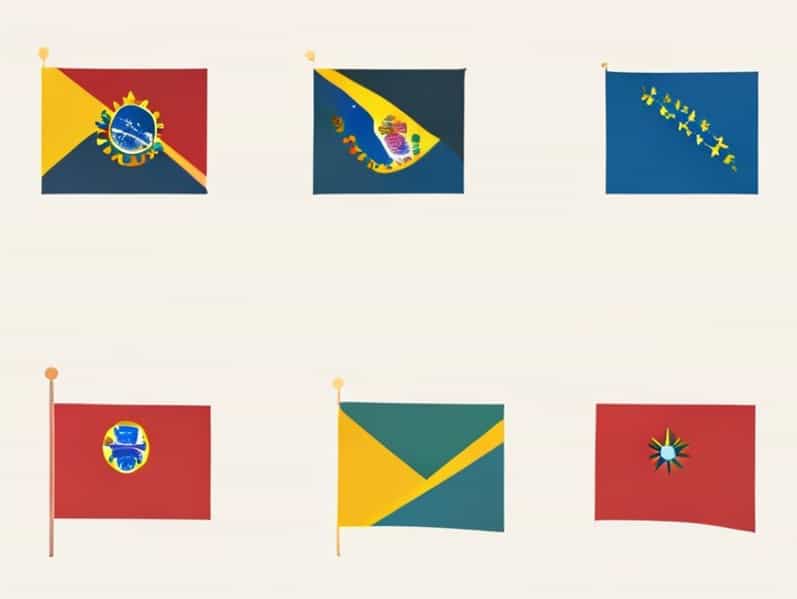
The flags of Latin America are full of history, color, and symbolism, representing the diverse nations that make up this culturally rich region. Each flag tells a story of independence, struggle, and national pride. From Mexico in the north to Argentina and Chile in the south, these flags are powerful emblems of identity and unity. By exploring their designs and meanings, we can better understand how Latin American countries express their heritage and values through their national symbols.
The Significance of Latin American Flags
Flags are more than decorative designs they are visual expressions of a nation’s character and ideals. In Latin America, most national flags emerged during the 19th century, a period marked by wars of independence and the formation of new republics. As European colonies gained freedom, they adopted flags that reflected their newfound sovereignty and aspirations for the future.
Many Latin American flags share common elements, such as stripes, stars, and colors representing liberty, unity, and natural beauty. Yet, each flag also carries unique historical and cultural details that make it distinct. Understanding these designs offers insight into the shared struggles and individual identities that shape Latin America.
Common Colors and Their Meanings
Across Latin America, certain colors appear repeatedly, often inspired by revolutionary ideals or natural features of the continent. These colors have deep symbolic meanings
- BlueOften symbolizes the sky, freedom, or the ocean connecting the region’s nations.
- WhiteRepresents peace, purity, and unity.
- RedStands for the blood shed for independence and courage.
- GreenAssociated with hope, fertility, and the land’s richness.
- Yellow or GoldRepresents wealth, the sun, and the natural resources of the region.
While these meanings vary slightly by country, they highlight shared values among Latin American nations freedom, unity, and pride in their natural heritage.
Flags of North Latin America
Mexico
The flag of Mexico features three vertical stripes of green, white, and red, with the national coat of arms in the center. The emblem depicts an eagle holding a serpent atop a cactus, based on an ancient Aztec legend about the founding of Tenochtitlán, now Mexico City. The colors have modern meanings green for hope, white for unity, and red for the blood of national heroes. Mexico’s flag is one of the most recognizable symbols of Latin identity and history.
Guatemala
Guatemala’s flag consists of two blue stripes on the sides and a white stripe in the middle, symbolizing the sky, the sea, and peace. The national emblem in the center features a quetzal bird, representing freedom, along with a scroll declaring independence from Spain on September 15, 1821. The crossed rifles and swords reflect the country’s readiness to defend liberty, while the laurel wreath represents victory.
El Salvador
The flag of El Salvador is blue-white-blue with the national coat of arms in the center. The blue stripes represent the Pacific Ocean and the Caribbean Sea, while the white stands for peace and unity. The coat of arms includes a triangle representing equality and five volcanoes symbolizing the original Central American provinces. Around it, the motto República de El Salvador en la América Central honors its regional heritage.
Flags of Central and Caribbean Latin America
Costa Rica
Costa Rica’s flag has five horizontal stripes blue, white, red, white, and blue. The red center stripe is wider, symbolizing the blood shed for freedom, while blue represents the sky and white signifies peace. The national coat of arms includes three volcanoes, ships, and the rising sun, showing the country’s natural beauty and commitment to peace and progress.
Cuba
The flag of Cuba is one of the oldest in Latin America, consisting of five horizontal stripes three blue and two white and a red triangle with a white star. The blue stripes represent the divisions of the island, white stands for purity, and the red triangle symbolizes equality and fraternity. The star represents independence. The flag was designed in the 19th century during Cuba’s fight for freedom from Spanish rule.
Dominican Republic
The Dominican Republic’s flag features a white cross dividing four rectangles two blue and two red with the national coat of arms at the center. Blue represents liberty, red symbolizes the blood of patriots, and white signifies salvation. It is the only flag in the world that includes an image of the Bible, showing the importance of faith in Dominican culture.
Flags of South America
Brazil
Brazil’s flag is a striking design of green with a yellow diamond and a blue globe featuring stars and the national motto Ordem e Progresso (Order and Progress). The green represents the lush forests, the yellow symbolizes the nation’s wealth in gold, and the stars depict the constellations seen in the night sky over Rio de Janeiro. Each star corresponds to a Brazilian state, making the flag both symbolic and geographic.
Argentina
Argentina’s flag features two light blue stripes with a white band in the middle and a golden sun at the center. The Sun of May represents the Inca sun god Inti and symbolizes freedom. The blue and white colors are said to reflect the clear skies and snow of the Andes, as well as national unity. Adopted in 1818, this flag has become a strong emblem of Argentine independence and pride.
Chile
Chile’s flag, known as La Estrella Solitaria or The Lone Star, features two horizontal bands of white and red, with a blue square and a white star in the upper left corner. The blue represents the sky and the Pacific Ocean, the white symbolizes the snow of the Andes, and the red honors the blood shed for independence. The single star stands for unity and guidance.
Colombia
Colombia’s flag is composed of three horizontal stripes yellow, blue, and red. The yellow occupies half of the flag, symbolizing wealth and justice; the blue represents the seas that border the nation, and the red stands for the blood of those who fought for freedom. The design also reflects the shared heritage of other countries that once formed part of Gran Colombia, such as Venezuela and Ecuador.
Peru
The flag of Peru features three vertical stripes red, white, and red with or without the national coat of arms in the center, depending on its use. Red symbolizes the blood of patriots, while white stands for purity and peace. The emblem includes a vicuña, a cornucopia, and a palm branch, representing the nation’s fauna, abundance, and victory. The simple yet elegant design has become a proud national symbol.
Venezuela
Venezuela’s flag consists of three horizontal stripes of yellow, blue, and red, with eight white stars in a semicircle across the blue band. The yellow represents wealth, blue symbolizes independence from Spain, and red honors the blood of heroes. The stars represent the provinces that declared independence. It is a flag filled with revolutionary spirit and national unity.
Shared Symbolism Among Latin American Flags
Despite their unique designs, many Latin American flags share common themes rooted in independence and liberty. The repetition of similar colors and patterns is no coincidence. These elements were inspired by early independence movements and figures such as Simón BolÃvar and José de San MartÃn, who dreamed of a united Latin America. The use of red, blue, and yellow in several flags reflects the influence of revolutionary ideals and the shared colonial past that shaped these nations.
Unity Through Diversity
While the flags of Latin America differ in design, they represent unity through diversity. Each flag tells the story of a nation’s culture, natural environment, and journey toward freedom. Together, they form a vibrant mosaic that mirrors the continent’s history, languages, and traditions.
The flags of Latin America are more than national symbols they are reflections of resilience, hope, and identity. Whether it’s Mexico’s proud eagle, Brazil’s celestial stars, or Argentina’s radiant sun, each design holds deep meaning for the people it represents. These flags remind us of the shared heritage and enduring spirit of Latin America, a region where history, culture, and pride are woven into every color and symbol that waves in the wind.