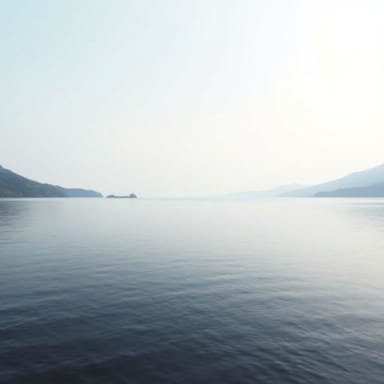
Lake Tanganyika is one of the most fascinating and mysterious lakes in the world, known not only for its vast surface area but also for its incredible depth. Located in East Africa and bordered by four countries Tanzania, the Democratic Republic of the Congo (DRC), Burundi, and Zambia Lake Tanganyika is a freshwater lake that plays a vital role in the region’s ecology, economy, and culture. For scientists, environmentalists, and travelers alike, the question of how deep Lake Tanganyika is leads to a deeper appreciation of this geological marvel. Understanding its depth means uncovering the story of tectonic shifts, ancient ecosystems, and unique biodiversity.
Basic Dimensions of Lake Tanganyika
Surface Area and Length
Lake Tanganyika is the second-largest freshwater lake in the world by volume and surface area, covering around 32,900 square kilometers (12,700 square miles). It stretches approximately 673 kilometers (418 miles) from north to south, making it the longest freshwater lake on Earth. Its width ranges between 50 and 70 kilometers (31 to 43 miles), varying by location.
Depth in Perspective
What makes Lake Tanganyika particularly remarkable is not just its length and size, but how deep it is. The average depth of the lake is about 570 meters (1,870 feet), but the deepest point plunges to an astonishing 1,470 meters (4,820 feet). This makes Lake Tanganyika the deepest lake in Africa and the second-deepest lake in the world, after Lake Baikal in Russia.
Geological Formation and Tectonic Activity
Part of the East African Rift System
Lake Tanganyika lies in a valley formed by the East African Rift, a major tectonic fault line where the African Plate is splitting into two. Over millions of years, this tectonic movement has caused the land to sink, creating a rift valley that eventually filled with water. The continuous geological activity contributes to the lake’s impressive depth and shape.
Age of the Lake
Lake Tanganyika is estimated to be between 9 and 12 million years old, making it one of the oldest lakes in the world. Its depth is a result of the long-term sinking of the rift floor and the gradual accumulation of water over millennia. Because of its ancient origins, the lake has become a cradle for endemic species and complex ecosystems.
Measuring the Depth of Lake Tanganyika
Scientific Surveys
Scientists use echo sounding and sonar technologies to measure the lake’s depth. These instruments send sound waves to the bottom of the lake and calculate the time it takes for the signal to return, providing accurate depth readings even in the deepest parts. Modern surveys confirm the maximum depth of Lake Tanganyika to be around 1,470 meters.
Comparison to Other Lakes
In terms of depth, Lake Tanganyika is
- The deepest lake in Africa
- The second-deepest freshwater lake in the world (after Lake Baikal)
- The world’s longest freshwater lake
- One of the few lakes with anoxic (oxygen-depleted) waters at its deepest levels
Ecological Impact of the Depth
Stratified Layers
Because of its great depth, Lake Tanganyika is stratified into different layers, each with distinct temperatures and oxygen levels. The upper layer, known as the epilimnion, is warmer and well-oxygenated. Below it lies the hypolimnion, a deeper, colder layer where oxygen becomes scarce. The deepest parts of the lake are largely anoxic and host unique microbial life forms that survive in these extreme conditions.
Unique Biodiversity
The depth and age of Lake Tanganyika have created an environment where hundreds of species have evolved independently. The lake is home to over 250 species of cichlid fish, many of which are found nowhere else on Earth. The deep waters provide shelter and stable habitats for aquatic life, promoting evolutionary diversification.
Importance to Local Communities
Fisheries and Livelihood
Millions of people rely on Lake Tanganyika for food, employment, and transportation. Fishing is a major economic activity, with the lake supporting large populations of sardine-like fish called dagaa and various cichlid species. However, overfishing and climate change threaten these livelihoods, especially as water temperatures and oxygen levels fluctuate with depth.
Transportation and Trade
The vast and deep waters of Lake Tanganyika serve as natural highways for boats and ferries transporting goods and people between countries along its shores. Despite its depth, the lake is relatively calm compared to ocean waters, making it suitable for local and cross-border travel.
Scientific and Environmental Concerns
Climate Change Effects
Climate change is affecting the thermal stratification of Lake Tanganyika. Warmer surface temperatures can disrupt the lake’s natural mixing process, preventing oxygen from reaching deeper waters. This affects aquatic life and could lead to declines in fish populations that depend on specific temperature and oxygen conditions.
Pollution and Sedimentation
Increased human activity around the lake, including agriculture and urbanization, contributes to pollution and sediment runoff. These pollutants can alter the water chemistry and threaten the lake’s delicate ecological balance, especially in deeper layers that are slow to change due to limited mixing.
Conservation and Research Efforts
Monitoring Programs
Organizations and research institutions monitor Lake Tanganyika’s depth, temperature profiles, and biodiversity regularly. These programs help track long-term changes and assess the health of the ecosystem. By understanding how deep waters behave, scientists can predict and mitigate negative trends.
Cross-Border Cooperation
Since Lake Tanganyika spans four countries, regional cooperation is essential for sustainable management. Initiatives like the Lake Tanganyika Authority promote joint efforts to conserve fish stocks, reduce pollution, and maintain ecological balance, taking into account the lake’s depth-related dynamics.
Interesting Facts About Lake Tanganyika’s Depth
- At 1,470 meters, Lake Tanganyika’s deepest point is more than three times the height of the Eiffel Tower.
- Its deep basin stores about 18% of the world’s available freshwater.
- The deepest areas are completely dark and oxygen-free, hosting rare anaerobic organisms.
- If drained, the depth of the lake would resemble a canyon-like valley below sea level.
So, how deep is Lake Tanganyika? With a maximum depth of around 1,470 meters, it ranks among the deepest and most mysterious lakes on the planet. But this statistic only scratches the surface. The lake’s depth influences everything from its biodiversity and climate sensitivity to its role in local economies and scientific exploration. It is not just a geological depression filled with water; it is a living, dynamic system shaped by ancient tectonic forces and sustained by delicate ecological interactions. Whether viewed from a scientific, environmental, or human perspective, the profound depth of Lake Tanganyika makes it a true wonder of the natural world.