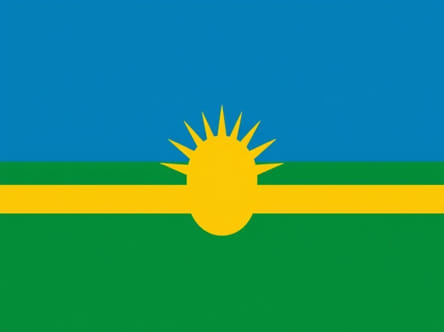
Located in Northwest Africa, Mauritania’s path to independence was shaped by its colonial legacy, political awakening, and the wider wave of decolonization that swept across Africa in the mid-20th century. Formerly a part of French West Africa, Mauritania was a sparsely populated territory with deep cultural ties to both Arab-Berber and sub-Saharan African societies. Its emergence as a sovereign nation was the result of careful diplomacy, internal political organization, and negotiation with colonial authorities. Gaining independence in 1960, Mauritania joined the ranks of newly independent African nations seeking self-rule and national identity after decades of foreign domination.
Colonial Background of Mauritania
Mauritania became part of French West Africa in the early 20th century. As a colony, it was governed from Dakar, Senegal, and administered with minimal development investment due to its desert environment and nomadic population. The French colonial strategy focused on indirect rule, using local leaders and tribal structures to maintain control while introducing administrative changes and taxation.
Colonial Administration and Impact
- Mauritania was formally declared a French colony in 1920.
- Its population was largely nomadic and culturally diverse, including Moors (Arab-Berber groups) and black African communities.
- French rule brought limited infrastructure or economic development to the region.
The French administration in Mauritania concentrated primarily on maintaining order and collecting taxes, with little emphasis on education or modernization. This limited engagement would later influence the pace and structure of Mauritania’s nationalist movement.
The Rise of Political Awareness
Political consciousness in Mauritania began to rise in the aftermath of World War II. Like many other colonies, Mauritania was affected by changing global attitudes toward imperialism and the growing demand for self-determination among colonized peoples. France’s defeat in WWII and the formation of the United Nations encouraged colonies to seek new political rights and autonomy.
In 1946, Mauritania was granted representation in the French National Assembly, allowing its elites to participate in French political life. This gave rise to a new class of political leaders, many of whom would later guide the country toward independence.
Key Developments in Political Mobilization
- Political parties began to form, often aligned with either French colonial interests or nationalist goals.
- The Mouvement Populaire Mauritanien (MPM) emerged as one of the earliest political organizations pushing for local rights.
- French reforms such as the 1956 Loi-Cadre gave more autonomy to African colonies, setting the stage for self-government.
Although political activity was initially limited to the elite, these developments fostered a growing sense of national identity and laid the groundwork for future independence.
The Role of Moktar Ould Daddah
Moktar Ould Daddah played a central role in Mauritania’s transition to independence. A trained lawyer and politician, Daddah emerged as a unifying figure capable of bridging the divide between Mauritania’s various ethnic and tribal communities. In 1957, he was appointed Vice President of the Governing Council of Mauritania, and by 1958 he became President of the newly formed Autonomous Republic within the French Community.
Under Daddah’s leadership, Mauritania negotiated increased internal autonomy while maintaining peaceful relations with France. His pragmatic approach helped prevent the violent struggles seen in other African countries and allowed for a more stable path toward independence.
Achievements of Daddah’s Leadership
- Formed a coalition that united Moorish and black African communities under a shared national vision.
- Led constitutional negotiations with France to define Mauritania’s future political status.
- Positioned Mauritania as a moderate and cooperative partner in the decolonization process.
Daddah’s leadership was instrumental in ensuring a smooth transition and in laying the foundations for Mauritania’s post-independence governance.
Decolonization and the Push for Sovereignty
The late 1950s marked a turning point in Mauritania’s journey to independence. The collapse of the French colonial empire in Indochina and Algeria, along with increasing African demands for autonomy, pressured France to reconsider its role in Africa. In 1958, the French Fifth Republic offered its colonies the choice to become part of the French Community or to seek full independence.
Mauritania initially opted to remain within the French Community while gaining greater self-governance. However, growing national pride and the example of neighboring states such as Senegal, Mali, and Guinea inspired stronger demands for complete independence.
Steps Toward Full Independence
- In 1959, Mauritania held elections to a national assembly that would draft its constitution.
- The new constitution created the framework for an independent republic with an executive president.
- On November 28, 1960, Mauritania officially declared independence from France.
France recognized Mauritania’s sovereignty, and Moktar Ould Daddah became the first President of the independent republic. The transition occurred without major conflict, a rare occurrence in the decolonization era.
International Challenges and Recognition
Despite a peaceful independence, Mauritania faced immediate challenges on the international stage. Morocco, under King Mohammed V, claimed that Mauritania was historically part of Greater Morocco, and refused to recognize its independence. This delayed Mauritania’s entry into the United Nations and strained regional relations.
In response, Mauritania strengthened ties with other African nations and gradually gained support from the international community. The Soviet Union and many newly independent African states recognized Mauritania’s sovereignty, helping it gain UN membership in 1961.
Diplomatic Strategies to Secure Recognition
- Joined the Organization of African Unity (OAU) to affirm its legitimacy among African peers.
- Maintained diplomatic ties with France and Western countries to ensure stability.
- Promoted non-alignment during the Cold War to attract both Western and Eastern support.
By the early 1960s, Mauritania had secured its place in the international community as an independent state, despite ongoing disputes with Morocco.
Post-Independence Challenges
Although independence was achieved peacefully, Mauritania faced serious internal challenges in the years that followed. The country was economically underdeveloped, with limited infrastructure, low literacy rates, and regional inequalities between the Arab-Berber north and the black African south.
President Moktar Ould Daddah worked to unify the country through a policy of national integration, Arabic language promotion, and centralized planning. However, ethnic tensions and economic hardship continued to pose long-term challenges to national unity and political stability.
Key Issues After Independence
- Balancing ethnic and cultural differences within a new national identity.
- Building administrative capacity and expanding education and healthcare services.
- Developing the economy, which relied heavily on mining and foreign aid.
Despite these obstacles, Mauritania remained relatively stable compared to other newly independent African nations, a testament to its cautious and diplomatic route to self-rule.
Mauritania gained independence through a process defined by negotiation, pragmatism, and political unity. From its colonial origins as a peripheral territory in French West Africa, it emerged as a sovereign nation in 1960 under the leadership of Moktar Ould Daddah. Unlike many African states that experienced violent liberation movements, Mauritania’s peaceful transition was shaped by calculated diplomacy, constitutional reform, and a unified political movement. Though challenges remained in the post-independence period, the nation’s birth was a remarkable example of decolonization through cooperation rather than conflict. Mauritania’s story highlights the complexity and diversity of African independence movements in the 20th century.
#kebawah#