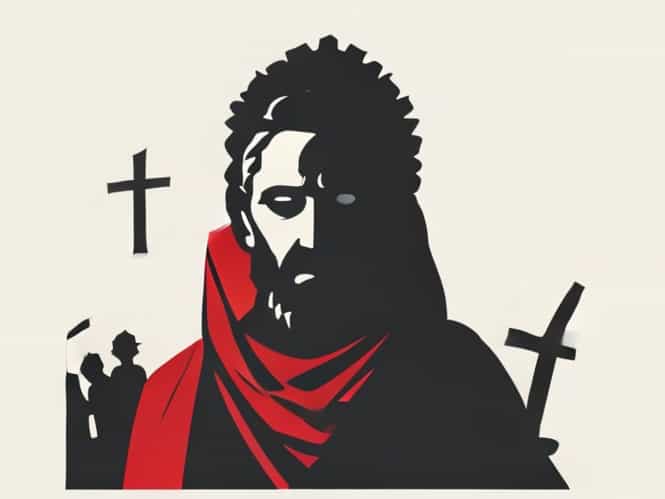
The persecution of Christians under Emperor Nero remains one of the darkest chapters in early Christian history. Nero, who ruled the Roman Empire from 54 to 68 AD, is often remembered for his cruelty, extravagance, and the infamous Great Fire of Rome. It was after this devastating event in 64 AD that Nero’s persecution of Christians began in earnest. His actions not only caused immense suffering to early believers but also set a precedent for future Roman policies toward the Christian faith. Understanding how Nero persecuted Christians reveals much about the tensions between the Roman state and the growing Christian movement during the first century.
The Historical Context of Nero’s Reign
Nero became emperor at the young age of sixteen. Initially, his reign was guided by capable advisers such as Seneca and Burrus, and the early years of his rule were relatively stable. However, as Nero grew older, he became increasingly tyrannical and self-indulgent. He was obsessed with art, music, and theater, often performing publicly, which scandalized the Roman elite. His rule became notorious for corruption, political executions, and an expanding climate of fear within Rome.
At the same time, Christianity was beginning to spread across the empire. Though still a small sect, Christians were already viewed with suspicion. Romans misunderstood Christian practices, particularly their secret gatherings, their refusal to worship Roman gods, and their rejection of emperor worship. This made them convenient scapegoats in times of political turmoil a fact Nero would exploit after the Great Fire of Rome.
The Great Fire of Rome and Its Aftermath
On the night of July 18, 64 AD, a massive fire broke out in Rome and burned for six days, destroying much of the city. The fire consumed temples, homes, and entire districts, leaving thousands homeless. Ancient sources such as Tacitus, Suetonius, and Cassius Dio suggest that rumors spread that Nero himself had ordered the fire to clear land for his ambitious new palace, the Domus Aurea, or Golden House.
As public outrage grew, Nero needed someone to blame. The Christians, already distrusted by the populace, were an easy target. Nero accused them of setting the fire and ordered widespread persecution. This marked the first official and organized persecution of Christians by the Roman state.
How Nero Persecuted Christians
Nero’s persecution was brutal and public. According to the historian Tacitus, Christians were arrested not only for the alleged arson but also for their hatred of mankind a vague accusation that reflected Roman misunderstanding of Christian beliefs. Once arrested, many Christians were forced to confess and implicate others, leading to a growing wave of executions.
Torture and Execution Methods
The punishments inflicted under Nero were intended not only to kill but also to entertain and terrify. Many Christians were thrown to wild animals in the arena, a spectacle designed to satisfy Roman crowds. Others were crucified, an especially painful and humiliating death reserved for slaves and criminals. Perhaps the most horrifying form of execution involved covering victims with pitch or wax and setting them on fire to serve as living torches during Nero’s nighttime festivities in his gardens.
These gruesome acts reflected Nero’s desire to deflect blame and to demonstrate his power. He staged these executions as public entertainment, framing the Christians as enemies of Rome. Through this propaganda, Nero hoped to restore his reputation and control over a city devastated by fire and discontent.
The Role of Propaganda
Nero’s persecution was not only physical but also psychological. By depicting Christians as dangerous outsiders, he fueled public hatred and fear. Romans believed Christians practiced cannibalism a misunderstanding of the Eucharist and incest, due to their references to one another as brothers and sisters. These rumors made the persecution seem justified to the general populace.
This propaganda campaign had lasting effects. It associated Christianity with rebellion, immorality, and treason, shaping how the Roman state and its citizens viewed the religion for centuries. Although the persecution began as a political maneuver, it reinforced an enduring cultural hostility toward Christians.
The Impact on Early Christianity
Nero’s persecution marked a turning point in the history of Christianity. Before this time, the movement had been relatively obscure, mostly confined to Jewish communities and small gatherings across the empire. After Nero’s brutal campaign, Christianity gained visibility, albeit through tragedy. The stories of Christian martyrs inspired others to remain faithful despite the threat of death.
Tradition holds that both the apostles Peter and Paul were executed during Nero’s reign. Peter, according to Christian sources, was crucified upside down in Rome because he felt unworthy to die in the same manner as Christ. Paul, a Roman citizen, was reportedly beheaded a quicker and less painful death. These executions symbolized the beginning of Christian martyrdom, which became a defining feature of the faith’s early identity.
Psychological and Spiritual Resilience
While Nero’s persecution was meant to destroy the Christian community, it instead strengthened it. The courage of the martyrs inspired others to convert, impressed by their unwavering faith. Early Christian writers often described these events as tests of faith and opportunities to witness for Christ. The suffering of believers became a source of spiritual power, and the concept of martyrdom was elevated to a sacred act of devotion.
Ironically, Nero’s cruelty helped Christianity spread. The persecution attracted attention throughout the empire, and stories of the martyrs circulated widely, reinforcing the belief that Christian faith was stronger than fear or violence. In this sense, Nero unintentionally helped solidify Christianity’s foundation.
Historical Accounts and Interpretations
Much of what we know about Nero’s persecution comes from Roman historians, particularly Tacitus, who wrote in his Annals. Although Tacitus was no friend of Christianity, he acknowledged the innocence of Christians in the Great Fire, describing them as scapegoats. He also noted that the punishments inflicted upon them were excessively cruel, even by Roman standards.
Suetonius, another historian, referred briefly to Nero’s actions, mentioning that Christians were punished for their new and mischievous superstition. While his tone is less sympathetic than Tacitus’s, his account confirms that Christians were singled out under Nero’s rule. Later Christian writers, such as Tertullian and Eusebius, expanded these narratives, portraying Nero as the embodiment of evil and the first great persecutor of the Church.
Symbolism of Nero in Christian Thought
Over time, Nero became a symbol of tyranny and wickedness in Christian literature. Some early believers even associated him with the Antichrist described in the Book of Revelation. This symbolic portrayal reflected not only his cruelty but also the trauma his persecution left on the Christian community. Nero’s name became synonymous with the idea of a ruler who opposes God and seeks to destroy the faithful.
In later centuries, as Christianity gained acceptance and eventually became the state religion of Rome, the memory of Nero’s actions served as a warning against political oppression and moral corruption. His reign exemplified how absolute power, driven by fear and vanity, could lead to unimaginable cruelty.
The End of Nero’s Reign
Nero’s rule eventually collapsed under the weight of his misdeeds. His extravagance drained the imperial treasury, and rebellions erupted across the empire. Abandoned by his allies and declared an enemy of the state, Nero fled Rome and committed suicide in 68 AD. His death ended the Julio-Claudian dynasty and ushered in a period of political chaos known as the Year of the Four Emperors.
Although Nero’s persecution ended with his death, the precedent he set endured. Later emperors, such as Domitian and Diocletian, would launch their own campaigns against Christians. Each time, the faith grew stronger, sustained by the example of those who had suffered under Nero’s brutal regime.
Nero persecuted Christians through fear, propaganda, and horrific violence. He used them as scapegoats to shift blame for the Great Fire of Rome and to restore his damaged reputation. Through torture, execution, and public humiliation, Nero sought to destroy a community he barely understood. Yet his cruelty had the opposite effect. The persecution gave birth to the Christian tradition of martyrdom, inspiring future generations of believers. History remembers Nero not as a powerful emperor but as a tyrant whose attempts to suppress faith only made it stronger. The story of Nero’s persecution of Christians stands as a lasting testament to the resilience of faith in the face of oppression.