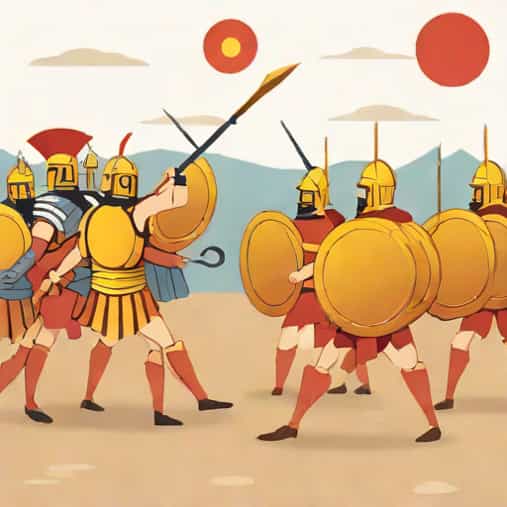
The Battle of Plataea, fought in 479 BCE during the Greco-Persian Wars, marked the decisive end of the second Persian invasion of Greece. This battle involved a coalition of Greek city-states, including Sparta, Athens, Corinth, and others, facing the massive Persian army led by Mardonius. The outcome of Plataea was pivotal, as it not only halted Persian ambitions in Greece but also set the stage for the rise of Athens and the golden age of Greek civilization. Understanding how the battle ended requires examining the strategies, key figures, and battlefield developments that led to the Greek victory and the Persian defeat.
Background of the Battle of Plataea
The Persian Wars had been ongoing for decades, with earlier battles such as Marathon and Thermopylae shaping the conflict between Greek city-states and the Persian Empire. After Xerxes I’s initial invasion and the withdrawal of the Persian forces following the naval defeat at Salamis in 480 BCE, Mardonius, one of Xerxes’ generals, remained in Greece with a substantial force. He aimed to subjugate central Greece and force the Greek city-states into submission. The Greeks, recognizing the threat, assembled a combined army to confront the Persians near Plataea in Boeotia.
Greek Forces and Commanders
The Greek army was composed of troops from various city-states, each bringing its own style of warfare. Sparta provided highly disciplined hoplites, while Athens contributed heavily armed infantry and naval expertise. The overall command was shared among the Greek leaders, with Pausanias, the Spartan regent, serving as the primary commander. Other notable Greek leaders included Aristides of Athens and other regional generals who coordinated their forces to maintain cohesion and strategic advantage.
Persian Forces and Leadership
The Persian army, under Mardonius, was numerically superior and included infantry, cavalry, and specialized archers. Mardonius sought to exploit his army’s size and the mobility of his cavalry to overwhelm the Greek forces. Despite their numerical advantage, the Persians faced challenges in terrain, coordination, and morale when confronting the heavily armored Greek hoplites in close combat.
Initial Deployment and Skirmishes
The Greek army initially took a defensive position on high ground near Plataea, carefully choosing terrain that limited the effectiveness of the Persian cavalry. Mardonius attempted to provoke the Greeks into battle, using psychological tactics and minor skirmishes to lure them into a vulnerable position. For several days, both armies engaged in maneuvers and minor clashes, testing each other’s strength while avoiding a full-scale engagement until the conditions were favorable.
Strategic Considerations
- The Greeks sought to hold a strong defensive position to neutralize Persian numerical advantage.
- The Persians attempted to draw the Greeks into open terrain where cavalry could dominate.
- Supply lines and logistical considerations affected the timing and positioning of both armies.
- Both sides prepared for decisive engagement by scouting and arranging formations carefully.
The Decisive Battle and Greek Victory
The battle began in earnest when Greek commanders decided to advance after observing the Persians’ movements and signs of weakness. A key moment was the effective use of the Greek hoplites’ phalanx formation, which provided both offensive power and defensive stability against the Persian infantry and cavalry. The heavily armed Greek soldiers advanced in coordinated lines, forcing the Persians to engage in hand-to-hand combat where the Persian numerical advantage was less effective.
Critical Moments During the Battle
One of the turning points was the collapse of the Persian morale when parts of their army began to flee. Mardonius was killed during the fighting, which further demoralized the Persian forces. Greek troops pressed the advantage, exploiting disorganization within the Persian ranks. The disciplined Greek hoplites, combined with strategic coordination between different city-state contingents, enabled the Greeks to encircle and defeat the remaining Persian units.
Aftermath of the Battle
The Greek victory at Plataea was decisive. Thousands of Persian soldiers were killed, and the remaining forces retreated in disarray. Mardonius’ death removed the primary Persian commander in Greece, effectively ending the Persian invasion. The Greek coalition emerged largely intact, with relatively lower casualties compared to the Persians. This victory confirmed the effectiveness of the hoplite phalanx and cooperative strategy among the Greek city-states.
Key Figures in the Battle
The outcome of Plataea was influenced by several important leaders on both sides. Their decisions, courage, and coordination were pivotal in determining the battle’s course.
Spartan Leadership
Pausanias, serving as regent for Sparta, played a crucial role in maintaining unity among the Greek forces and making strategic decisions during the battle. His ability to coordinate various contingents and ensure disciplined engagement was essential to the success of the Greek phalanx and the exploitation of Persian weaknesses.
Athenian Contributions
Aristides and other Athenian leaders provided significant tactical support, contributing both soldiers and logistical planning. Athens’ disciplined approach complemented Sparta’s military leadership, highlighting the importance of collaboration among Greek city-states in achieving collective success.
Persian Command
Mardonius’ leadership was ambitious but ultimately flawed. His reliance on cavalry and attempts to intimidate or outmaneuver the Greeks were undermined by the terrain and the cohesion of the Greek forces. His death during the battle marked a turning point, leading to the collapse of Persian morale and organization.
Impact of the Battle of Plataea
The end of the Battle of Plataea marked a turning point in the Greco-Persian Wars. With the Persian threat neutralized, Greek city-states gained a period of security that allowed cultural, political, and economic development, particularly in Athens. Plataea demonstrated the value of discipline, strategy, and cooperation in warfare, reinforcing the strength of Greek military organization against larger forces. The battle also symbolized the defense of Greek independence and the effectiveness of collective action against a powerful empire.
Legacy
- Confirmed Greek military superiority in defensive battles.
- Ended Persian ambitions in mainland Greece for decades.
- Strengthened alliances among Greek city-states.
- Set the stage for the rise of Athens as a cultural and political center.
- Influenced military strategy in subsequent historical conflicts.
The Battle of Plataea ended with a decisive Greek victory, achieved through strategic positioning, disciplined hoplite formations, and effective leadership from commanders such as Pausanias and Aristides. The death of Persian general Mardonius and the collapse of Persian morale ensured that the invasion was stopped and Greece remained free from foreign domination. Plataea is remembered not only for its immediate military outcome but also for its lasting impact on Greek unity, military tactics, and the preservation of independence, illustrating how leadership, strategy, and coordination can determine the outcome of a pivotal historical battle.