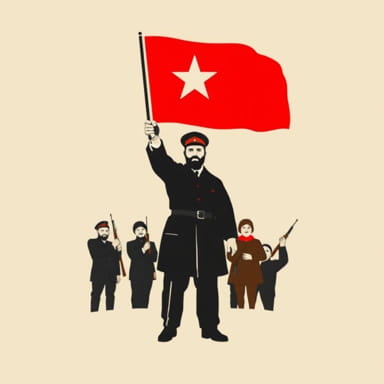
When the Bolshevik Revolution erupted in Russia in 1917, the United States, along with other Western nations, viewed it with a mix of alarm, suspicion, and strategic interest. The rise of a communist government led by Vladimir Lenin marked a significant shift in global power dynamics during the final stages of World War I. The U.S. response was shaped by fears of communism, concern for its wartime alliances, economic interests, and the desire to influence the outcome of Russia’s internal conflict. As events unfolded, the American reaction would include military intervention, diplomatic disengagement, and increased domestic surveillance in response to the perceived threat of Bolshevism.
Initial Reaction to the Bolshevik Seizure of Power
Distrust and Ideological Opposition
The U.S. government, led by President Woodrow Wilson, reacted to the Bolsheviks’ rise with deep mistrust. The communist ideology clashed directly with American democratic and capitalist principles. Lenin’s decision to withdraw Russia from World War I through the Treaty of Brest-Litovsk with Germany was viewed as a betrayal of the Allied war effort. The Bolsheviks’ calls for a worldwide workers’ revolution also stoked fear that communism could spread beyond Russia’s borders.
Nonrecognition of the Soviet Government
One of the most significant early responses was the refusal of the United States to recognize the new Soviet government. From 1917 until 1933, the U.S. withheld formal diplomatic recognition, citing the Bolsheviks’ violent methods, rejection of international obligations, and ideological extremism. This stance signaled American opposition to communist rule and isolated the Soviet Union on the international stage for years.
American Military Intervention in Russia
The Polar Bear Expedition
In 1918, the United States participated in a military intervention in Russia as part of a broader Allied campaign. Known as the ‘Polar Bear Expedition,’ around 5,000 American troops were sent to northern Russia, primarily around the city of Arkhangelsk. The official goal was to safeguard military supplies and assist in reopening an Eastern Front against Germany, but the mission evolved into an effort to support anti-Bolshevik White forces during the Russian Civil War.
Troops in Siberia
At the same time, American forces were also deployed to Siberia. About 8,000 U.S. soldiers joined an Allied expedition there, ostensibly to rescue the Czech Legion and protect Allied material. However, their presence also aligned with efforts to undermine Bolshevik control. Despite these deployments, the U.S. was hesitant to fully commit to the anti-Bolshevik cause, reflecting internal political divisions and doubts about the mission’s feasibility.
Limited Strategic Impact
The American military involvement in Russia was ultimately limited and inconclusive. The U.S. withdrew its troops by 1920, after realizing that the Bolsheviks were consolidating power and the civil war would not be easily won by the anti-communist factions. However, the intervention left a lasting impact on Soviet-American relations, fueling Soviet distrust of Western intentions for decades to come.
Domestic Consequences of the Bolshevik Revolution
The First Red Scare
The Bolshevik Revolution intensified fears of communism within the United States. In 1919 and 1920, the country experienced the First Red Scare, a period of heightened suspicion and widespread panic over the possibility of a communist uprising on American soil. Labor strikes, anarchist bombings, and the formation of radical political groups fueled these fears.
Palmer Raids and Civil Liberties
Attorney General A. Mitchell Palmer launched a series of raids targeting suspected radicals, anarchists, and communists. These ‘Palmer Raids’ led to thousands of arrests and deportations, often without proper legal procedures. Many immigrants, especially those from Eastern Europe, were viewed with suspicion and subjected to increased scrutiny. The Red Scare had a chilling effect on free speech and civil liberties, with labor unions and left-wing organizations facing persecution.
U.S. Foreign Policy Toward Soviet Russia
Isolation and Economic Barriers
Following the withdrawal of military forces and the end of the Russian Civil War, the U.S. maintained a policy of isolation from the Soviet Union. Trade between the two nations was minimal, and the U.S. refused to engage in official diplomatic relations. The American government also discouraged private investment in Soviet territories due to concerns over nationalization and property seizures.
Gradual Pragmatic Engagement
Despite ideological differences, some American businesses were interested in accessing Soviet markets. Over time, economic interests began to compete with political ideology. While formal recognition was still withheld, some American companies found ways to engage with the Soviet Union through trade deals and technical cooperation, particularly during the New Economic Policy (NEP) period in the 1920s.
Recognition and the Shift in Relations
Diplomatic Recognition in 1933
It was not until 1933, under President Franklin D. Roosevelt, that the United States officially recognized the Soviet Union. The decision was driven by economic concerns during the Great Depression, the need for new markets, and geopolitical calculations as tensions rose in Europe. While the move did not erase decades of mistrust, it marked a new phase of cautious diplomacy between the two powers.
Continued Suspicion and Propaganda
Even after recognition, relations remained uneasy. U.S. officials and the public continued to view Soviet communism as a threat to American values. During the 1930s, political propaganda on both sides reinforced negative perceptions. The U.S. criticized Soviet purges and lack of political freedoms, while the USSR accused the West of capitalist exploitation and imperialism. These tensions set the stage for the eventual Cold War that would emerge after World War II.
Long-Term Impact on U.S.-Russia Relations
Foundation for Cold War Rivalry
The U.S. response to the Bolshevik Revolution laid the groundwork for the long-term ideological struggle that defined the 20th century. The initial opposition, military intervention, and diplomatic isolation all contributed to mutual suspicion. This early hostility influenced Soviet attitudes toward the West and shaped Soviet foreign policy well into the Cold War era.
Legacy in Domestic Politics
Domestically, the fear of communism that arose from the Bolshevik Revolution became a recurring theme in American politics. From the Red Scare of the 1920s to McCarthyism in the 1950s, the perceived threat of leftist ideology often led to government crackdowns on dissent and curtailment of civil liberties. The revolution’s influence extended beyond foreign affairs into the core of American democratic debates about freedom, security, and ideology.
- Military intervention in Russia increased tensions with the Soviet Union.
- Refusal to recognize the Soviet government delayed diplomatic engagement.
- Domestic fear of communism shaped American civil policies.
- The ideological divide created a foundation for Cold War hostilities.
A Complex and Lasting Response
The U.S. response to the Bolshevik Revolution was multifaceted, combining military action, ideological opposition, and domestic suppression. Initially driven by wartime strategy and fears of radicalism, American policy evolved into a long-standing pattern of mistrust and confrontation. While diplomatic recognition eventually occurred, the effects of the early response continued to shape relations between the United States and the Soviet Union for decades. The reaction to the Bolshevik rise to power not only influenced foreign policy but also deeply affected American society, revealing how revolutions abroad can stir intense domestic reactions and long-term geopolitical consequences.
#kebawah#