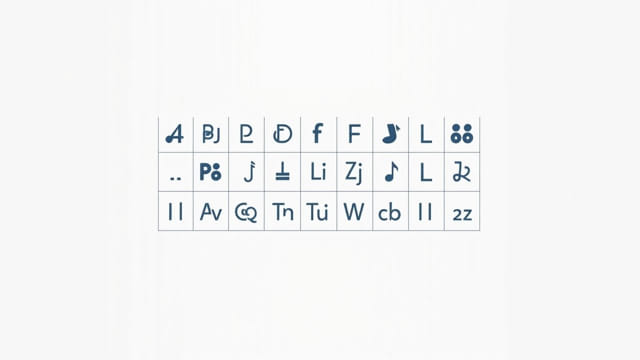
The International Phonetic Alphabet (IPA) chart is an essential linguistic tool used to represent the sounds of spoken language with precision and consistency. Unlike traditional spelling systems, which can vary dramatically across languages and even within the same language, the IPA chart provides a standardized method for capturing the exact pronunciation of words. This is particularly useful for linguists, language learners, speech therapists, and anyone working with language in a professional or academic setting. Each symbol in the chart corresponds to a distinct sound or phoneme, allowing users to transcribe and interpret spoken language accurately.
What Is the International Phonetic Alphabet?
The International Phonetic Alphabet is a system of phonetic notation created by the International Phonetic Association. Its main goal is to provide a consistent and universally understood set of symbols to represent the wide range of sounds found in human speech. Unlike writing systems based on specific languages, the IPA is designed to be language-neutral, covering all known speech sounds, including those not present in major world languages.
The Importance of the IPA Chart
There are thousands of languages in the world, each with its own unique phonetic characteristics. In many cases, two words may be spelled similarly but pronounced very differently. The IPA chart solves this issue by transcribing words based on how they sound, not how they are spelled. This makes it an invaluable tool for:
- Language learners trying to master pronunciation
- Linguists studying the structure of languages
- Actors and singers learning accurate accents
- Speech-language pathologists analyzing speech disorders
Main Categories in the IPA Chart
The IPA chart is divided into several sections, each representing a different category of sound. These include consonants, vowels, suprasegmentals, diacritics, and non-pulmonic consonants. Each category is essential for understanding how sounds function across languages.
Consonants (Pulmonic)
Pulmonic consonants are the most common type of sounds and are produced by air moving from the lungs through the vocal tract. These are arranged in the chart based on two main criteria:
- Place of articulation Where the sound is produced (e.g., bilabial, dental, alveolar)
- Manner of articulation How the sound is produced (e.g., plosive, nasal, fricative)
Vowels
Vowel sounds are produced without any significant constriction in the vocal tract. The vowel section of the IPA chart is shaped like a trapezoid to represent the mouth’s position when forming each vowel. Key features used to categorize vowels include:
- Height How high the tongue is (e.g., close, mid, open)
- Backness How far back the tongue is (e.g., front, central, back)
- Roundedness Whether the lips are rounded or not
Consonants (Non-Pulmonic)
Non-pulmonic consonants are sounds that do not rely on air from the lungs. These include clicks (found in some African languages), implosives, and ejectives. Although rare in many languages, these sounds are critical to the phonetic systems of those that use them.
Diacritics
Diacritics are small marks added to symbols to modify their pronunciation. For instance, they can indicate nasalization, length, tone, voicing, or aspiration. Diacritics allow the IPA to cover fine phonetic details not represented by base symbols alone.
Suprasegmentals
Suprasegmentals refer to features that apply to larger units of speech such as syllables or entire words. This includes stress, intonation, length, and tone. These elements are crucial for capturing the rhythm and melody of speech.
Benefits of Using the IPA Chart
The IPA chart offers a wide range of benefits, especially for those dealing with multiple languages or intricate pronunciations. Here are some major advantages:
- Universal Standard The IPA is accepted and used worldwide.
- Accuracy Captures exact pronunciation, removing ambiguity.
- Clarity in Teaching Teachers can explain pronunciation more effectively.
- Enhanced Language Study Linguists can study and compare languages at a phonetic level.
IPA Chart in Language Learning
For language learners, understanding the IPA chart can significantly improve pronunciation skills. By learning how to read IPA transcriptions, learners can avoid common pitfalls such as mispronouncing letters based on their native spelling rules. Many language dictionaries now include IPA transcriptions next to word entries, aiding pronunciation.
Examples of IPA in English
Here are a few examples showing how English words are transcribed using the IPA:
- cat /kæt/
- think /θɪÅk/
- measure /ËmÉÊÉr/
- through /θruË/
These examples show how IPA can clarify the exact pronunciation of each word, especially for non-native speakers.
How to Read the IPA Chart
Reading the IPA chart takes practice but becomes easier over time. Beginners can start by learning the basic consonants and vowels of their native language using IPA. Once familiar with those, it’s easier to expand into more complex symbols or sounds from other languages.
Each symbol on the chart represents a single sound. By breaking down words into these symbols, you can see exactly how each sound is produced and how they combine in natural speech. For learners of new languages, this is especially valuable for mastering accent and clarity.
Learning Resources
To master the IPA, many learners turn to phonetics textbooks, online IPA charts, and pronunciation dictionaries. Repetition and practice, such as reading IPA transcriptions aloud or listening to native speakers while reading IPA versions, can help reinforce learning.
The International Phonetic Alphabet chart is a crucial resource for anyone looking to understand or teach pronunciation across languages. With its standardized symbols and attention to phonetic detail, the IPA makes it easier to learn new languages, compare dialects, or diagnose speech issues. Whether you are a student, teacher, linguist, or casual learner, incorporating the IPA into your language studies can lead to more accurate pronunciation, greater language comprehension, and a deeper understanding of the mechanics of human speech.