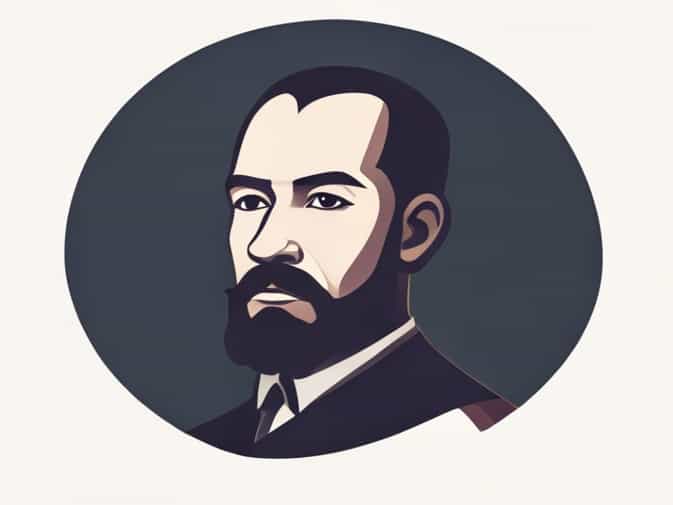
When people discuss the early heroes of American history, the name Crispus Attucks often arises. Known as the first person killed in the Boston Massacre of 1770, Attucks is frequently regarded as the first casualty of the American Revolution. His death helped spark outrage against British rule, uniting colonists in their fight for independence. But the question remains is Crispus Attucks truly a hero, and what makes his legacy so significant in the broader story of America’s founding? Understanding his life, his role in history, and the symbolism attached to his name can help us explore why he continues to be remembered more than two centuries later.
Who Was Crispus Attucks?
Crispus Attucks was a man of mixed African and Native American heritage, believed to have been born around 1723 in Framingham, Massachusetts. Historians think he was the son of an enslaved African man and a Native American woman of the Natick tribe. Attucks was likely born into slavery, but records suggest that he escaped at a young age, seeking freedom and independence. For the next two decades, he is thought to have worked as a sailor and dockworker, moving along the eastern coast of the colonies.
By the late 1760s, tensions between the British authorities and American colonists had reached a breaking point. Taxes, trade restrictions, and the presence of British soldiers in colonial towns created growing resentment. Boston, in particular, was a hotbed of protest. It was in this atmosphere that Crispus Attucks found himself at the center of one of the defining events leading up to the American Revolution the Boston Massacre.
The Boston Massacre and Attucks’s Role
On the night of March 5, 1770, tensions between Boston citizens and British soldiers exploded into violence. A crowd of angry colonists gathered near the Custom House, shouting insults and throwing snowballs, rocks, and debris at the British guards. The situation quickly spiraled out of control, and British soldiers opened fire on the crowd. Five colonists were killed that night, and Crispus Attucks was the first to fall.
Eyewitness accounts suggest that Attucks was standing at the front of the crowd, confronting the soldiers. When shots rang out, he was struck by two bullets and died instantly. His body became a symbol of colonial resistance the first to die for what would become the cause of American liberty. In the days following the massacre, news of the event spread rapidly, and Attucks’s death became a rallying cry against British oppression.
Why Some Call Crispus Attucks a Hero
The idea of Crispus Attucks as a hero stems largely from his symbolic role in American history. His death represented more than just a tragic incident; it became a powerful statement about freedom, courage, and sacrifice. He stood, quite literally, at the front lines of protest, confronting an armed imperial power in defense of colonial rights.
- Symbol of FreedomAs a man of African and Native American descent, Attucks’s presence at the Boston Massacre symbolized the involvement of people of color in the earliest struggles for liberty. His participation demonstrated that the desire for freedom transcended race and status.
- Martyr for IndependenceBy being the first to die, Attucks became viewed as the first martyr of the American Revolution. His death was later commemorated as the spark that ignited the movement toward independence.
- Representation of CourageAttucks’s decision to stand up to British soldiers reflected a level of bravery that resonated deeply with colonists who felt powerless under British rule.
In this sense, many historians and citizens alike regard Crispus Attucks as a hero not necessarily because of what he said or did throughout his life, but because of what his death represented in the context of America’s path to freedom.
Historical Debates and Different Perspectives
Despite the widespread admiration for Attucks, there has been historical debate about how to interpret his role. Some early accounts suggested that he may have been one of the main instigators of the confrontation that led to the massacre. British loyalists at the time argued that Attucks provoked the soldiers, implying that the event was a riot rather than an act of peaceful protest. These differing narratives made him a controversial figure in the years following his death.
However, later historians and activists reexamined these claims, emphasizing the social and racial context of the time. Given that people of color in colonial America faced significant discrimination and limited rights, Attucks’s willingness to confront injustice can be seen as an act of defiance and courage. Whether or not he provoked the event, his death still played a vital role in uniting the colonies against British authority.
Changing Views Over Time
In the 19th century, during the abolitionist movement, Crispus Attucks became an important symbol for African Americans advocating for freedom and equality. Activists pointed to his sacrifice as evidence that Black Americans had always been part of the nation’s struggle for liberty. His legacy was used to challenge racist beliefs and to argue for the inclusion of African Americans in the narrative of American heroism.
By the 20th century, Attucks’s image had been firmly cemented as that of a national hero. Schools, monuments, and public institutions were named after him. His story was included in textbooks, and his name was celebrated during Black History Month and Independence Day commemorations. Over time, the question of whether he was a hero became less about his individual actions and more about what his story symbolizes the fight for justice and equality in the face of oppression.
The Legacy of Crispus Attucks
The legacy of Crispus Attucks endures as a reminder that the fight for freedom has always included people from diverse backgrounds. His story bridges the histories of African Americans, Native Americans, and the broader struggle for independence. Attucks’s heroism lies in his willingness to stand at the front lines of conflict, despite the social barriers that would have limited his rights and opportunities in colonial America.
His death was not in vain. It fueled outrage, inspired protests, and contributed to a growing sense of unity among the colonies. The Boston Massacre, in which he died, became one of the key events that led directly to the American Revolution just five years later. Without such moments of defiance and sacrifice, the momentum for independence might not have developed as quickly as it did.
Commemoration and Memory
Today, Crispus Attucks is commemorated in various ways throughout the United States. The Crispus Attucks Museum in Indianapolis celebrates his life and legacy, and schools across the country bear his name. His image has appeared in artwork, historical exhibitions, and even postage stamps. In Boston, a monument honors him and the other victims of the massacre, symbolizing their contribution to American liberty.
These memorials serve as more than just reminders of a single historical figure; they reflect a broader acknowledgment of how freedom and democracy have always depended on the courage of individuals willing to challenge injustice. Attucks’s legacy invites reflection on how far the nation has come and how far it still has to go in fulfilling the ideals of equality he helped ignite.
Was Crispus Attucks Truly a Hero?
The question Is Crispus Attucks a hero? ultimately depends on how one defines heroism. If being a hero means showing courage in the face of danger, standing up for one’s beliefs, and inspiring others to act, then Attucks certainly fits the description. His death became a symbol of collective resistance a moment that transcended his own life and helped shape the identity of a nation.
While historians may debate the finer details of his actions that night, there is no denying the impact his death had on history. He has come to represent not only the beginning of America’s revolution but also the long struggle for equality and civil rights that continues to this day.
Crispus Attucks stands as a powerful symbol in American history a man of African and Native American descent who lost his life in a pivotal moment that helped ignite the American Revolution. Whether viewed as a martyr, a freedom fighter, or simply an ordinary man caught in extraordinary circumstances, his courage and sacrifice have earned him a place among America’s early heroes. His story reminds us that the fight for liberty and justice has always been diverse, complex, and deeply human. In that sense, Crispus Attucks is not just a historical figure he is a timeless example of what it means to stand up for freedom, even at the ultimate cost.