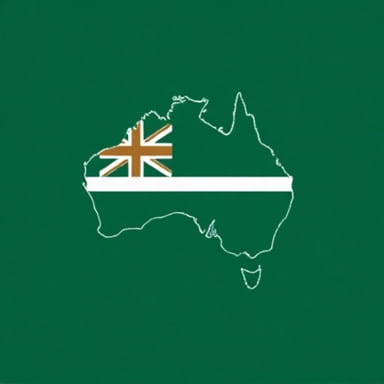
Many people unfamiliar with the Pacific region often assume that Nauru, a tiny island nation in the central Pacific Ocean, might be part of Australia. Given its proximity to Australia, its historical ties, and economic dependence on Australian support, it’s understandable why this confusion arises. However, Nauru is not part of Australia. It is an independent country with its own government, constitution, and international standing. Still, the deep connections between Nauru and Australia both politically and economically make this an interesting topic to explore in greater detail.
Understanding Nauru’s Geography and Independence
Location in the Pacific
Nauru is a small island country located in the Micronesia subregion of the Pacific Ocean. It lies roughly 4,000 kilometers northeast of Australia. Despite its small size just 21 square kilometers it is an independent nation with a long and complex history. Its geographic proximity to Australia does not make it a part of the Australian continent or political entity, but it does contribute to a strong bilateral relationship.
Nauru’s Political Status
Nauru is a sovereign nation, recognized by the United Nations and other international bodies. It gained independence on January 31, 1968, becoming the world’s smallest independent republic. Before independence, the island was administered by Australia, New Zealand, and the United Kingdom under a United Nations trusteeship following World War II. This trusteeship was based on Nauru’s former status as a League of Nations mandate territory.
Historical Relationship with Australia
Colonial and Mandate Periods
Before World War I, Nauru was a German colony. After Germany’s defeat in the war, the League of Nations mandated Nauru to be administered jointly by Australia, the United Kingdom, and New Zealand, with Australia taking the lead. During this time, Australia was responsible for many administrative tasks, including infrastructure, healthcare, and education.
This arrangement continued after World War II under the United Nations trusteeship system. The island remained under Australian administration until independence in 1968. These decades of Australian governance helped shape Nauru’s modern institutions and forged lasting ties between the two countries.
Post-Independence Support
Even after gaining independence, Nauru continued to rely on Australia for economic aid, defense, and development assistance. Australia has remained Nauru’s most significant international partner. In particular, Australia provides extensive financial support and assistance with healthcare, education, and public services. However, this support does not translate to political control or governance.
Australia and Nauru Current Relations
Diplomatic Ties
Australia and Nauru maintain full diplomatic relations. Both countries have embassies and high commissions in each other’s territories. They collaborate closely on regional and international issues through organizations such as the Pacific Islands Forum. Their diplomatic relations are respectful and grounded in mutual interests, not in political dependency.
Economic Partnerships
Nauru’s economy has historically been based on phosphate mining, a resource that has been largely depleted. In recent years, the country has depended heavily on aid and income generated from hosting Australia’s offshore asylum seeker processing centers. While this economic arrangement ties the two countries closely together, Nauru retains full sovereignty over its land, population, and policies.
Legal and Political Differences
Sovereign Governance
Nauru has its own government, comprising an elected parliament and a president who acts as both head of state and head of government. Its constitution was adopted in 1968 and provides the legal foundation for its institutions and democratic processes. Australia has no authority over Nauru’s legal or political systems.
Separate Legal Systems
Each country has its own independent legal system. While Nauru’s legal system has been influenced by Australian law due to their historical connection, the laws enforced on the island are enacted by Nauru’s own legislature. Courts in Nauru interpret and enforce local laws, and there is no legal obligation to adhere to Australian court rulings or statutes.
Misconceptions About Nauru’s Status
Common Confusions
Because of the historical ties, ongoing economic reliance, and shared language (English), many people mistakenly believe Nauru is part of Australia. In fact, Nauruans travel frequently to Australia for education and medical treatment. The visibility of Australian influence in media, infrastructure, and business can add to the misunderstanding.
Additionally, Australia’s use of Nauru for offshore processing of asylum seekers has made headlines internationally. This political arrangement often overshadows Nauru’s status as a separate entity, especially in media coverage that emphasizes Australia’s role in Pacific affairs.
Clarifying Sovereignty
Despite these close associations, Nauru is fully independent. It has its own international country code, currency (the Australian dollar is used by choice, not requirement), national symbols, and diplomatic missions. It votes independently in the United Nations and maintains bilateral relations with other countries on its own terms.
International Recognition of Nauru
Membership in Global Organizations
Nauru is a recognized member of the United Nations, the Pacific Islands Forum, the Commonwealth of Nations, and other regional and international organizations. It participates in global diplomacy, development initiatives, and climate change negotiations as a fully sovereign nation.
Passports and Citizenship
Nauru issues its own passports, and its citizens are considered nationals of Nauru, not Australia. While many Nauruans have access to Australian visas for work or study, they do not have automatic Australian citizenship or residency. The two countries manage immigration and travel separately through bilateral agreements.
To answer the central question Nauru is not part of Australia. It is a sovereign nation with its own government, constitution, and international identity. While the two countries share deep historical, economic, and political ties, especially due to Australia’s past administration and ongoing support, this relationship does not equate to political union. Nauru stands as one of the world’s smallest independent countries, proudly managing its own affairs while cooperating closely with its larger Pacific neighbor. Understanding this distinction is essential when discussing geopolitical relationships in the Pacific and recognizing the autonomy of smaller island nations like Nauru.