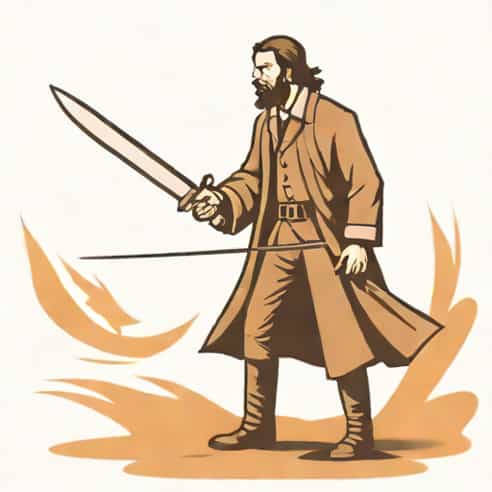
John Proctor, one of the central characters in Arthur Miller’s play *The Crucible*, is often remembered for his powerful journey through fear, guilt, integrity, and redemption. His story takes place in the turbulent world of the Salem witch trials, where accusations spread rapidly and reputations are destroyed with little evidence. Proctor’s actions throughout the play reveal a complex blend of courage and cowardice, making him one of American literature’s most compelling tragic heroes. His internal struggle, combined with the mounting pressure of a fearful society, offers insight into how ordinary individuals navigate moral choices in extraordinary circumstances.
Understanding John Proctor’s Character
John Proctor is introduced as a hardworking farmer, outspoken, principled, and respected in the community. However, he is also deeply flawed. His private guilt over an affair with Abigail Williams shapes many of his decisions. This combination of strength and vulnerability makes his actions-both brave and cowardly-rich subjects for analysis.
His desire to preserve his integrity clashes with his instinct for self-preservation. This conflict becomes the foundation for many key moments in the play. Proctor’s acts of courage and cowardice are not simple opposites; instead, they represent different stages in his personal transformation.
The Weight of Personal Guilt
Guilt drives John Proctor’s early behavior. His shame over betraying his wife, Elizabeth, makes him hesitant to expose Abigail’s lies. He fears that revealing the truth will force him to confess his affair, damaging his reputation. This hesitation can be seen as an act of cowardice, but it also reflects the realistic fear of public judgment.
- Proctor feels responsible for the chaos Abigail creates.
- His guilt complicates his desire to act bravely.
- Fear of exposure delays his involvement in stopping the witch hunt.
Acts of Cowardice in the Early Stages
Proctor’s cowardice emerges most clearly at the beginning of the story, when the witchcraft accusations begin to spread. He knows Abigail is manipulating the town, yet he hesitates to confront the court.
Failure to Speak Out Immediately
One of the most significant acts of cowardice occurs when Proctor waits too long to reveal the truth about Abigail. His reluctance is tied to his fear that confessing the affair will harm his good name. At this stage, he chooses self-protection over exposing injustice, even though he knows innocent people are suffering.
This decision highlights how personal shame can influence moral action. Proctor is not evil or indifferent; he is human. His fear reflects a universal experience-wanting to preserve dignity even when doing so carries consequences.
Struggles with Honesty
Another moment that borders on cowardice is his difficulty in openly communicating with Elizabeth. His emotional distance and inability to confront the affair directly prevent the couple from uniting against the rising danger. His silence allows Abigail’s influence to grow unchecked.
- He avoids difficult conversations.
- He prioritizes comfort over honesty.
- His hesitation contributes indirectly to the crisis in Salem.
The Turning Point Proctor’s Emerging Courage
As the witch trial hysteria worsens, Proctor’s courage begins to surface. The danger faced by his wife and community forces him to reevaluate his priorities. Instead of protecting his reputation, he becomes determined to do what is morally right.
Confronting Abigail
Proctor’s decision to confront Abigail and reject her manipulation is one of his earliest acts of true courage. He recognizes that she is using fear to destroy lives and decides to stand against her influence. This confrontation marks a shift
- He refuses to be controlled by guilt.
- He acknowledges his responsibility for the situation.
- He prioritizes truth over personal comfort.
Defying Authority
When Proctor enters the courtroom, he demonstrates significant bravery. Challenging the court is dangerous, as judges wield enormous power. Still, he chooses to speak openly about the corruption within the trials. His willingness to face ridicule shows his growing moral clarity.
Proctor knows the judges might turn on him, but he insists on defending the innocent. This act of courage highlights his evolution from hesitation to moral conviction.
The Ultimate Act of Courage Protecting His Name
The climax of Proctor’s courage comes near the end of the play, when he is pressured to sign a confession admitting to witchcraft. Signing would save his life but destroy his integrity. Refusing means death. It is here that Proctor makes the most difficult choice of all.
Choosing Integrity Over Survival
Proctor initially agrees to confess, overwhelmed by fear and exhaustion. However, when he realizes the confession will be used to justify the court’s actions and condemn others, he cannot go through with it. His decision to tear the signed confession is a defining moment.
By refusing to give the court his name, he reclaims his morality. He chooses honor over life, demonstrating astonishing bravery.
- He accepts the consequences of his choices.
- He protects others from false accusations.
- He affirms his self-worth by preserving his name.
The Complexity of His Cowardice
Although Proctor ultimately becomes a symbol of courage, his earlier acts of cowardice are essential to understanding his character. They make his transformation believable and powerful. His fear does not diminish his heroism-it deepens it.
His reluctance to speak out shows how overwhelming public judgment can be. His silence demonstrates how guilt clouds judgment. These human flaws make his later courage even more meaningful.
The Role of Fear in Moral Struggle
Proctor’s cowardice is not rooted in malice but in fear-fear of humiliation, fear of failure, and fear of losing everything he values. This fear shapes his journey and reflects the experience of many individuals who must confront difficult truths.
- Fear delays justice.
- Fear reveals inner conflict.
- Fear becomes the catalyst for personal growth.
John Proctor as a Tragic Hero
Proctor embodies many qualities of a tragic hero he is flawed, honorable, torn between desire and duty, and ultimately redeemed through sacrifice. His courage does not erase his mistakes, but it allows him to rise above them.
His journey symbolizes the struggle between personal integrity and societal pressure. Through his actions, Proctor shows that courage is not the absence of fear but the decision to act despite it.
Legacy of Proctor’s Character
Today, John Proctor is remembered as a literary figure who teaches valuable lessons about courage, honesty, and moral responsibility. His story encourages readers to examine how fear influences decision-making and how bravery can emerge from moments of weakness.
- He demonstrates that redemption is possible.
- He illustrates the cost of integrity.
- He reminds readers to question unjust authority.
John Proctor’s acts of courage and cowardice shape the emotional and moral landscape of *The Crucible*. His flaws make him relatable, and his bravery makes him unforgettable. Throughout the play, he evolves from a man controlled by guilt to one who embraces truth and sacrifice. His journey highlights the profound tension between fear and integrity, offering a timeless reflection on what it means to act with courage even when the world seems determined to crush it.