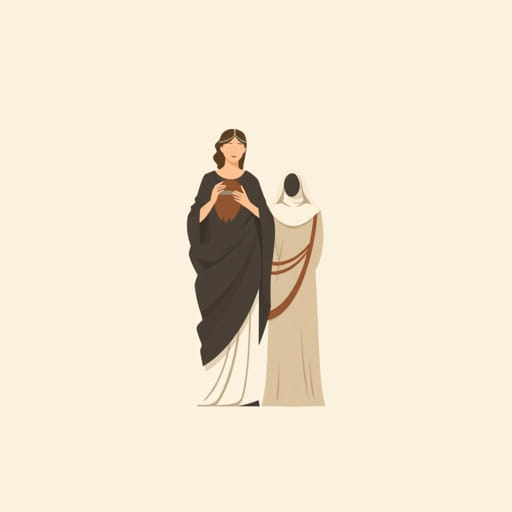
Judith and Her Maidservant is a powerful and emotionally charged painting that has captured the imagination of art lovers and historians for centuries. This dramatic work, created by the Italian Baroque painter Artemisia Gentileschi, stands out not just for its technical mastery but also for the intensity of its subject matter. Unlike many other works of its time, this painting offers a perspective shaped by a female artist who brought her own life experiences and artistic vision into the depiction of the biblical heroine Judith. The painting is more than just an interpretation of a religious story it is a bold artistic statement that highlights strength, courage, and resistance through the eyes of a woman artist in a male-dominated era.
The Artist Behind the Canvas
Artemisia Gentileschi: A Pioneer of Her Time
Artemisia Gentileschi was born in Rome in 1593 and became one of the first widely recognized female painters in the history of Western art. Trained in her father Orazio Gentileschi’s studio, she was deeply influenced by Caravaggio’s dramatic use of light and shadow, known as chiaroscuro. Yet Artemisia brought something entirely new to the canvas: an emotional depth and realism in female figures rarely seen in her time.
As a woman working in a patriarchal society, Artemisia faced significant barriers, including personal trauma and institutionalized discrimination. Nevertheless, she earned commissions from major courts across Europe and built a reputation as a strong and independent artist. Her paintings, especially those depicting female figures from mythology and scripture, are often interpreted as expressions of empowerment and resistance.
The Story of Judith in Art
The biblical story of Judith comes from the Book of Judith, a deuterocanonical text in which a Jewish widow infiltrates the enemy camp and beheads the Assyrian general Holofernes, thus saving her people. It is a tale of bravery, deception, and divine justice. Throughout art history, this subject has been popular with artists, especially in the Baroque period, due to its potential for dramatic and emotionally charged scenes.
Analysis of Judith and Her Maidservant
Composition and Visual Drama
Judith and Her Maidservant, one of Artemisia’s most celebrated works, captures the moment just after the beheading of Holofernes. Unlike some of her earlier paintings where the act of violence is depicted at its peak, this scene is more contemplative and suspenseful. Judith is shown turning her head, perhaps reacting to a noise or sensing danger, while her maidservant gathers the general’s head into a bag.
The composition is marked by dramatic contrasts of light and dark, a technique Artemisia mastered from Caravaggio. The figures are illuminated from the side, creating a theatrical spotlight effect that draws attention to their facial expressions and gestures. The tension is palpable the women are both cautious and alert, their bravery evident in their poise and calmness.
Symbolism and Feminine Strength
This painting is rich with symbolism. Judith, dressed in elegant clothing, represents both beauty and strength. Her maidservant, often overlooked in other depictions, plays a central role in Artemisia’s version. Together, they represent solidarity, cunning, and the power of female alliance. The use of rich textiles, realistic facial expressions, and physical interaction between the characters adds depth and humanity to the story.
Many art historians interpret this painting as a feminist icon of its time. It not only portrays women taking control of their fate but also reclaims the narrative of violence and heroism through a female lens. The maidservant is not simply a helper but an essential part of the mission, suggesting Artemisia’s belief in women’s collective strength.
The Impact and Legacy of the Painting
Reception Over the Centuries
While Artemisia’s work was admired in her lifetime, her legacy faded for centuries before being rediscovered in the 20th century. Today, Judith and Her Maidservant is celebrated not only for its technical brilliance but also for its bold thematic choices. It is housed in several versions, including one at the Detroit Institute of Arts, where it continues to be a centerpiece of feminist art interpretation.
The painting’s resurgence in modern scholarship has positioned Artemisia as a pioneer in both artistic technique and thematic bravery. She challenged norms and depicted women not as passive subjects but as active agents of change, justice, and resistance.
Modern Influence and Cultural Relevance
In recent years, Judith and Her Maidservant has inspired modern artists, writers, and scholars. The painting is often discussed in the context of the #MeToo movement and women’s empowerment. Its message transcends time, offering a visual representation of strength in the face of oppression.
- Art schools now teach Artemisia’s work as foundational to understanding Baroque painting.
- Feminist art historians often cite this piece as a critical shift in the portrayal of women in art.
- Exhibitions dedicated to women artists frequently feature Judith and Her Maidservant as a landmark in female-authored art.
Judith’s Enduring Symbolism
Judith as a Cultural Icon
Judith has become more than just a biblical figure she is a symbol of courage, moral strength, and justice. Through Artemisia’s brush, this figure evolved into a powerful emblem of female resistance. Unlike male artists who may have focused on her physical beauty or the shock of violence, Artemisia presented Judith with psychological depth and emotional realism.
The Maidservant’s Role Reimagined
In many earlier depictions, the maidservant is marginalized or absent. Artemisia re-centers her, making her an indispensable part of the narrative. This reimagining shifts the focus from individual heroism to collective effort, emphasizing that behind every act of bravery is often a partnership, a support system, or a quiet strength that deserves recognition.
Judith and Her Maidservant by Artemisia Gentileschi is more than a masterpiece of Baroque art it is a revolutionary act of storytelling through paint. With this work, Artemisia did not just capture a biblical tale; she redefined how women could be portrayed in art. Through the lens of personal experience and historical defiance, she offered an enduring image of female strength, intelligence, and unity. Today, this painting continues to inspire and challenge viewers, urging them to see beyond the surface and recognize the deeper forces of courage and justice at play.