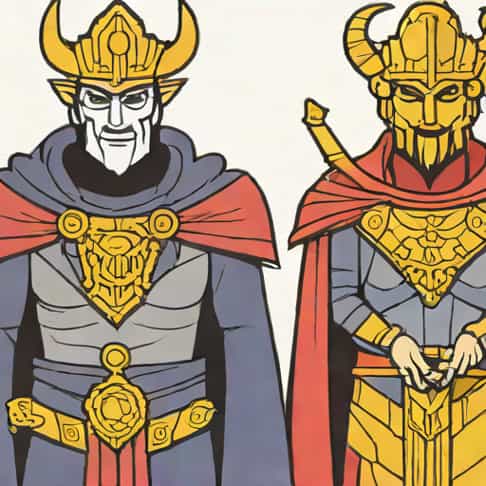
Mythology and legend have long fascinated humans with their complex characters, epic battles, and moral lessons. Among these stories, villains often stand out for their cunning, power, or ability to challenge heroes in ways that leave lasting impressions. Interestingly, some of these mythological villains can also be understood through a queer lens, whether through non-normative gender expressions, fluid sexuality, or the defiance of societal norms regarding love and desire. Exploring the queer villains of myth and legend offers a fresh perspective on traditional stories, revealing layers of identity, transgression, and representation that have often been overlooked or misinterpreted.
The Concept of Queer Villains in Mythology
Queer villains in myths are characters whose identities, desires, or behaviors deviate from conventional norms, often being framed as dangerous, seductive, or morally ambiguous. In many cultures, these characters are portrayed as threats to the social or natural order, which can reflect historical anxieties about gender, sexuality, and power. Yet, reading these characters through a modern queer lens allows us to recognize the complexity of their motivations, the richness of their identities, and the ways they challenge rigid societal expectations.
Why Queer Villains Matter
Queer villains are important because they provide representation, even if complicated, in a historical context where queer identities were often suppressed or coded. These figures often display traits such as transformation, seduction, or subversion, which can be interpreted as expressions of queer identity. By studying these characters, we gain insight into how different cultures have grappled with non-normative identities, and we also expand our understanding of villainy beyond mere evil, seeing it as resistance, power, or self-expression.
Examples of Queer Villains in Myth and Legend
Across various mythologies, several villains stand out as examples of queer-coded or explicitly queer characters. These figures often combine elements of seduction, trickery, and transgression, challenging heroes and societal norms alike.
Loki from Norse Mythology
Loki, the trickster god of Norse mythology, is one of the most famous queer villains. Known for shape-shifting and manipulating both gods and humans, Loki’s fluid gender and identity allow for a range of interpretations. In some myths, Loki transforms into a mare, giving birth to the eight-legged horse Sleipnir, demonstrating the fluidity of gender and the subversion of traditional roles. Loki’s cunning and morally ambiguous nature often position him as an antagonist, yet his complexity and unpredictability make him a compelling figure in Norse stories.
Medusa from Greek Mythology
Medusa, the Gorgon whose gaze turns people to stone, is often considered a villain, but her story contains layers of queer and feminist reading. Medusa’s transformation from a beautiful woman into a monstrous figure by Athena, often after being violated, can be interpreted as a punishment for desires and autonomy that fall outside societal norms. Medusa’s sexuality and autonomy, framed as threatening, make her a figure who challenges patriarchal structures. Viewing her through a queer lens highlights her role as an outsider whose power disrupts traditional gender expectations.
Enchantresses and Sorceresses
Across various legends, sorceresses such as Circe and Morgan le Fay often embody queer-coded villainy. These figures wield magic in ways that challenge male heroes, often manipulating desire, attraction, or transformation. Circe, in Greek mythology, famously turns men into animals, subverting their dominance and demonstrating control over bodies and sexuality. Morgan le Fay, in Arthurian legend, is frequently portrayed as a seductress and manipulator, challenging the patriarchal order and blurring lines between good and evil. Their queer-coded traits, including autonomy, non-normative sexuality, and magical power, position them as both feared and fascinating antagonists.
Trickster Figures and Queer Subversion
Trickster figures across cultures often embody queer characteristics, using deception, transformation, and playfulness to challenge societal norms. Beyond Loki, other examples include Coyote in Native American mythology and Anansi in West African folklore. These tricksters frequently defy gender norms or sexual expectations, using fluid identities to navigate between worlds, outsmart opponents, or disrupt hierarchical structures. While not always explicitly villainous, their actions often place them in opposition to established authority, making them antagonistic figures with queer undertones.
The Role of Transformation
Transformation is a common trait among queer villains, serving as a metaphor for fluidity and non-conformity. Shape-shifting allows characters to traverse boundaries of gender, species, or social status, creating tension and intrigue. These transformations are often viewed as dangerous or unnatural in traditional myths, reinforcing the villainous reputation. Yet, modern interpretations recognize this ability as a symbol of freedom, identity exploration, and resistance to restrictive norms.
Queer Desire and Villainy
Desire is another defining characteristic of queer villains. Many antagonists in myth express desire in ways that deviate from societal expectations, whether through same-sex attraction, transgressive relationships, or manipulative seduction. This framing often marks them as morally suspect or dangerous, reflecting historical anxieties about queer desire. For example, the sirens of Greek mythology lure sailors with irresistible songs, embodying both sexual and dangerous power. Their allure and threat illustrate how queer-coded desire can intersect with villainy, creating complex, multi-dimensional characters.
Challenging Heteronormative Norms
Queer villains frequently challenge heteronormative and patriarchal structures in myth. By asserting control over their bodies, desires, or magical powers, they disrupt established hierarchies. Their actions often provoke fear or moral panic in the narrative, which positions them as antagonists. However, this opposition to societal norms can also be seen as a form of resistance, allowing modern audiences to reinterpret these characters as symbols of queer empowerment and agency, rather than mere evil.
Modern Interpretations and Cultural Impact
Contemporary scholars and creators increasingly highlight the queer aspects of mythological villains. By re-examining these characters, modern interpretations reveal how myths reflect complex social attitudes toward gender and sexuality. Literature, television, and film often draw inspiration from these queer villains, portraying them with nuance and depth rather than as one-dimensional threats. This renewed attention allows audiences to appreciate the richness of myth and the ways in which marginalized identities have been coded into cultural stories for centuries.
Influence on Storytelling
Queer villains have influenced storytelling by challenging conventional notions of morality, identity, and power. Their presence encourages audiences to question assumptions about good and evil, and to explore the fluidity of identity and desire. In modern fantasy, horror, and myth-inspired fiction, queer villains serve as catalysts for conflict, character development, and thematic exploration, demonstrating the enduring appeal and relevance of these mythological figures.
Queer villains of myth and legend offer a fascinating lens through which to understand stories, culture, and identity. Figures like Loki, Medusa, Circe, and other tricksters and sorceresses challenge norms, wield desire and transformation as power, and expand the boundaries of traditional villainy. By exploring these characters, readers can gain insight into historical perspectives on gender and sexuality, while also appreciating the complexity and richness of myth. Queer villains are not simply antagonists; they are symbols of subversion, empowerment, and the enduring human fascination with characters who defy convention and captivate the imagination.