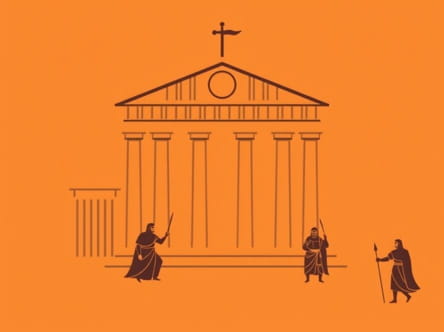
In the long and complex history of the Roman Empire, few events were as shocking to contemporaries or as symbolically powerful as the sack of Rome by the Visigoths in 410 AD. It was the first time in nearly 800 years that Rome had fallen to a foreign enemy, and the event marked a critical point in the decline of the Western Roman Empire. The Visigoths, a Germanic tribe led by their king Alaric I, captured and plundered the city after years of political instability, military weakness, and failed negotiations with the Roman authorities. The sack not only demonstrated the weakening grip of the Roman state but also showed the growing strength and organization of so-called barbarian groups who had once lived on the empire’s fringes.
Background of the Visigoths
Origins and Migration
The Visigoths were part of the larger Gothic people, originally from Scandinavia and later settled near the Black Sea. Pressured by the advancing Huns in the late 4th century, the Visigoths sought refuge within the Roman Empire. In 376 AD, they were allowed to cross the Danube into Roman territory, but mistreatment and food shortages led to tensions.
Battle of Adrianople
In 378 AD, the Visigoths clashed with Roman forces at the Battle of Adrianople, resulting in a disastrous Roman defeat and the death of Emperor Valens. This battle exposed the Roman military’s vulnerability and marked a shift in power. Afterward, the Visigoths were recognized as foederati (allied tribes) but remained restless and mobile within the empire’s borders.
Alaric and the Rise of Visigothic Power
Alaric’s Ambitions
Alaric I, originally a commander in the Roman army, became leader of the Visigoths around 395 AD. His goal was not necessarily to destroy Rome but to secure land, recognition, and rank for his people within the empire. However, repeated failures by Roman emperors to meet his demands led Alaric to take aggressive actions, including military campaigns in Greece and Italy.
March Toward Rome
Alaric and his army moved through the Italian Peninsula, exploiting the political chaos in the Roman court. He besieged Rome multiple times, using starvation and fear as weapons. Although the Roman Senate tried to negotiate and pay him off, the imperial government in Ravenna resisted making concessions. The impasse culminated in the sack of the city.
The Sack of Rome in 410 AD
How the Visigoths Entered the City
On August 24, 410 AD, the Visigoths entered Rome through the Salarian Gate, reportedly opened by slaves or insiders sympathetic to the invaders. For three days, they looted homes, ransacked public buildings, and seized treasure. However, they largely spared churches and religious figures, a gesture that reflected their Christian (Arian) faith and Alaric’s attempts to maintain order.
Impact on Roman Society
Although Rome was no longer the political capital of the Western Roman Empire it had been replaced by Ravenna the city remained the spiritual and symbolic heart of the empire. Its fall shocked the Roman world. Citizens were traumatized, and many fled the city. For Romans and foreigners alike, the sack symbolized the vulnerability of the once-invincible empire.
Consequences of the Sack
Psychological and Cultural Effects
The sack of Rome reverberated across the ancient world. Christian theologians like St. Augustine responded by writing influential works such asThe City of God, addressing how such a calamity could occur in a supposedly divine order. Pagans blamed Christians for the decline of Rome’s traditional gods, while Christians saw it as a test of faith.
Military and Political Ramifications
The Roman military’s failure to protect the city encouraged further incursions by other barbarian tribes. It also undermined confidence in the Western Roman leadership. Although the Eastern Roman (Byzantine) Empire remained strong, the West descended into greater fragmentation and chaos, eventually collapsing entirely by 476 AD.
Visigothic Movements After the Sack
Alaric died soon after the sack, but the Visigoths continued to roam Italy before eventually settling in Gaul and Hispania, where they established a stable Visigothic Kingdom. This post-Roman state became a major power in Western Europe and contributed to the transformation of Roman civilization into medieval Christendom.
Legacy of the Visigothic Sack
Symbol of Decline
The sack of Rome by the Visigoths has often been interpreted as a watershed moment in world history a clear marker of Rome’s fall from greatness. Although the city was sacked again later by the Vandals and others, the 410 event remained the most psychologically devastating because of its unprecedented nature.
Reevaluation of Roman Power
The event forced historians and political thinkers to reevaluate what made Rome powerful and how it had become vulnerable. It showed that military strength alone could not sustain an empire indefinitely, especially one plagued by internal divisions, economic instability, and administrative decay.
Integration of the Visigoths
Ironically, the sack of Rome led not to the destruction of Roman civilization, but to its transformation. The Visigoths, and other so-called barbarian groups, adopted Roman customs, laws, and Christianity, blending Roman traditions with their own and forming the foundation of early medieval Europe.
The 410 AD sack of Rome by the Visigoths was far more than a violent invasion. It represented a turning point in the decline of the Western Roman Empire, a symbol of shifting power dynamics in late antiquity, and a harbinger of the medieval world to come. The Visigoths, under Alaric, challenged the very image of Roman invincibility and ushered in a new era where former outsiders would become the architects of Europe’s future kingdoms. Understanding the historical significance of this event offers deep insight into the fragility of empires and the complex legacies left behind by their rise and fall.