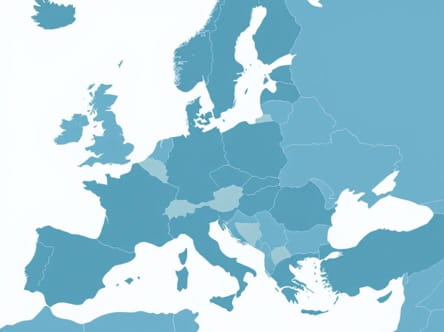
The Frankish Empire was one of the most powerful political and military entities in medieval Europe, and its vast and shifting borders were documented in several historic maps. These maps of the Frankish Empire, especially during the reign of Charlemagne, help us understand the political landscape of Western Europe during the early Middle Ages. By analyzing the Frankish Empire map, historians and researchers can trace the transformation of post-Roman Europe and the foundations of modern European nations. The empire’s territorial growth, political structure, and military campaigns are all reflected through cartographic representations that evolved over time.
Origins and Early Expansion of the Frankish Empire
The Frankish Empire began as a loose confederation of Germanic tribes known as the Franks, who settled in Roman Gaul during the decline of the Western Roman Empire. The earliest maps that represent Frankish territories are focused around the Rhine River and the northern regions of Gaul. The rise of Clovis I, who unified the Frankish tribes in the late 5th century, marked the beginning of a more centralized Frankish state. His conversion to Christianity also aligned the Franks with the Roman Catholic Church, establishing a long-standing relationship that would shape the empire’s politics and expansion.
Key Territories Under Clovis I
- Neustria (northwestern France)
- Aquitaine (southwestern France)
- Burgundy (southeastern France)
- Austrasia (northeastern France and western Germany)
Maps from this period, though often schematic and lacking precise borders, show the spread of Frankish influence across Roman Gaul. By the time of Clovis’ death in 511, the Frankish Empire stretched from the Pyrenees to the Rhine and was divided among his sons, a practice that would lead to frequent internal divisions in later generations.
Charlemagne and the Zenith of Frankish Power
The most iconic maps of the Frankish Empire are those that depict the reign of Charlemagne (Charles the Great), who ruled from 768 to 814. Under his leadership, the empire reached its largest territorial extent. Charlemagne’s military campaigns extended Frankish control into Italy, parts of modern-day Germany, and central Europe, creating a vast realm that spanned much of Western Europe.
Major Regions on Charlemagne’s Map
- All of modern-day France
- Most of Germany
- Northern Italy, including Lombardy
- The Low Countries (Belgium, Netherlands, Luxembourg)
- Austria and parts of Hungary
- Small parts of northern Spain
The imperial coronation of Charlemagne by Pope Leo III in 800 CE marked the birth of the Holy Roman Empire, even though Charlemagne’s realm is more accurately referred to as the Carolingian Empire. Maps from this era typically highlight Aachen (modern Germany) as the imperial capital, with trade routes, religious centers, and administrative regions prominently marked. These visual representations show an empire that served as a cultural and political bridge between the ancient Roman world and medieval Europe.
Administrative Divisions and Map Features
One of the most important features of a Frankish Empire map during the Carolingian era is its division into counties and duchies, which were governed by counts and dukes loyal to the emperor. These subdivisions helped manage such a vast and diverse realm, especially in areas with different languages, customs, and ethnic groups.
Visual Indicators on Frankish Maps
- Major rivers like the Rhine, Danube, and Seine as boundary markers
- Trade routes and roads such as the Via Francigena
- Ecclesiastical centers like Reims, Tours, and Rome
- Fortified towns and frontier regions
These maps often show military frontiers such as the Spanish March, a buffer zone against Muslim-held territories in Iberia. The empire’s boundaries were not static; they expanded and contracted based on military campaigns, diplomatic treaties, and internal divisions.
Fragmentation After Charlemagne
Following Charlemagne’s death, the empire was divided among his grandsons through the Treaty of Verdun in 843. This treaty is a critical event that is often highlighted in historical maps of the Frankish world. It split the empire into three distinct regions:
- West Francia the basis for modern France
- East Francia the precursor to the Holy Roman Empire and modern Germany
- Middle Francia a narrow strip including modern-day Italy, the Low Countries, and parts of eastern France
Maps of the post-Verdun period illustrate the decline of centralized power and the beginning of feudal fragmentation. The once-unified Frankish Empire was now three separate kingdoms, each facing its own challenges from internal strife and external invasions, such as those by the Vikings and Magyars.
The Role of Cartography in Understanding Frankish Influence
Although medieval mapmaking lacked the precision of modern cartography, maps of the Frankish Empire remain invaluable for understanding the historical development of Europe. These maps serve multiple purposes:
- Highlighting the geographic spread of Latin Christianity
- Identifying centers of learning, such as monasteries and scriptoria
- Depicting shifting borders due to dynastic wars and treaties
- Revealing the legacy of Roman roads and cities integrated into Frankish rule
Contemporary historians use these maps in conjunction with archaeological evidence, documents, and chronicles to reconstruct the complexity of the Frankish world. The cartographic record reflects not only political power but also cultural and religious transformation.
Legacy of the Frankish Empire Map in Modern Europe
The legacy of the Frankish Empire, as seen through historical maps, is deeply embedded in the shaping of modern European countries. The divisions established by the Treaty of Verdun roughly correlate to modern national borders. Moreover, the Carolingian emphasis on education, religion, and governance laid the groundwork for the European medieval states that would emerge centuries later.
Modern historical atlases often dedicate entire sections to the Frankish Empire, emphasizing its significance as the largest and most organized political entity in post-Roman Western Europe. The visual representation of the empire continues to inform academic studies, cultural heritage, and even political discourse in modern France and Germany, which both trace aspects of their national identities to Frankish roots.
Understanding the Frankish Empire map is essential to grasp the transformation of Europe in the aftermath of the Roman Empire. From its humble beginnings in the Rhineland to its zenith under Charlemagne, the map of the Frankish Empire charts the political, military, and religious evolution of Western Europe. Through these visual records, we gain a clearer view of how early medieval kingdoms laid the foundation for the nations we recognize today. The shifting borders, strategic regions, and administrative systems reflected in these maps reveal a complex and dynamic empire whose influence still resonates in the modern era.