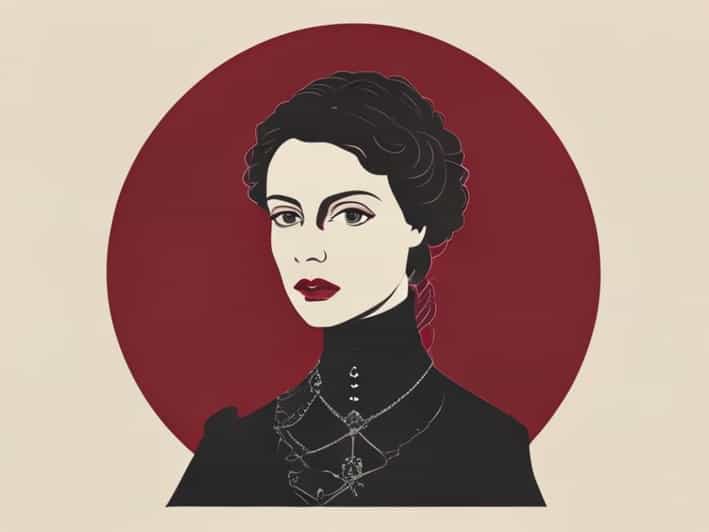
The rise of the Victorian madwoman is a fascinating and complex phenomenon that reflects both the social anxieties and literary trends of the nineteenth century. During the Victorian era, society held rigid expectations for women, emphasizing domesticity, moral virtue, and submission to male authority. When women deviated from these norms, either through defiance, emotional intensity, or intellectual independence, they were often labeled as mad or unstable. Literature of the time amplified this perception, giving rise to a recurring archetype the madwoman. From Gothic novels to the works of Charlotte Brontë and beyond, this figure became a potent symbol of social repression, gendered oppression, and the thin line between genius and madness.
Historical Context of Female Madness
In Victorian England, medical and cultural discourses often framed women as inherently more susceptible to mental instability. Physicians of the time believed that the female nervous system was delicate and prone to hysteria, a diagnosis that could encompass everything from mood swings to resistance against patriarchal control. Women who expressed anger, sexual desire, or independent thought were frequently pathologized, and institutionalization became a common tool for enforcing conformity. This historical context laid the groundwork for the literary emergence of the madwoman figure, who embodied both fear and fascination for Victorian audiences.
Social Constraints and Gender Roles
The Victorian madwoman cannot be understood without considering the era’s social constraints. Women were expected to maintain the ideal of the angel in the house, a figure devoted entirely to family, domestic duties, and moral guidance. Deviation from this ideal, whether through ambition, sexual independence, or intellectual pursuit, was often seen as threatening. The madwoman, therefore, represented the anxieties surrounding female autonomy. She was dangerous precisely because she refused to conform, and her madness symbolized the consequences of challenging societal norms.
Literary Origins of the Madwoman
The literary madwoman gained prominence through Gothic and Romantic novels, where isolated, mysterious, and emotionally intense women captivated readers. Early examples often depicted women locked away, consumed by jealousy, revenge, or forbidden knowledge. These narratives reflected contemporary concerns about the destabilizing potential of female agency and the fragility of social order. In these works, the madwoman was both feared and pitied, a complex character whose transgression was inseparable from her suffering.
Bertha Mason in Jane Eyre
One of the most iconic Victorian madwomen is Bertha Mason from Charlotte Brontë’s Jane Eyre. Locked in the attic by her husband, Bertha embodies the terrifying otherness of uncontrolled female passion. She is violent, irrational, and secretive, yet Brontë’s portrayal also evokes sympathy. Bertha’s madness is linked to colonial and racial anxieties, as she is a Creole woman imported from Jamaica, making her both socially and geographically alien. This combination of gender, race, and madness underscores the multifaceted fears that Victorian society projected onto women who could not or would not conform.
Symbolism and Thematic Significance
The madwoman in Victorian literature functions as a powerful symbol. She often represents suppressed desires, social critique, and the consequences of extreme oppression. While she is a figure of horror for her unpredictability, she is also a mirror reflecting the limitations imposed upon women. Her madness is rarely natural; it is constructed through confinement, lack of autonomy, and societal pressure. In this sense, the archetype is both a critique of patriarchal society and a dramatic embodiment of its consequences.
Madwoman as Social Critique
Many Victorian writers used the madwoman to critique restrictive gender norms. By exaggerating the consequences of repression, novels could explore the psychological toll of enforced domesticity and silence. In these stories, the madwoman’s rage, violence, or despair serves as a commentary on the impossibility of fulfilling societal expectations without sacrificing individuality or mental health. Through this lens, her madness is not simply personal pathology but a socially produced phenomenon.
Madwoman and Gothic Tropes
The Gothic genre played a key role in shaping the madwoman archetype. Themes of confinement, secrecy, and hidden spaces attics, towers, and isolated estates were common settings. These physical spaces mirrored the psychological imprisonment of women, emphasizing the link between environment and mental instability. Gothic tropes heightened the dramatic effect, making the madwoman both a terrifying and compelling figure for readers. Her madness was not only a personal struggle but also a narrative device to explore broader anxieties about power, gender, and identity.
Madwoman Beyond Literature
The influence of the Victorian madwoman extends beyond literature into cultural and artistic representations of women. In visual art, theater, and early cinema, women who displayed independence or defiance were often cast as mad, dangerous, or morally ambiguous. These portrayals reinforced societal fears while simultaneously providing a space for exploring female subjectivity and transgression. The madwoman became a cultural shorthand for the consequences of challenging social norms, and her image persisted into the modern imagination.
Feminist Reinterpretations
In the late twentieth and twenty-first centuries, feminist scholars and writers have reinterpreted the Victorian madwoman as a figure of resistance rather than mere pathology. Critics argue that her madness can be read as a rational response to oppression. By reframing her narrative, modern scholarship highlights the systemic forces that create her instability and reclaims her as a symbol of agency, defiance, and critique. This reinterpretation has influenced contemporary literature, art, and criticism, demonstrating the enduring relevance of the madwoman archetype.
Psychological Dimensions
The Victorian madwoman also offers insight into historical understandings of psychology and mental health. Her depiction reflects contemporary anxieties about the mind, emotion, and the effects of confinement. Victorian theories of hysteria, nervous disorders, and inherited temperament intersect with literary portrayals, suggesting that madness was not only a medical issue but also a cultural one. Studying the madwoman helps modern readers understand how gender, power, and mental health were intertwined in Victorian thought.
Madness as Resistance
Psychologically, the madwoman’s behavior can be interpreted as resistance to domination. Her irrationality, violence, or isolation are responses to environments that deny her autonomy and self-expression. This perspective challenges earlier readings that reduced her to a spectacle of fear, instead framing her as a complex figure whose madness exposes the violence inherent in patriarchal control.
The rise of the Victorian madwoman is a reflection of both literary creativity and social anxiety. Rooted in the strict gender roles and medical theories of nineteenth-century England, the madwoman archetype became a central figure in literature, art, and culture. Characters like Bertha Mason demonstrate how madness was linked to oppression, social marginalization, and resistance. Through Gothic conventions and symbolic storytelling, the madwoman revealed the costs of limiting female autonomy. Modern feminist and psychological interpretations have reclaimed her as a figure of critique and resilience, ensuring that the legacy of the Victorian madwoman continues to inform discussions about gender, power, and mental health. By examining her rise, we gain insight not only into Victorian culture but also into enduring themes of control, freedom, and the complex realities of women’s lives across history.