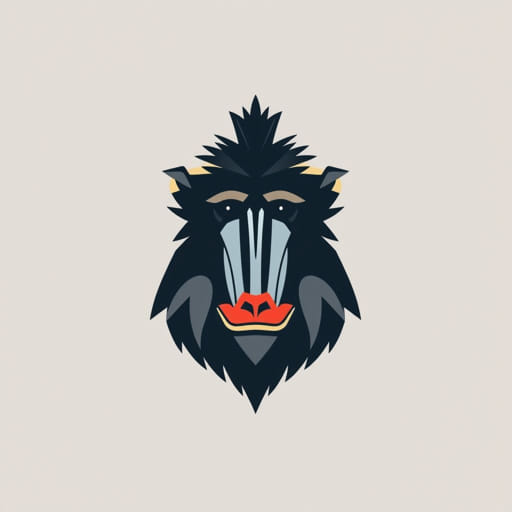
The word ‘mandrill’ refers to a fascinating and distinctive species of primate known for its vibrant coloring and complex social behaviors. Often confused with baboons due to their physical similarities, mandrills actually belong to a separate genus and have their own unique traits. Understanding the meaning of ‘mandrill’ goes beyond a basic dictionary definition; it involves exploring the biology, habitat, behavior, and cultural significance of this extraordinary animal. For nature enthusiasts, students, or curious minds, learning about the mandrill offers insight into the diversity of life on Earth and how language captures such diversity through precise terminology.
Definition of Mandrill
The term ‘mandrill’ is used to describe a large, colorful monkey native to the rainforests of Central Africa. Scientifically known asMandrillus sphinx, the mandrill is one of the largest and most visually striking monkeys in the world. It is best recognized for the bright blue and red coloring on its face and the vibrant hues on its rear, which are more pronounced in dominant males. The name ‘mandrill’ can refer both to the specific species and, more generally, to its place in the primate family tree.
Etymology and Linguistic Meaning
The word ‘mandrill’ likely originates from a combination of ‘man’ and ‘drill,’ where ‘drill’ refers to a closely related primate species. This blend suggests the mandrill’s man-like features and its association with other primates. Although not human, the mandrill’s facial expressions and behaviors often evoke a sense of familiarity, which may have influenced the formation of its name in English. Over time, the term has remained consistent in its use, always referring to this specific kind of primate.
Physical Characteristics of the Mandrill
To fully understand what a mandrill is, it’s essential to explore its physical attributes. These primates are especially known for their colorful appearance, which plays a significant role in their identity and mating rituals.
- Coloration: Mandrills exhibit some of the most brilliant coloration in the animal kingdom. Males display bright red nostrils and lips, along with vivid blue ridges along the sides of their faces. The rump is also brightly colored, which becomes even more intense when the animal is excited.
- Size: Male mandrills can weigh up to 30 kg (66 lbs), while females are significantly smaller, rarely exceeding 15 kg (33 lbs). This sexual dimorphism is one of the most extreme among primates.
- Teeth: Mandrills have long canine teeth that can appear intimidating. These are used mainly for display and defense rather than hunting or aggressive behavior.
Habitat and Distribution
Mandrills are found primarily in the tropical rainforests and occasionally in savannahs of western Central Africa, especially in countries like Gabon, Cameroon, and the Republic of the Congo. They prefer dense, humid forests where food sources are abundant and where they can form large, complex social groups.
Ecological Role
As omnivores, mandrills eat a wide variety of food, including fruits, seeds, roots, insects, and small vertebrates. Their foraging helps in seed dispersal and controlling insect populations, making them crucial to the ecological balance of their habitat. In this way, understanding the term ‘mandrill’ also includes acknowledging its role in maintaining biodiversity.
Social Structure and Behavior
Mandrills live in large social groups called ‘hordes,’ which can consist of hundreds of individuals. These groups are structured around a dominant male who leads the horde and has exclusive mating rights with the females.
- Communication: Mandrills use a variety of vocalizations, facial expressions, and body postures to communicate. Their facial coloration also plays a role in social signaling.
- Grooming: Social grooming is a vital activity for mandrills, reinforcing social bonds and hierarchies within the group.
- Territorial Behavior: While generally non-aggressive, mandrills can become territorial and will defend their group from external threats.
Conservation Status
Despite their striking appearance and complex behavior, mandrills face several threats in the wild. Habitat destruction due to logging and agriculture, along with illegal hunting for bushmeat, has led to a decline in their population. As a result, the mandrill is classified as Vulnerable by conservation organizations.
Efforts to Protect Mandrills
Conservation efforts include the establishment of national parks and wildlife reserves in regions where mandrills are native. Education and awareness programs aim to reduce human-wildlife conflict and illegal hunting. Studying mandrills also provides valuable insight into primate evolution and biodiversity conservation.
Cultural References and Symbolism
The mandrill has appeared in various cultural contexts, from African folklore to modern media. Its unique appearance often symbolizes strength, mystery, or wildness. In popular culture, the mandrill sometimes appears in animated films or documentaries, increasing public awareness and interest in the species.
Mandrill vs. Baboon
Though often mistaken for baboons, mandrills are more closely related to drills. Unlike baboons, mandrills exhibit more vibrant colors and live in denser forest environments. Recognizing the difference between the two helps clarify the meaning of ‘mandrill’ and avoid confusion with other species.
Mandrill in Scientific Research
Because of their social complexity and close relation to humans, mandrills are often studied in primatology and behavioral science. Researchers examine mandrill social dynamics, communication methods, and environmental adaptation to better understand primate evolution and human ancestry.
Key Findings from Studies
- Mandrills use visual signals, such as color intensity, to establish dominance.
- Their social networks can change rapidly, especially during breeding seasons.
- Mandrill societies are influenced by both male competition and female choice.
In summary, the word ‘mandrill’ refers to a vividly colored, socially intricate primate species native to Central Africa. More than just a biological label, the term encompasses a wealth of knowledge about animal behavior, ecosystem dynamics, and cultural symbolism. From their brilliant appearance and group dynamics to their importance in the environment and science, mandrills are a rich subject of study and admiration. Understanding the meaning of mandrill deepens our appreciation for the complexity and beauty of life on Earth.