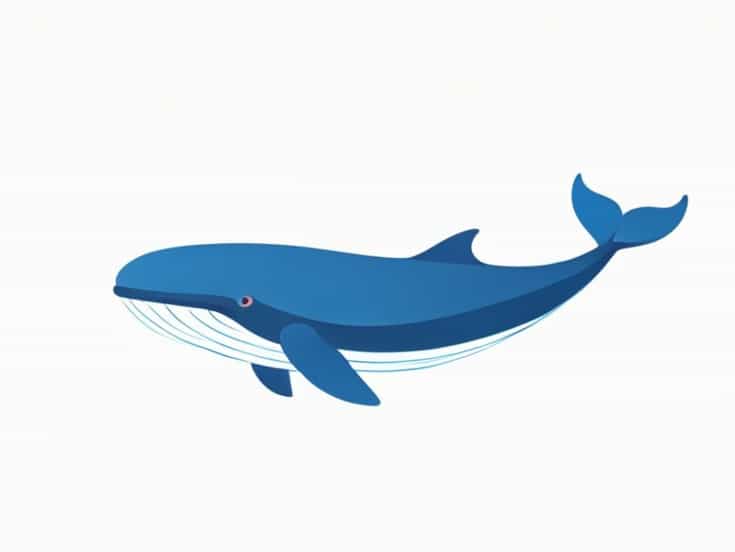
The blue whale is the largest animal known to have ever existed on Earth, captivating scientists and nature enthusiasts with its sheer size and majesty. Understanding the size of a blue whale helps to appreciate not only the physical scale of this marine giant but also the biological adaptations that allow it to survive in the ocean. Measuring the length, weight, and other dimensions of blue whales provides insight into their feeding habits, reproductive biology, and ecological role. From the massive heart to the enormous tongue, every part of the blue whale reflects its status as a creature of extraordinary proportions.
Average Size of a Blue Whale
Blue whales (Balaenoptera musculus) are truly remarkable in size. Adult blue whales typically range in length from 70 to 100 feet (21 to 30 meters), although individuals exceeding 110 feet (33 meters) have been reported. Females are generally larger than males, a phenomenon known as sexual dimorphism, which is common among baleen whales. The largest blue whales can weigh up to 200 tons (approximately 181 metric tonnes), making them heavier than any dinosaur known to have existed. Their immense size is an adaptation to their oceanic lifestyle, allowing them to store vast amounts of energy and travel long distances across the seas.
Length and Body Structure
The length of a blue whale is one of the most striking measures of its size. The head alone can be up to one-quarter of the total body length, often around 20 to 25 feet (6 to 7.5 meters). Blue whales have streamlined, elongated bodies with a broad, flat head and a tapered tail. This design allows them to move efficiently through water despite their enormous mass. The body is covered in bluish-gray skin, often mottled with lighter spots, giving the species its common name. Each structural feature, from the massive flippers to the fluke of the tail, contributes to the whale’s swimming efficiency and ability to hunt krill in massive quantities.
Weight of a Blue Whale
Weight is another critical aspect of blue whale size. On average, adult blue whales weigh between 100 and 150 tons (90 to 136 metric tonnes), though some exceptional individuals may reach up to 200 tons. To put this into perspective, a single blue whale can weigh as much as 33 elephants or hundreds of humans. This weight is supported by a thick layer of blubber that can be up to 12 inches (30 centimeters) deep, providing insulation in cold waters and serving as an energy reserve during long migrations. The massive musculature required to propel such a body through water is concentrated in the tail and body, emphasizing the importance of both size and strength for survival.
Comparison with Other Marine Creatures
Blue whales are unmatched in size among living marine animals. While other large whales, such as fin whales and sperm whales, are impressive in their own right, the blue whale surpasses all in both length and mass. For instance
- Fin whales reach lengths of up to 85 feet (26 meters) and weigh up to 80 tons (72 metric tonnes).
- Sperm whales can grow to about 67 feet (20 meters) and weigh up to 57 tons (52 metric tonnes).
- Orcas, or killer whales, are significantly smaller, averaging 26 feet (8 meters) and weighing 6 tons (5.4 metric tonnes).
These comparisons highlight how the blue whale dominates in terms of sheer scale, making it the ultimate example of gigantism in marine mammals.
Growth Patterns of Blue Whales
Blue whales grow rapidly during the first year of life. A newborn calf is typically around 23 to 25 feet (7 to 7.6 meters) long and weighs between 2 to 3 tons (1.8 to 2.7 metric tonnes). During the nursing period, calves gain up to 200 pounds (90 kilograms) per day, thanks to the highly nutritious milk of their mothers, which can be over 50% fat. Growth slows after the first year but continues steadily until the whale reaches full adult size, usually around 10 years of age. This rapid early growth is essential for survival, allowing young whales to withstand cold ocean waters and evade predators.
Sexual Dimorphism in Size
Female blue whales tend to be larger than males, both in length and weight. This size difference plays a role in reproduction, as larger females can carry and nurse calves more effectively. The average length of adult females can reach 90 to 100 feet (27 to 30 meters), while males average slightly shorter lengths of 70 to 90 feet (21 to 27 meters). Weight differences also follow this pattern, with females generally heavier, providing additional energy reserves for gestation and lactation. Sexual dimorphism is a common adaptation among baleen whales and contributes to reproductive success.
Factors Affecting Blue Whale Size
Several factors influence the size of a blue whale, including genetics, food availability, and environmental conditions. Abundant prey, such as krill, allows whales to grow larger and maintain their massive energy needs. Genetic variations among populations can also result in slightly different average sizes. For example, blue whales in the Southern Hemisphere tend to be larger than their Northern Hemisphere counterparts, possibly due to differences in nutrient availability and migration patterns. Environmental changes, human impacts, and historical whaling have also affected populations, occasionally influencing size trends over generations.
Adaptations for Gigantism
The enormous size of blue whales is supported by several biological adaptations. Their circulatory and respiratory systems are highly efficient, with a heart weighing around 400 pounds (180 kilograms) and capable of pumping blood through the massive body. The lungs are large, enabling deep dives and extended periods underwater. Their skeletal structure is flexible and lightweight relative to body mass, allowing efficient movement despite the whale’s bulk. These adaptations ensure that the blue whale can thrive as the largest animal in the ocean.
The size of a blue whale is truly awe-inspiring, with adults reaching lengths of 70 to 100 feet and weights of up to 200 tons. This enormous scale is reflected in every aspect of their biology, from their rapid early growth and sexual dimorphism to their specialized adaptations for life in the ocean. Comparisons with other whales and marine creatures underscore the blue whale’s dominance as the largest living animal. Understanding their size helps highlight the ecological significance, energy requirements, and survival strategies of these marine giants. By appreciating the magnitude of blue whales, we gain a deeper respect for the wonders of the natural world and the extraordinary adaptations that allow life to thrive on a massive scale.