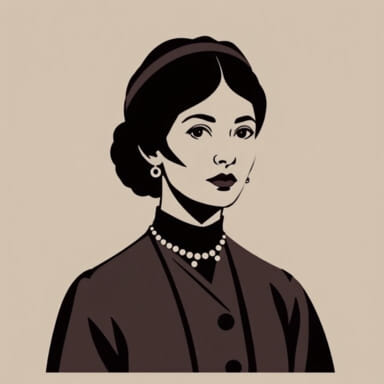
Emmeline Pankhurst is remembered as one of the most influential figures in the history of women’s rights, particularly for her role in the suffragette movement in the United Kingdom. She became a household name not only because of her passionate advocacy but also for her fearless methods of protest. Her name is closely tied to the fight for women’s suffrage in the early 20th century, and her actions left a powerful legacy that shaped the course of gender equality. She inspired generations to challenge oppressive systems and demand equal rights, particularly the right to vote.
Background and Early Life
Emmeline Pankhurst was born in Manchester, England, in 1858 into a politically active family. Her parents were strong supporters of social reform, and this environment influenced her worldview from an early age. Pankhurst was well-educated and married Richard Pankhurst, a lawyer who also championed women’s rights. Together, they raised daughters who would later join her in the suffrage struggle.
Founding the Women’s Social and Political Union (WSPU)
Pankhurst’s most significant contribution to history began in 1903 when she founded the Women’s Social and Political Union. The WSPU was created to focus solely on women’s suffrage and was known for its motto: ‘Deeds, not words.’ The organization believed that peaceful protests had failed and that more direct action was necessary to force the government to recognize women’s voting rights.
Famous for Leading the Suffragette Movement
Emmeline Pankhurst became famous primarily for her leadership role in the suffragette movement. While the broader suffrage movement included many groups using various methods, the WSPU stood out for its militant approach. Pankhurst believed that change would not come from polite appeals but from visible, disruptive actions that forced the issue into the public and political spotlight.
Public Protests and Civil Disobedience
Under her leadership, suffragettes began organizing marches, rallies, and acts of civil disobedience that gained widespread attention. These included:
- Interrupting political meetings
- Marching on Parliament
- Chaining themselves to railings
- Smashing windows of government buildings
These tactics drew intense media coverage and placed pressure on politicians who had long ignored the issue. Emmeline Pankhurst insisted that women had waited long enough for progress and that urgency required bold action.
Arrest and Imprisonment
Another reason Emmeline Pankhurst became so famous was her willingness to be arrested for her cause. She was imprisoned multiple times and often went on hunger strikes to protest her detention. The British government responded by force-feeding her and other suffragettes, a controversial practice that drew public sympathy toward the movement.
The Cat and Mouse Act
In 1913, the government passed the ‘Prisoners (Temporary Discharge for Ill Health) Act,’ commonly known as the ‘Cat and Mouse Act.’ This law allowed hunger-striking suffragettes to be released when they became weak, only to be re-arrested once they recovered. The cruel and manipulative nature of the act backfired on the government, as it further galvanized public support for women’s suffrage and made Pankhurst an even more iconic figure.
World War I and Shift in Focus
When World War I began in 1914, Emmeline Pankhurst made a significant strategic shift. She suspended suffrage activism to support the British war effort, believing that national unity was crucial. This decision was controversial, but it helped change public perception of women as responsible citizens. Many women took on essential roles in factories, offices, and hospitals during the war, demonstrating their capability and strengthening the argument for granting them the vote.
Partial Victory in 1918
Due in part to the suffragettes’ relentless activism and the contributions of women during the war, the Representation of the People Act was passed in 1918. This law granted voting rights to women over the age of 30 who met minimum property requirements. While not full equality, it marked a historic milestone and validated the efforts of Pankhurst and her followers.
Later Life and Legacy
In her later years, Emmeline Pankhurst remained politically active. She joined the Conservative Party, focusing on issues like women’s social conditions and moral reform. Though this move surprised some of her supporters, it reflected her desire to continue influencing public policy. She died in 1928, just weeks before women in the UK were granted equal voting rights with men through the Equal Franchise Act.
Enduring Impact
Emmeline Pankhurst’s fame endures because she symbolized strength, resilience, and unyielding commitment to justice. Her contributions were not just in the bold acts she led but in the visibility she gave to the broader cause. She turned the issue of women’s suffrage into a national and global conversation. Her tactics controversial as they were forced a reluctant society to listen and eventually change.
Criticism and Historical Debate
While many celebrate Emmeline Pankhurst as a heroine, historians also debate the consequences of her militant methods. Critics argue that violence and property damage alienated potential allies. Others point out that her movement focused primarily on middle- and upper-class white women, often excluding working-class and non-white voices. These criticisms are valid and part of a larger conversation about how social movements are shaped by power, class, and race.
Balancing Legacy
Despite the criticisms, most historians agree that without the boldness of Emmeline Pankhurst and the WSPU, women’s suffrage in the UK might have been delayed. Her methods sparked debate, but they also broke through the indifference that had long silenced women’s demands for political equality. She remains a controversial yet undeniably influential figure whose name is inseparable from the struggle for women’s rights.
Emmeline Pankhurst is most famous for leading the suffragette movement and using radical tactics to bring attention to women’s suffrage. Her leadership, public protests, and willingness to endure imprisonment made her a powerful symbol of resistance and determination. Though her actions were divisive at times, they ultimately helped pave the way for major legal and societal changes. Today, she is remembered not only as a political activist but as a key figure who challenged the status quo and transformed the role of women in society.